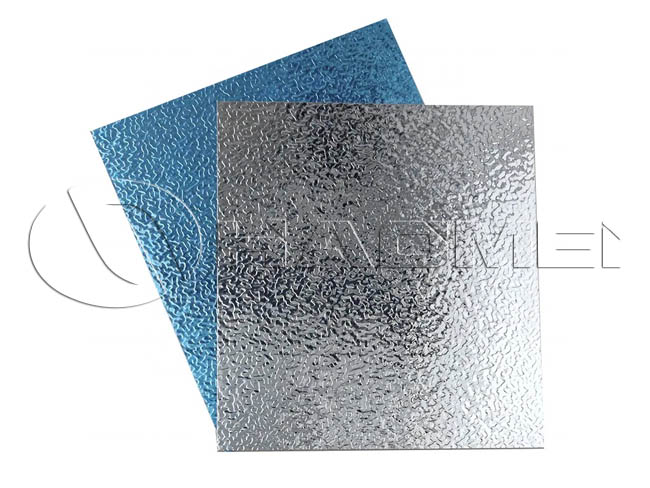
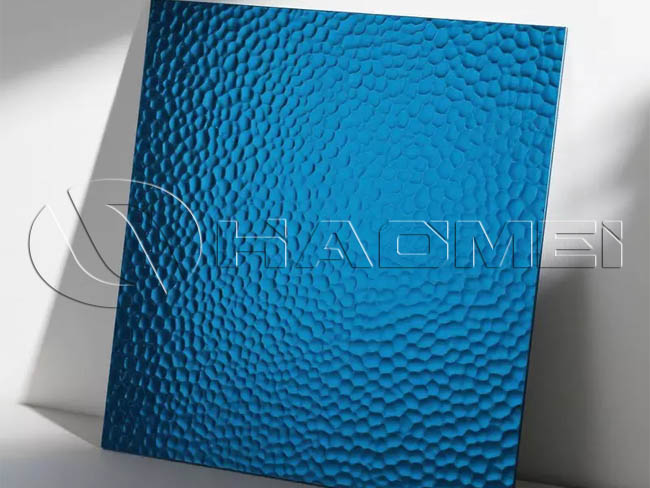
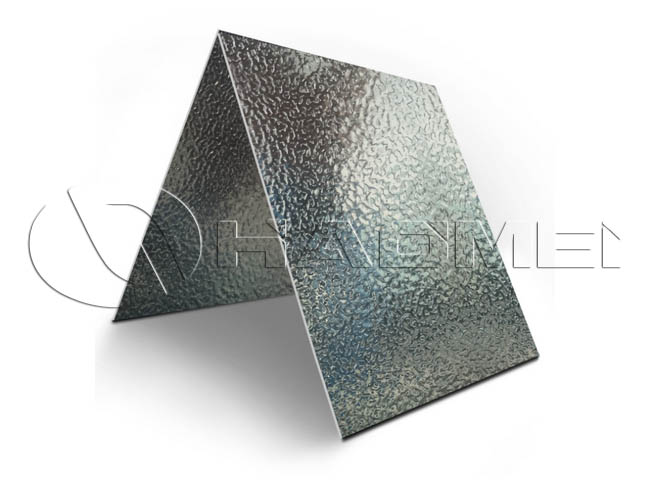
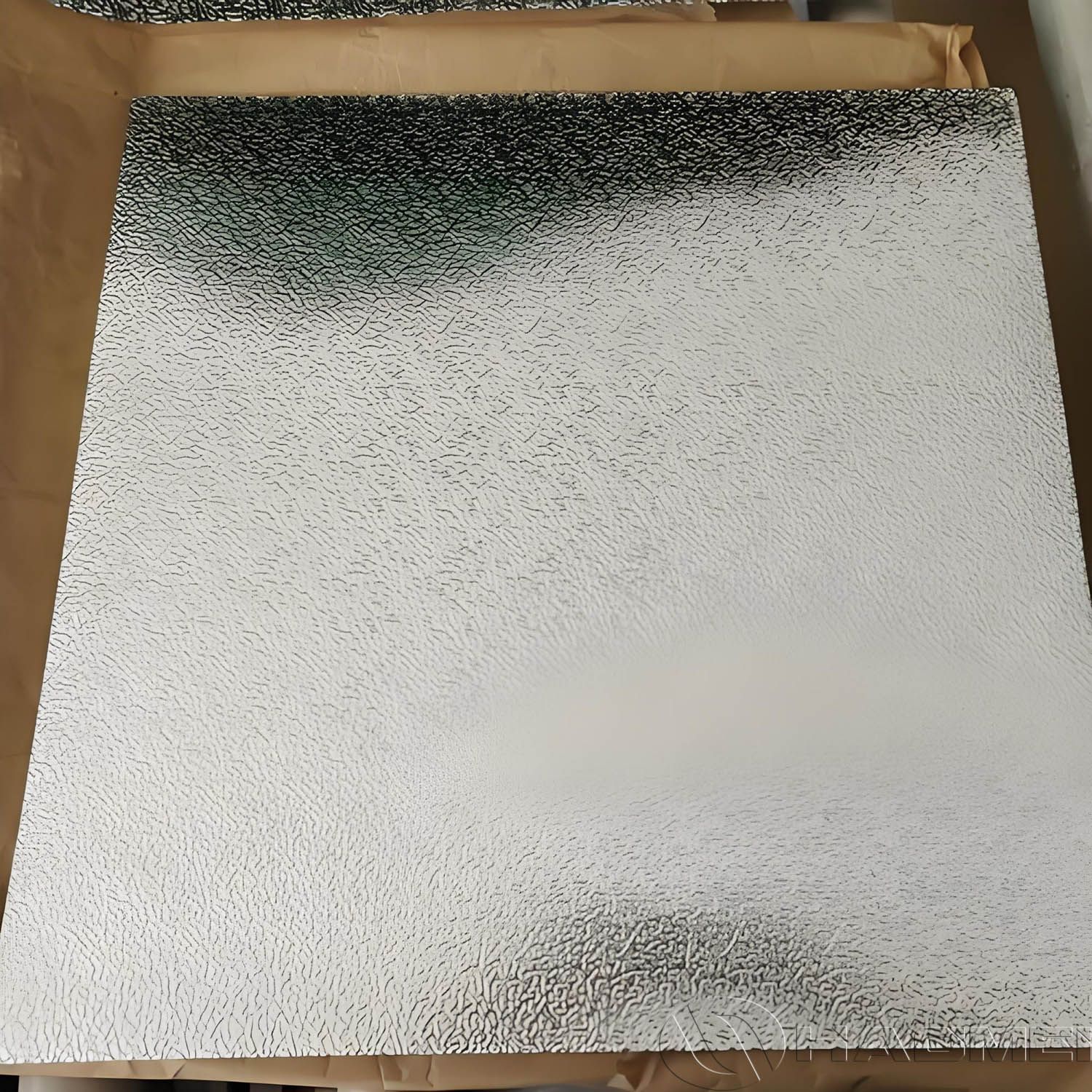
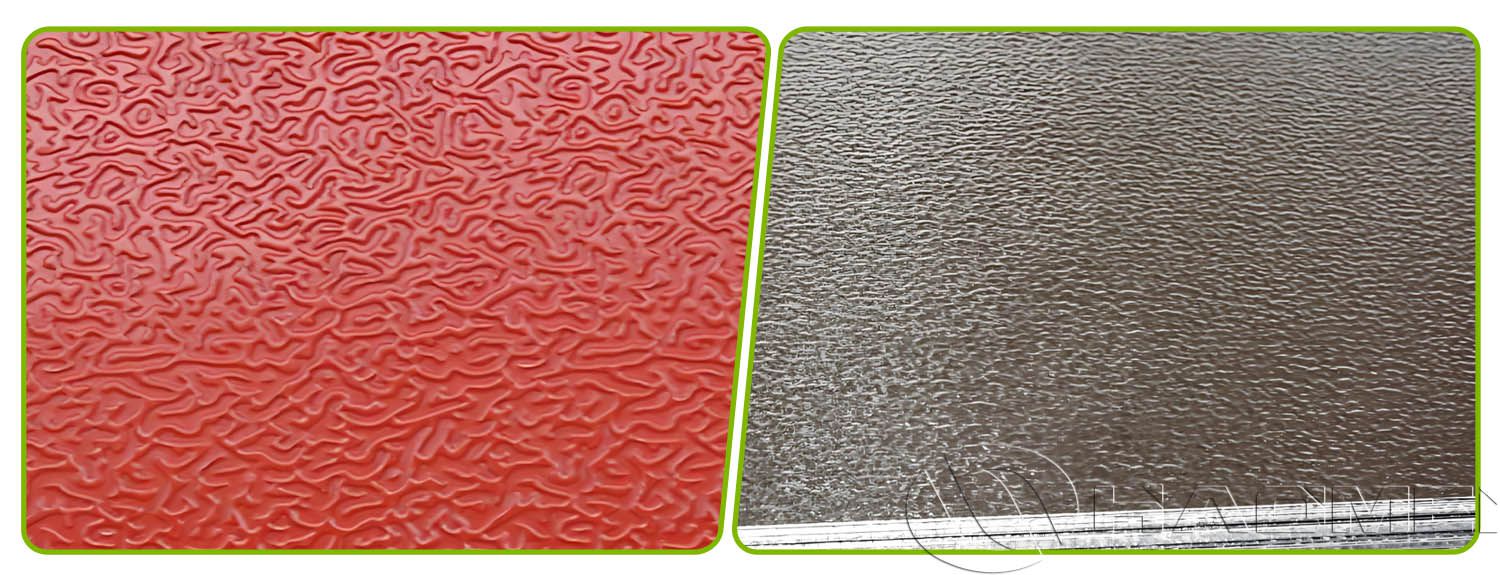
Orange peel embossed aluminum sheet is a functional aluminum material processed through a specialized embossing method. Its surface features a uniform and fine orange peel texture with a pattern depth of 0.05–0.3 mm. In addition to its decorative appearance, the texture improves slip resistance, wear resistance, and scratch resistance.
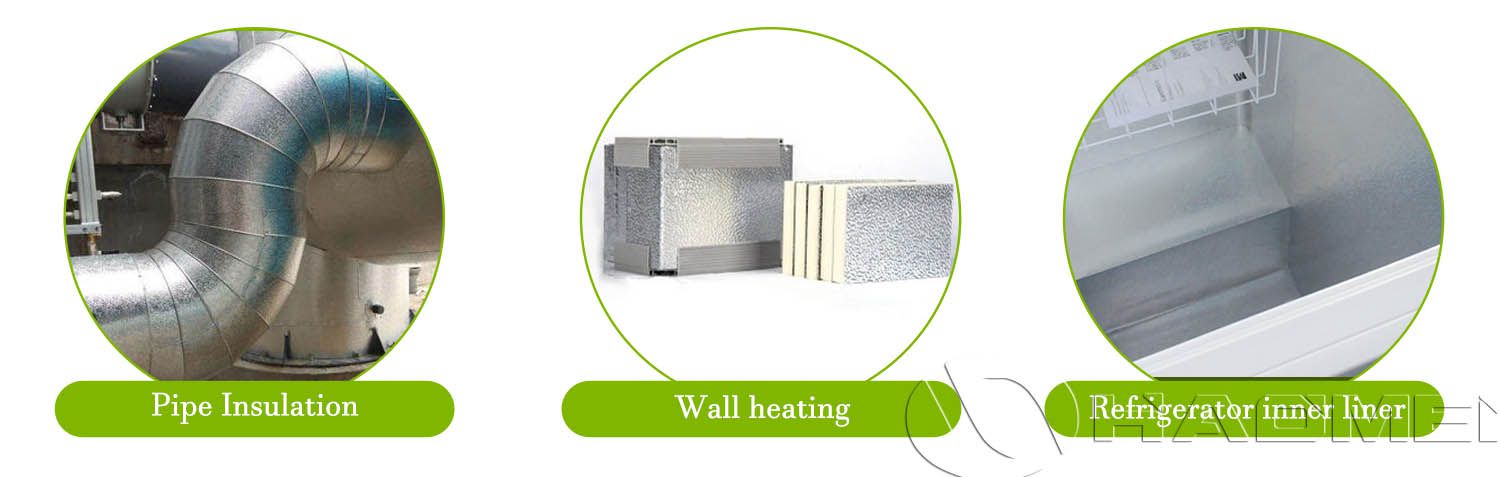
It is mainly used in refrigeration and heat-exchange industries, including refrigerators, air conditioners, and heat exchangers. Aluminum offers good thermal conductivity and a lower cost than copper. After embossing, the orange peel surface creates raised and recessed patterns that increase surface area and heat-transfer area, making it widely used in refrigeration applications.
In addition, the embossed texture reduces surface reflectivity and glare. Therefore, orange peel aluminum sheet is also widely used for corrosion protection and thermal insulation of equipment and pipelines where low reflectivity is required. Common thicknesses for insulation applications range from 0.3 mm to 1.0 mm, and are used in equipment rooms, machinery, pipes, and other insulation systems.
HAOMEI Aluminum has specialized in aluminum sheet production for more than 30 years. We offer embossed aluminum sheets in a variety of specifications and alloy grades, with customized solutions available for the requirements of different industries.
Features of Orange Peel Embossed Aluminum Sheet
Excellent Slip Resistance
The uniform orange peel texture significantly increases the surface friction coefficient and helps prevent slipping. Test data indicate that its static friction coefficient can reach 0.5–0.7, more than 60% higher than that of smooth aluminum coil. It provides reliable anti-slip performance in both dry and wet conditions.
Diffuse Reflection and Heat Dissipation
The orange peel texture creates diffuse reflection, effectively reducing harsh mirror-like glare and producing a soft matte visual effect. The embossing process also increases the surface area, helping improve heat transfer and heat dissipation. This makes it an ideal material for refrigeration and heat-exchange equipment.
Corrosion Resistance and Durability
The naturally formed oxide film on aluminum alloy provides good weather resistance and corrosion resistance. After anodizing, its resistance to acid rain corrosion can even exceed that of ordinary stainless steel. Protective coatings are stable, strongly adherent, impact-resistant, and resistant to peeling.
Lightweight and High Strength
Aluminum has a density of approximately 2.7 g/cm³, which is much lower than steel. The embossing process can also increase the effective thickness and strength of aluminum sheet to a certain extent. The thickness after embossing can increase by 0.1–0.25 mm, while tensile strength can improve by 10%–20% compared with smooth aluminum coil of the same specification.
Stain and Scratch Resistance
The raised and recessed texture naturally conceals fingerprints, minor scratches, and color variations. This improves appearance consistency and reduces maintenance costs. The surface is clean and glossy, and electro-oxidation treatment can help remove residual oil stains and fingerprints from handling.
Easy Fabrication
The material has good plasticity and can be bent, stamped, sheared, and welded to accommodate complex shapes. The pattern does not peel off or wear away during further processing, eliminating the need for an additional anti-slip coating.
Environmentally Friendly and Safe
Aluminum sheet is 100% recyclable and meets environmental requirements. It is non-toxic, safe, and environmentally friendly.
Product Specifications
| Item | Specification |
| Product Name | Orange Peel Embossed Aluminum Sheet |
| Alloy | 1050, 1060, 1070, 1100, 3003, 3004, 3105, 5052, etc. |
| Temper | O, H14, H16, H18, H24, H26, etc. |
| Thickness | 0.2–3.0 mm |
| Width | 100–1500 mm |
| Length | Customizable |
| Surface | Orange peel embossing |
| Surface Roughness, Ra | 3–10 μm |
| Processing Methods | Embossing, film lamination, anodizing, coating |
| Packaging | Standard export wooden pallet packaging |
MOQ
| 1-3 tons |
Common Alloy Grades and Their Characteristics
Orange peel embossed aluminum sheet is commonly made from high-quality 1000-series, 3000-series, or 5000-series aluminum alloys. These materials offer good formability, corrosion resistance, and strength to meet the needs of different applications.
| Alloy Grade | Main Characteristics | Common Applications |
| 1050 | High aluminum content, good formability, economical | General insulation, decoration, appliance back panels |
| 1060 | Good ductility, thermal conductivity, and processability | Insulation projects, cold-storage linings, decorative panels |
| 1100 | Good corrosion resistance and stable formability | General industrial equipment, decoration, and insulation |
| 3003 | Contains manganese; higher strength and corrosion resistance than 1xxx series | Cold storage, vehicle linings, insulation projects |
| 3004 | Higher strength; suitable for applications requiring certain load capacity and fabrication performance | Refrigeration equipment, construction, and industrial applications |
| 5052 | Excellent corrosion resistance and relatively high strength | Ships, vehicles, humid and coastal environments |
| 5754 | Good corrosion resistance, weldability, and formability | Transportation, marine applications, industrial protective panels |
Production Process of Orange Peel Embossed Aluminum Sheet
The quality of orange peel embossed aluminum sheet depends not only on the aluminum base material, but also on embossing equipment, roller precision, sheet-surface control, and subsequent treatment processes.
The standard production process generally includes:
Aluminum ingot casting → Hot rolling → Cold rolling → Annealing → Embossing → Leveling → Slitting / Cut-to-length → Inspection → Packaging
Embossing is the key process. Aluminum sheet is rolled through embossing rollers engraved with orange peel patterns, forming stable and evenly distributed raised and recessed textures on the sheet surface.
High-quality orange peel embossed aluminum sheet should have the following characteristics:
Clear, natural, and uniformly distributed patterns
Flat sheet surface without obvious waviness, dents, or creases
Stable thickness tolerances
Neat edges without severe burrs
No obvious oil stains, oxidation spots, scratches, or roller-mark defects
Neatly wound coils without telescoping, loose coiling, or edge damage
For customers with higher requirements for appearance, corrosion resistance, or weather resistance, further processing is available, including anodizing, color coating, film lamination, and anti-fingerprint treatment.
Customized Surface Treatments
1. Anodizing
Anodizing uses an electrochemical process to create a dense and thick aluminum oxide (Al₂O₃) protective layer on the surface of the aluminum sheet. Compared with the naturally formed oxide film, this artificial oxide layer provides superior corrosion resistance, surface hardness, and decorative performance.
It is widely used in high-end architectural curtain walls, electronic product housings, automotive interiors, and other applications.
2. Color Coating / Coil Coating
One or more layers of high-performance polyester (PE) or polyvinylidene fluoride (PVDF) coatings are applied to the substrate by roller coating and then cured at high temperatures.
This process provides excellent corrosion resistance and weather resistance. PVDF coatings can resist fading and peeling for decades under outdoor ultraviolet exposure. A broad range of custom colors is also available to meet different architectural and product design requirements.
Applications of Orange-Peel Patterned Aluminum Sheets
Refrigeration and heat exchange equipment: Refrigerator liners and back panels, freezer side panels, air conditioner outdoor unit casings, condensers, evaporator fins, etc.
Pipeline and equipment insulation: Insulation projects for pipelines and tanks in industries such as petroleum, chemicals, and power generation.
Architectural decoration: Stair treads, curtain wall cladding, elevator car interiors, flooring and wall surfacing in public areas, and decorative ceiling panels for high-end office buildings, luxury hotels, and upscale residences.
Transportation: Bus steps, flooring for rail transit, cabin interior panels for ships and yachts, RV interior flooring, and anti-slip flooring for transit platforms.
Electronic devices: Casings for laptops, mobile phones, tablets, and other devices.
Home and consumer use: Kitchen countertops, bathroom partitions, decorative furniture panels, cabinetry, lighting fixtures, commercial display booth construction, etc.
Industrial equipment: Machinery casings, control panels, instrument operation panels, etc.
Difference Between Orange Peel Embossed Aluminum Sheet and Other Patterned Aluminum Sheets
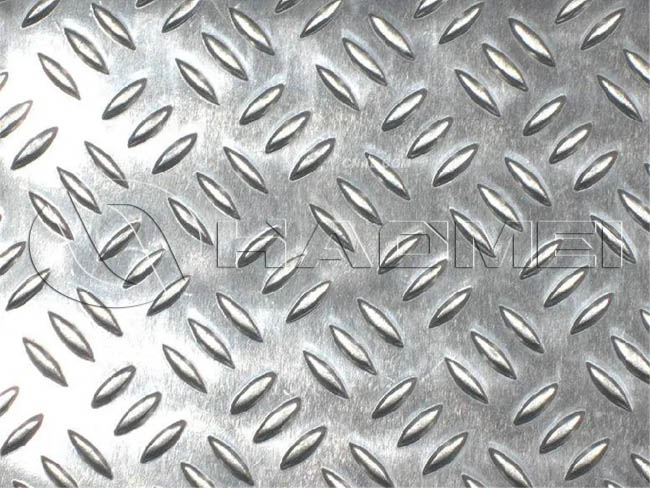
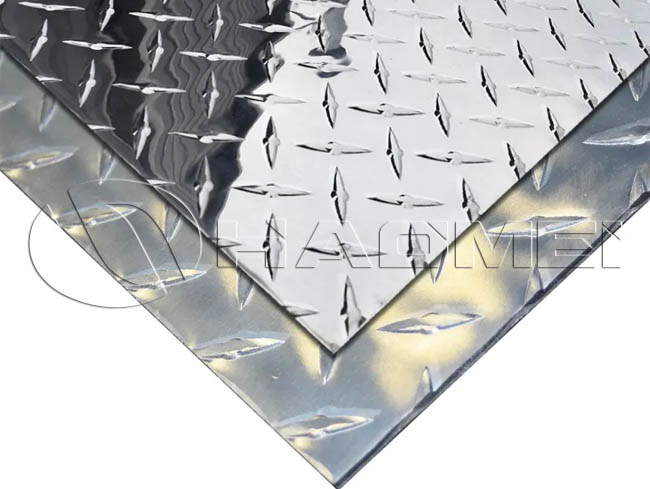
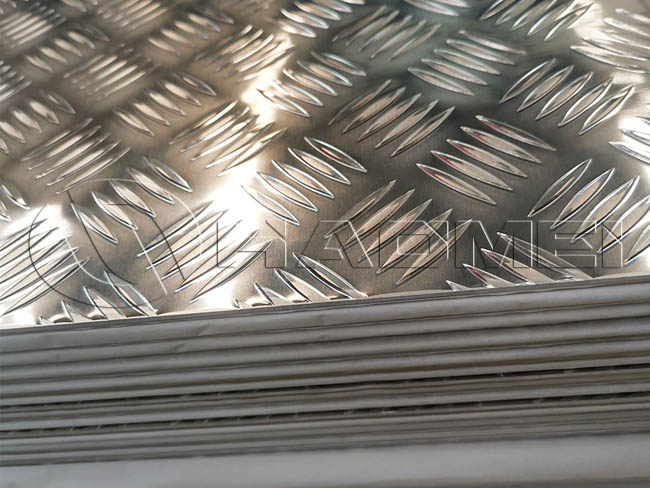
In addition to orange peel patterns, commonly available embossed aluminum sheets include five-bar tread, three-bar tread, pointer pattern, diamond pattern, and willow-leaf pattern sheets.
Compared with five-bar aluminum tread plate, orange peel embossed aluminum sheet has a finer pattern and stronger decorative effect. It is commonly used for insulation, cold storage, home appliances, and interior applications. Five-bar aluminum tread plate has a more pronounced pattern and places greater emphasis on load-bearing capacity and slip resistance, making it more suitable for flooring, stair treads, vehicle compartments, and industrial platforms.
In simple terms:
Orange peel embossed aluminum sheet: Best suited for decoration, insulation, cold storage, and light- to medium-duty anti-slip applications.
Five-bar aluminum tread plate: Best suited for floors, walkways, stair treads, and industrial applications requiring strong slip resistance.
Color-coated embossed aluminum sheet: Best suited for architectural decoration, appliance housings, and products with high visual-design requirements.
FAQ
Q1: What alloys are commonly used for orange peel embossed aluminum sheet?
A: Common alloys include 1050, 1060, 1100, 3003, 3004, 3105, and 5052. Among them, 3003 is the most widely used alloy for insulation projects.
Q2: Can the dimensions be customized?
A: Yes. We can customize thickness, width, length, and embossing patterns according to customer requirements.
Q3: Is orange peel embossed aluminum sheet suitable for outdoor use?
A: Yes. Aluminum offers excellent corrosion resistance. After anodizing or coating treatment, its weather resistance is further improved, making it highly suitable for outdoor construction and insulation projects.
Q4: What surface treatments are available?
A: Available treatments include mill-finish embossing, anodizing, color coating, PE/PVDF coating, film lamination, and more.
Q5: Do you provide samples?
A: Yes. We can provide samples for customers to evaluate material quality, surface finish, and fabrication performance before confirming that the product meets project requirements.