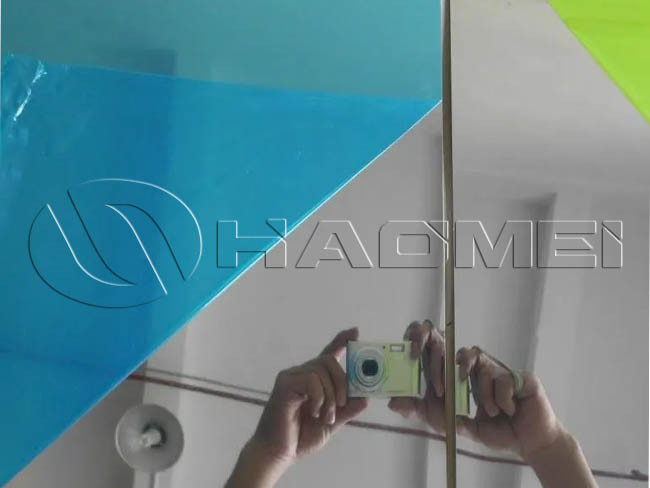
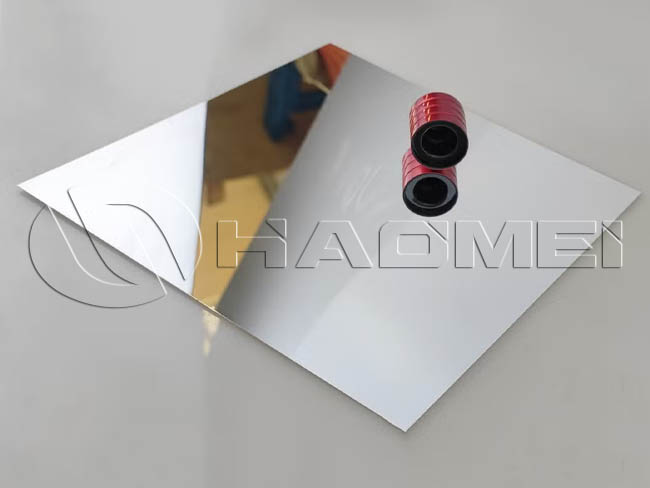
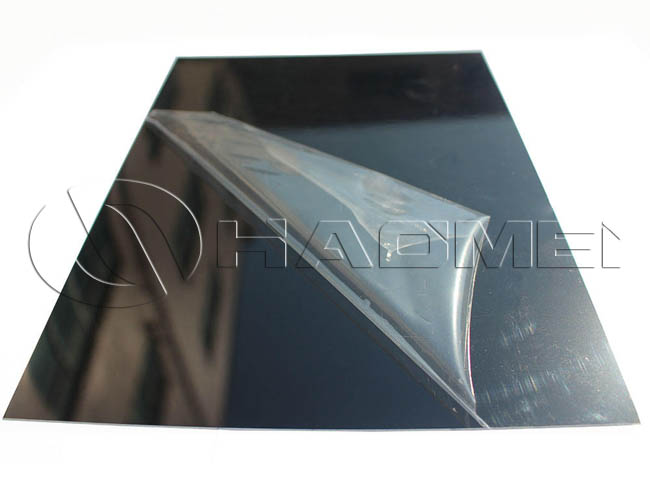
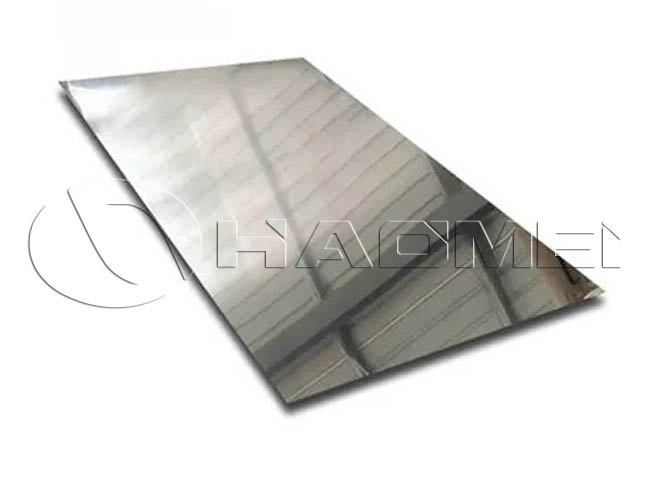
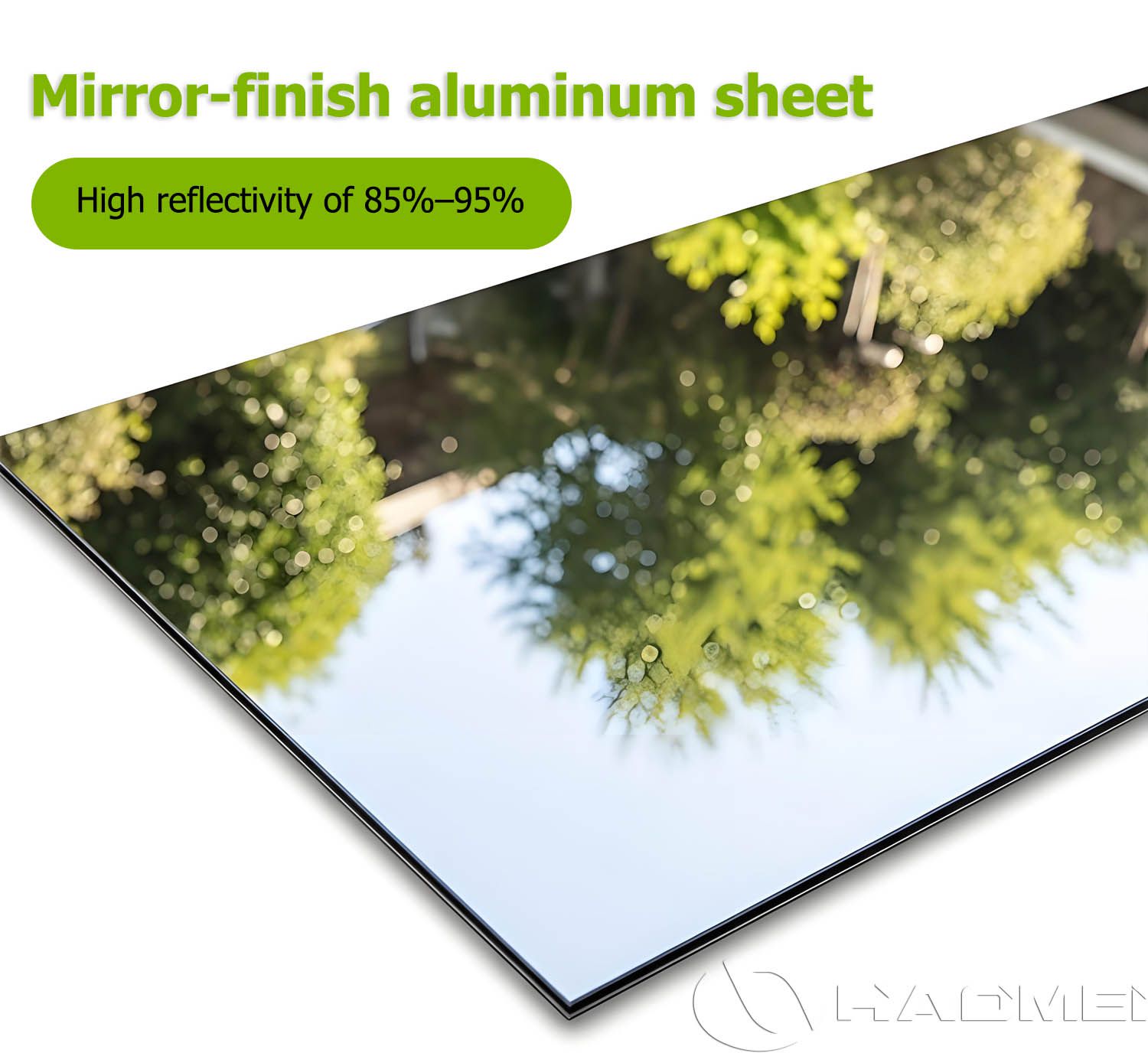
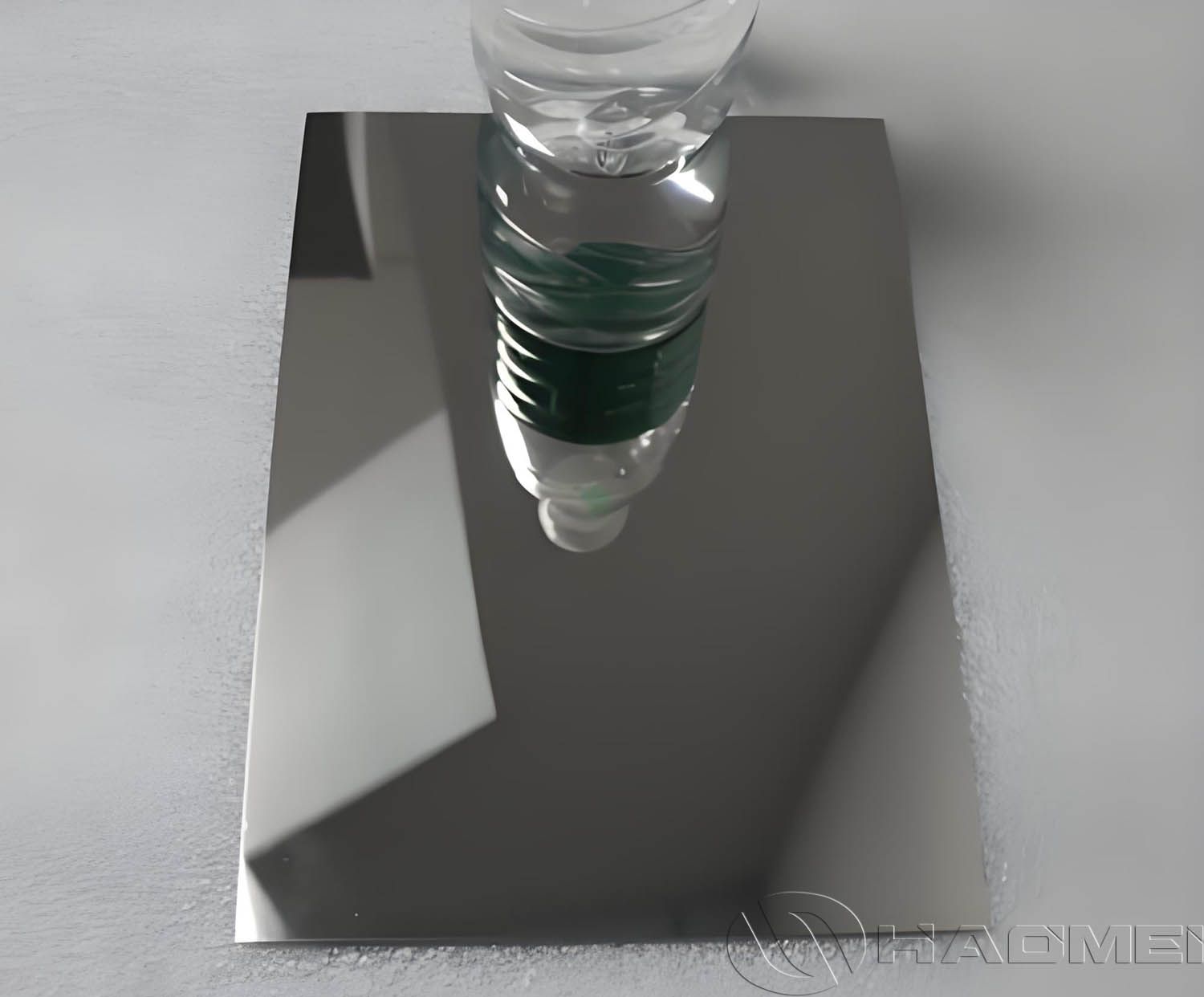
1050 mirror aluminum sheet is made from 1050 aluminum sheet or coil as the base material. Through mirror rolling, mechanical polishing, chemical polishing, electrochemical polishing, or other surface finishing processes, the aluminum surface achieves high gloss and excellent reflective performance.
1050 aluminum alloy belongs to the 1000 series of industrial pure aluminum. Its aluminum content is generally no less than 99.5%, so it is also commonly referred to as pure aluminum sheet or high-purity aluminum sheet. Due to its low alloying element content, 1050 aluminum retains the excellent ductility, thermal conductivity, electrical conductivity, and corrosion resistance of aluminum itself. It is particularly suitable for mirror finishing, embossing, brushing, bending, stamping, and film laminating.
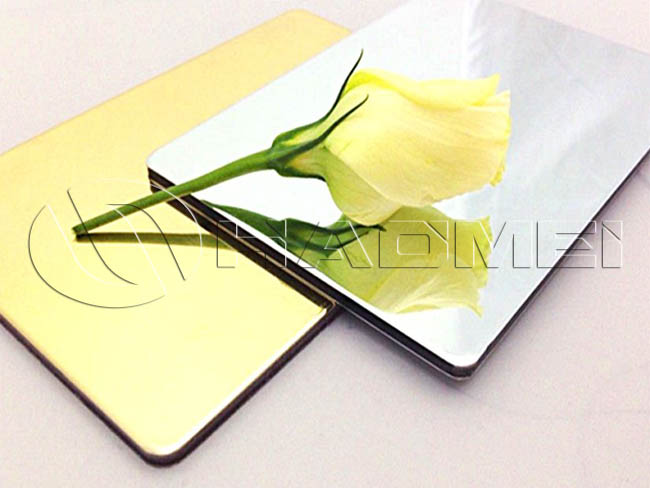
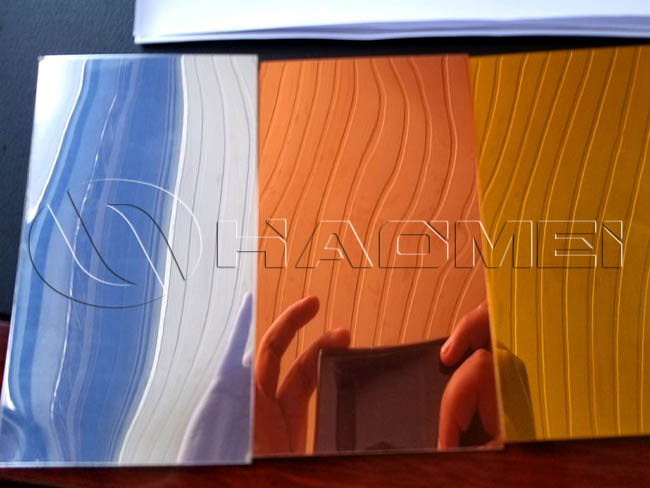
In appearance, 1050 mirror aluminum sheets usually present a silver-white, bright silver, or high-gloss metallic finish. Depending on the surface process and application requirements, the products can be divided into standard mirror aluminum sheets, high-reflectivity mirror aluminum sheets, anodized mirror aluminum sheets, colored mirror aluminum sheets, embossed mirror aluminum sheets, and film-laminated mirror aluminum sheets.
Characteristics of 1050 Aluminum Alloy
1050 aluminum alloy is a typical industrial pure aluminum material with the following characteristics:
Aluminum content generally not less than 99.5%
Low density, weighing approximately one-third as much as steel
Excellent ductility and plasticity
Good formability, stamping performance, and bendability
Resistance to atmospheric corrosion and general environmental corrosion
Good thermal and electrical conductivity
Easy to polish, anodize, coat, and laminate
Cannot be strengthened by heat treatment; strength is usually adjusted through strain hardening
Relatively low strength, making it more suitable for decorative and general functional applications
1050 Mirror Aluminum Sheet Specifications
| Item | Parameter |
| Alloy | 1050 |
| Temper | O, H14, H16, H18, H24 |
| Thickness | 0.20–3.00 mm |
| Width | 100–1500 mm, customizable |
| Length | Customized according to customer requirements |
| Surface Treatment | High-reflectivity mirror finish, anodizing, anti-oxidation, anti-fingerprint treatment |
| Reflectivity | 85%–95%, depending on the process |
| Protective Film | Single-sided or double-sided protective film |
| MOQ | 3 tons |
Product Features of 1050 Mirror Aluminum Sheet
1. High Reflectivity
The total reflectance of 1050 mirror aluminum sheet can reach approximately 86%. High-end 1050 mirror aluminum products can achieve a reflectivity of over 95%. This helps improve the luminous efficiency and brightness of lighting fixtures while providing more uniform light distribution.
2. Lightweight and Easy Installation
Aluminum has a density of approximately 2.71 g/cm³ and weighs only about one-third as much as stainless steel. This significantly reduces transportation costs and installation difficulty. It is especially suitable for weight-sensitive applications such as lighting fixtures, electronic enclosures, and automotive interior trim.
3. Corrosion Resistance
Aluminum naturally forms a dense oxide film in air, which effectively prevents further corrosion. After anodizing, the corrosion resistance of 1050 mirror aluminum sheet is further improved. It can withstand more than 167 hours in a 5% NaCl salt spray test without corrosion.
4. Good Processability
1050 mirror aluminum sheet offers excellent plasticity and ductility. It can be processed by shearing, punching, bending, rolling, embossing, drawing, riveting, bonding, and composite processing.
5. Excellent Thermal Conductivity
1050 aluminum has good thermal conductivity and can rapidly transfer heat. When used in LED lighting fixtures and lamp reflectors, it can improve heat dissipation efficiency while maintaining an attractive appearance.
6. Suitable for Anodizing
Due to its high purity, 1050 aluminum is highly suitable for stable, high-quality anodizing treatments. Processes such as chemical polishing, matte finishing, chemical sandblasting, electropolishing, dyeing, and sealing can all be applied.
7. Cost-Effective
Because 1050 aluminum contains few additional alloying elements, its production process is relatively simple and its price is comparatively economical. It is one of the most widely used aluminum series in conventional industry.
8. Environmentally Friendly and Recyclable
1050 aluminum is a green and environmentally friendly material that is 100% recyclable. Its material properties are barely reduced during recycling, meeting modern requirements for energy conservation, environmental protection, and sustainable development.
Common Tempers of 1050 Mirror Aluminum Sheet
Different tempers can be selected based on subsequent processing methods, strength requirements, and application scenarios.
| Temper | Characteristics | Common Applications |
| O | Fully annealed soft temper with the best ductility; easy for deep drawing, bending, and stretching | Lighting fixtures, deep-drawn parts, complex decorative components |
| H12 | Light strain-hardening with slightly improved strength | Standard decorative sheets and bent parts |
| H14 | Half-hard temper, balancing strength and workability | Home appliance panels, signage, ceilings, decorative sheets |
| H16 | Higher hardness and strength | General industrial panels and components requiring good flatness |
| H18 | Hard temper with high strength but lower ductility | Flat products with limited forming requirements |
In actual material selection, O, H12, or H14 tempers are generally recommended for products requiring repeated bending, stamping, or drawing. If greater stiffness, flatness, and deformation resistance are required, H14, H16, or H18 tempers may be selected.
Common Surface Types of 1050 Mirror Aluminum Sheet
Standard Mirror Aluminum Sheet
Standard mirror 1050 aluminum sheet is generally produced through mirror rolling or polishing processes. It has a certain degree of gloss and reflective performance and is suitable for general decoration, advertising signage, home appliance decorative components, and reflective parts.
High-Reflectivity Mirror Aluminum Sheet
High-reflectivity mirror aluminum sheet has higher requirements for substrate surface quality, rolling precision, and finishing processes. Its reflectivity, flatness, and surface uniformity are generally superior to those of standard mirror sheets.
It is commonly used in lighting reflectors, LED reflective panels, solar reflective components, and products requiring enhanced optical performance. Specific reflective properties should be confirmed according to visible light reflectance, specular reflectance, color difference, and surface inspection standards.
Anodized Mirror Aluminum Sheet
Anodizing is a process that forms a stable oxide film on the aluminum surface. After anodizing, the surface hardness, corrosion resistance, stain resistance, and color stability of 1050 mirror aluminum sheet can be improved.
Common colors for anodized mirror aluminum sheets include silver, champagne, gold, black, bronze, and rose gold. These sheets are suitable for high-end decoration, home appliance panels, lighting fixtures, door and window accessories, and commercial interior design.
Color-Coated Mirror Aluminum Sheet
Color-coated mirror aluminum sheet is produced by roller coating, spray coating, or film laminating on a mirror-finished substrate, providing a wide range of color options. Colors can be customized according to RAL color charts, Pantone color charts, or physical samples.
Color-coated mirror sheets are commonly used for architectural decoration, advertising displays, home appliance housings, cabinet panels, ceiling systems, and interior wall applications.
Film-Laminated Mirror Aluminum Sheet
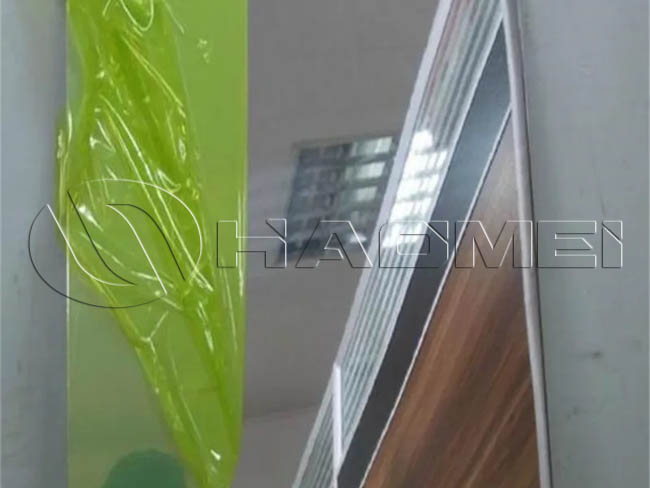
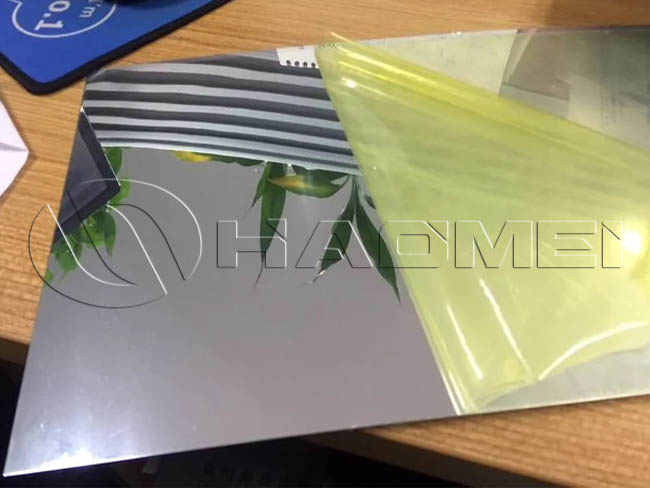
To protect mirror aluminum sheets from scratches during transportation, storage, and processing, PE protective film, PVC protective film, or laser protective film can be applied to the surface.
Protective film is particularly important for high-gloss mirror sheets, colored anodized sheets, and products requiring subsequent stamping or bending. Customers can select protective films with different thicknesses, adhesion levels, and temperature resistance properties according to processing requirements.
Applications of 1050 Polished Mirror Aluminum Sheet
Lighting: Lamp reflectors, lamp shades, LED reflective panels, grille light trays, and other lighting components.
Solar Energy: Solar thermal reflective materials, solar water heater reflector sheets, and related components.
Architectural Decoration: Interior ceilings, wall decoration, exterior wall cladding, elevator cabins, and more.
Home Appliances: Refrigerator panels, disinfection cabinet panels, electric heater reflectors, kitchen furniture, and more.
Electronics: Laptop housings, electronic product panels, heat sinks, and related components.
Automotive Interior and Exterior Decoration: Automotive interior panels, decorative strips, and trim components.
Signs and Nameplates: Signs, nameplates, luggage accessories, jewelry boxes, and more.
Daily Consumer Products: Cosmetic packaging materials, watch dials, and other decorative products.
Chemical Equipment: Chemical containers, heat exchangers, and other equipment requiring good corrosion resistance and formability but not high mechanical strength.