- Home
- Application
-
Aluminum Plate for Automotive Battery Trays
Email:sales@alummc.com
WhatsApp:+86-18703635966
Get a quotation -
Products
Email:sales@alummc.com
WhatsApp:+86-18703635966
Get a quotationProducts
With the rapid development of the new energy vehicle industry, the power battery pack has become the core power system of electric vehicles. Its safety, driving range, and service life directly affect the competitiveness of the entire vehicle.
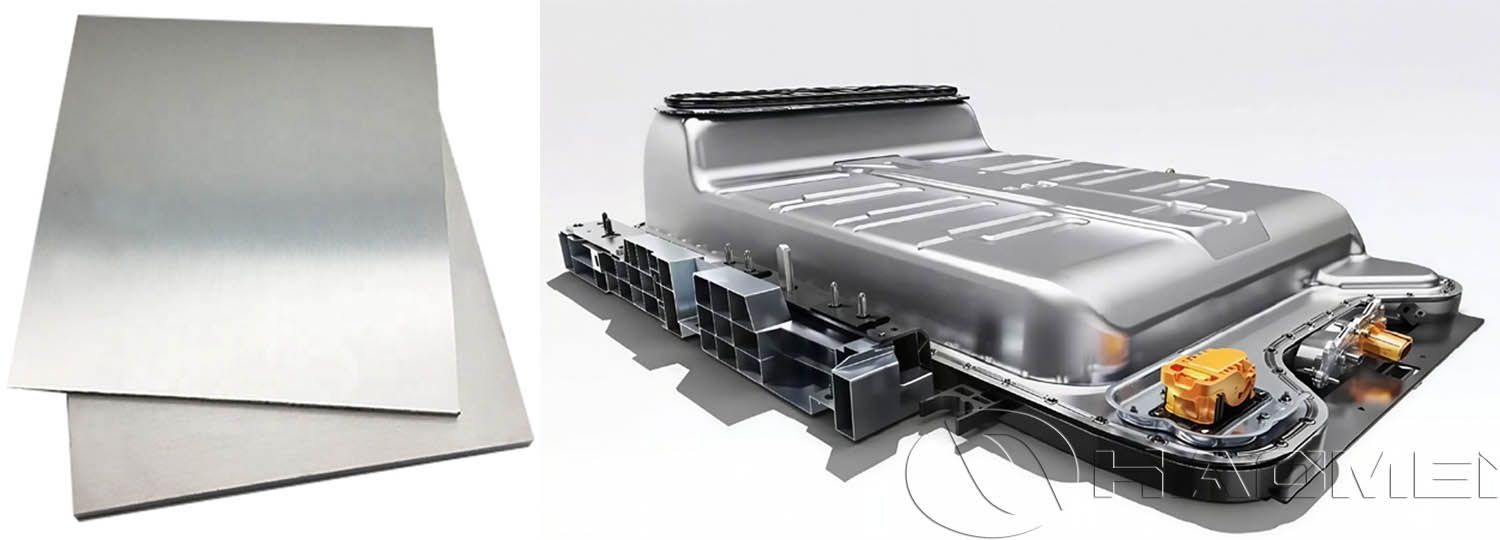
The battery tray serves as the protective foundation of the battery pack. It supports hundreds of kilograms of battery cells, resists road impacts, prevents moisture and corrosion from entering the battery system, and assists with thermal management.
In the past, steel battery trays were widely used. However, steel trays are heavy and susceptible to corrosion, limiting vehicle lightweighting and driving-range improvement. Aluminum alloy plates have become a mainstream material for EV battery trays because of their comprehensive advantages: low density, high strength, excellent heat dissipation, corrosion resistance, and good weldability.
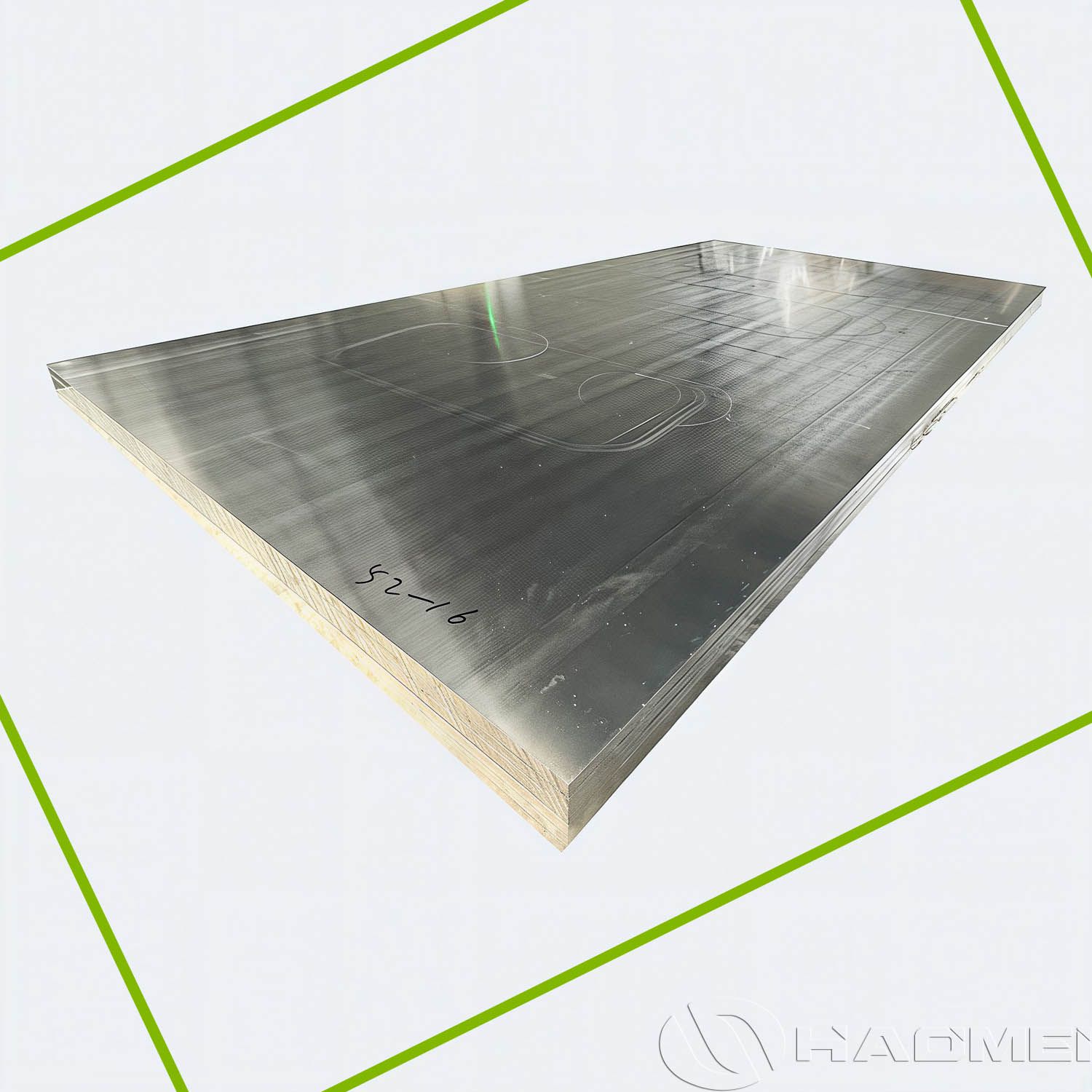
Installed at the bottom of the vehicle body, the battery tray is a critical chassis structural component. It must perform several functions simultaneously:
1.Load Bearing and Support
The battery tray secures battery modules, cooling pipes, high-voltage components, and other systems. It must withstand continuous loads caused by full vehicle weight, vibration, and road impacts during driving.
2.Collision Protection
During underbody impacts, bottoming-out events, or side collisions, the battery tray absorbs impact energy and prevents hard objects from penetrating into battery cells. This helps avoid cell compression, damage, and thermal runaway risks.
3.Sealing and Environmental Protection
Combined with sealants and welding processes, battery trays can achieve IP67 or IP68 protection ratings. They prevent rainwater, mud, dust, road salt, and other contaminants from entering the internal battery system.
4.Heat Transfer and Thermal Management
The tray bottom plate can also serve as a heat-dissipation base. It transfers heat generated during battery charging and discharging to the cooling plate or external environment, helping maintain a stable operating temperature for battery cells.
5.Lightweighting and Driving Range Improvement
Reducing battery pack weight can lower vehicle energy consumption and improve driving range without increasing battery capacity. It can also reduce the load on the suspension and chassis systems.
Steel trays have high density, limited lightweighting potential, and may corrode after long-term use. Composite battery trays are costly, have relatively poor thermal conductivity, and are difficult to repair. Therefore, aluminum alloy plates have become a preferred solution for vehicle manufacturers and Tier 1 suppliers.
6061 Aluminum Sheet
6061 is a heat-treatable Al-Mg-Si series aluminum alloy. It offers a good balance of strength, corrosion resistance, and processing performance.
After appropriate heat treatment, it can be used for battery tray structural components and reinforcing parts with relatively high load-bearing requirements. Common tempers include T6 and T651. When selecting 6061 aluminum plate, changes in the properties of the heat-affected zone after welding should be considered.
5052 Aluminum Sheet
5052 is a non-heat-treatable Al-Mg series aluminum alloy. It provides excellent corrosion resistance, formability, and welding performance.
It is suitable for battery tray components requiring stamping, bending, or welding. It performs well in humid environments. Its final load-bearing capacity should be determined according to sheet thickness, temper, and structural design.
5754 Aluminum Sheet
5754 is an Al-Mg series aluminum alloy with good corrosion resistance, weldability, and formability. It is suitable for automotive structural components and aluminum parts requiring complex forming.
In battery tray manufacturing, 5754 can be used for bottom plates, side panels, and other structural components according to design requirements.
6082 Aluminum Sheet
6082 is an Al-Mg-Si series aluminum alloy offering good structural strength and corrosion resistance. It is suitable for certain load-bearing structures and components requiring higher strength.
Its actual use should be evaluated based on forming complexity, joining method, and heat-treatment requirements.
Alloy Grade | Temper | Thickness (mm) | Width (mm) | Length (mm) | Typical Mechanical Properties | Main Applications |
| 6005A | T6 / T5 | 3.0-12.0 | 1250, 1500, 1800, 2000 | 2500-16000 | Tensile strength ≥260 MPa; yield strength ≥215 MPa | Main tray bottom plates, large frame panels, integrated welded battery trays |
| 6061 | T6 | 2.0-15.0 | 1220, 1500, 1800 | 2500-16000 | Tensile strength ≥290 MPa; yield strength ≥240 MPa; elongation δ5 ≥14% | Modular battery trays, reinforcement plates, mounting and connection plates |
| 5052 | H32 / H34 | 1.5-8.0 | 1250, 1500 | 2500-16000 | H32: tensile strength 210–260 MPa; yield strength ≥130 MPa | Tray covers, sealing covers, thin bottom protection plates |
| 5083 | H111 / H321 | 3.0-10.0 | 1500, 1800 | 2500-16000 | H111: tensile strength ≥270 MPa; yield strength ≥110 MPa | Battery protection trays for commercial vehicles, heavy trucks, and off-road chassis |
1. Significant Lightweighting for Improved Driving Range
Aluminum alloys have a density of approximately 2.7 g/cm³, about one-third that of steel. Compared with steel tray solutions, aluminum battery trays can reduce the overall battery pack weight by approximately 30%–50%.
Lower vehicle weight reduces energy consumption and can effectively improve driving range at the same battery capacity. It also reduces the load on the suspension and chassis.
2. Excellent Thermal Conductivity for Reduced Thermal Runaway Risk
The thermal conductivity of aluminum can reach approximately 120–180 W/(m·K), around four times higher than that of steel.
Heat generated during battery charging and discharging can be rapidly transferred through the aluminum bottom plate to the liquid cooling plate or the external environment. This helps equalize battery module temperatures, reduce localized overheating, improve battery safety, and extend cycle life.
3. Strong Corrosion Resistance for Complex Road Conditions
Aluminum naturally forms a dense oxide film in air, preventing further corrosion of the base metal. When combined with passivation or anti-corrosion coating treatments, aluminum battery trays can resist rain, humidity, coastal salt spray, and de-icing salts used on winter roads.
This improves long-term corrosion resistance, supports reliable battery pack sealing, and extends the service life of the vehicle.
4. Good Formability and Weldability for Mass Production
Battery trays are large, thin-wall structural components that require bending, stamping, and welded assembly. Aluminum alloys from the 5xxx and 6xxx series offer good plasticity and can be formed into complex structures.
They are also compatible with advanced joining processes such as friction stir welding (FSW) and laser welding. These processes can produce dense welds with good sealing performance, reducing leakage risks and supporting high-volume automated production.
5. Good Energy Absorption for Collision Safety
Under impact, aluminum structures can undergo controlled plastic deformation to absorb collision energy. This helps prevent rigid impacts from being directly transmitted to battery cells and supports compliance with power battery safety requirements, including relevant requirements under GB 38031.
Battery Tray Bottom Plate
The bottom plate supports battery modules and related components while forming an important part of the underbody protection structure of the battery pack.
The material should provide suitable stiffness, dimensional stability, and corrosion resistance. It must also be compatible with the bottom protection and sealing design of the battery pack.
Tray Side Panels and Peripheral Beams
Side panels and edge beams form the perimeter structure of the battery tray and contribute to load bearing, positioning, and connection.
Material selection should balance structural strength, welding performance, and assembly accuracy in order to meet vehicle packaging requirements and structural safety standards.
Cross Beams and Internal Reinforcement Structures
Cross beams and reinforcement components improve the overall stiffness of the battery tray, distribute localized loads, and help control vibration and deformation.
Depending on the structural design, these components may use formed aluminum plate parts, aluminum extrusions, or combined aluminum structures.
Thermal Management and Integrated Structures
In suitable battery pack designs, aluminum alloy structures can be integrated with liquid cooling plates, thermal conductive components, and mounting brackets.
The alloy grade, joining method, and sealing solution should be selected according to the operating conditions and technical requirements of the cooling system.
WELCOME TO CONTACT US
Your information is for contact only and will not be shared with any third party.