- Home
- Application
-
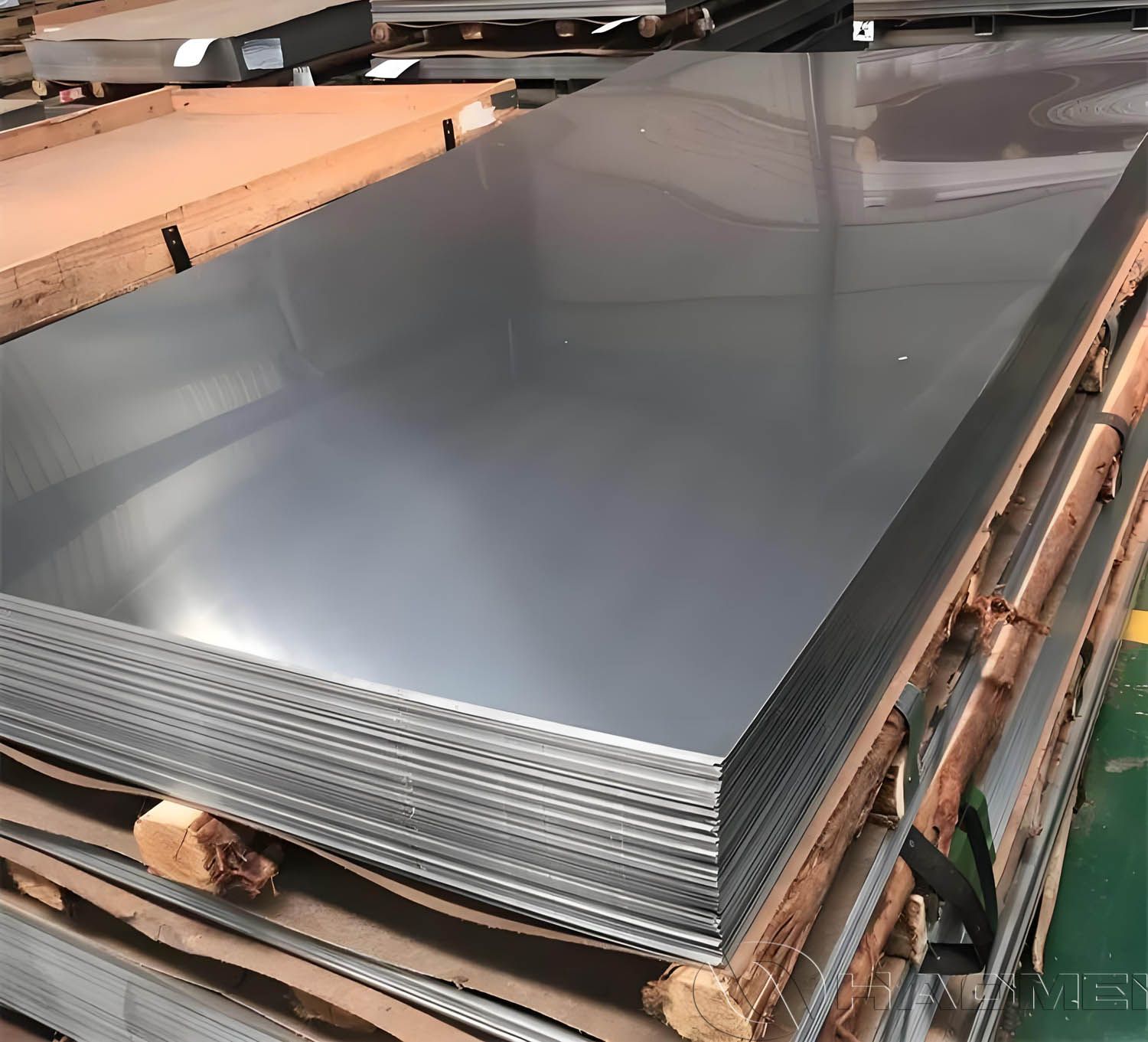
Aluminum Plate for Mold Making
Email:sales@alummc.com
WhatsApp:+86-18703635966
Get a quotation -
Products
Email:sales@alummc.com
WhatsApp:+86-18703635966
Get a quotationProducts
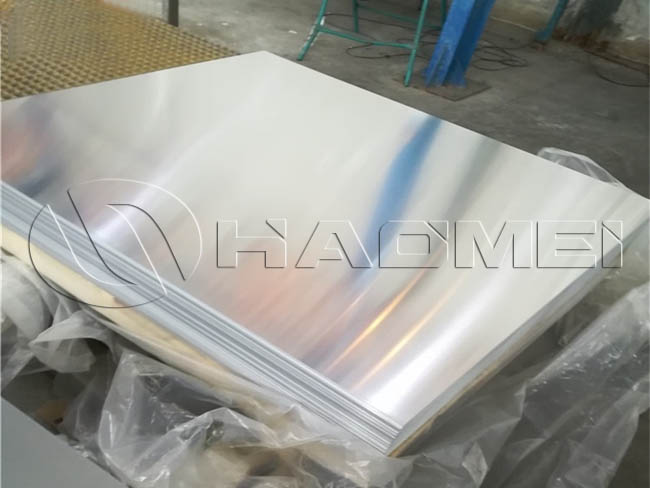
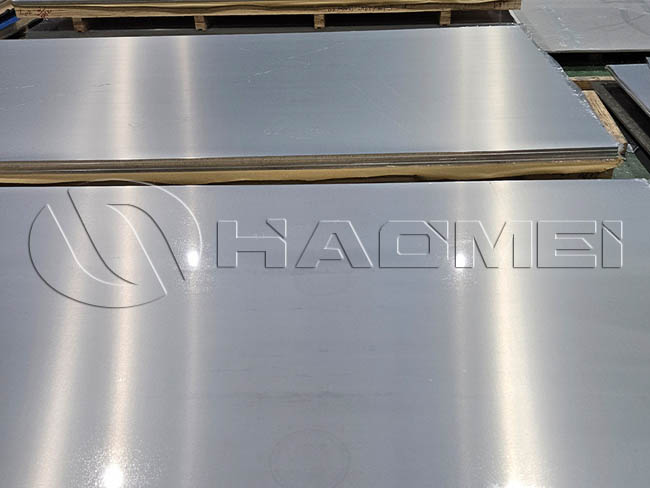
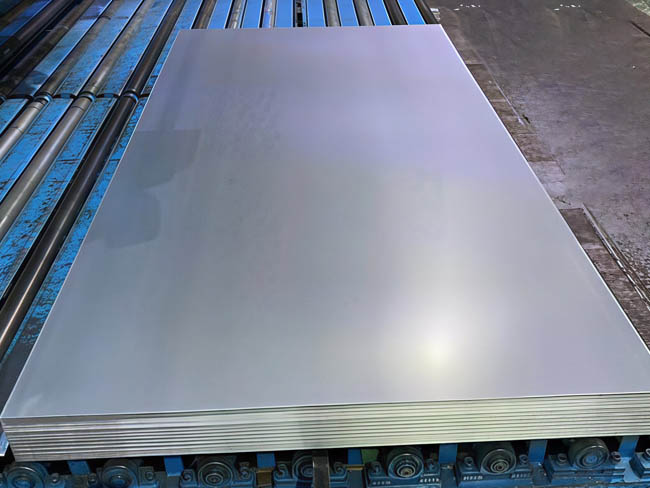
Aluminum plates used for molds require high material performance, including good mechanical strength, practical durability, and outstanding processing properties. During mold manufacturing, aluminum plates must provide sufficient strength and good heat-treatability so that hardness, strength, and operational stability can be further improved through heat treatment.
Based on mold manufacturing requirements, the most suitable aluminum alloys among the 1xxx–8xxx series are medium-hardness 5xxx and 6xxx series alloys, as well as higher-hardness 2xxx and 7xxx series alloys. Common grades include 5083, 5052, 6061, and 7075 aluminum sheets.
These materials are suitable for manufacturing aircraft components, gears, shafts, turbines, keys, and other precision parts, as well as structural components for trucks, tower structures, ships, and other applications requiring strength and corrosion resistance.
6061 aluminum alloy is the most widely used general-purpose material in the mold-making industry. Its primary alloying elements are magnesium and silicon, and it can be strengthened through heat treatment. In the 6061-T6 temper, it exhibits a tensile strength of approximately 310 MPa, a yield strength of about 275 MPa, and a hardness of roughly 95 HB. This level of strength is sufficient to meet the load-bearing requirements of most injection molds and thermoforming molds, while offering excellent machinability and dimensional stability. Another advantage of 6061 is its superior weldability, which facilitates the repair and modification of molds. For small-to-medium-sized injection molds, blow molds, vacuum thermoforming molds, and tooling fixtures, 6061 represents the most cost-effective choice.
6082 aluminum alloy is similar in performance to 6061 but offers slightly higher strength, with a tensile strength reaching up to 340 MPa. It possesses better corrosion resistance than 6061 and is commonly used in the European mold-making industry. For mold components that require a higher load-bearing capacity, 6082 is a viable alternative worth considering.
7075 aluminum alloy is a high-strength option among aluminum mold plates. With zinc as its primary alloying element, 7075-T6 achieves a tensile strength of up to 570 MPa, a yield strength of approximately 505 MPa, and a hardness of about 150 HB—mechanical properties that approach those of some low-carbon steels. 7075 offers distinct advantages in applications requiring high rigidity and wear resistance, such as high-pressure injection molds, clamping sections of blow molds, and tooling used in the aerospace sector. However, its machinability is slightly inferior to that of 6061, its weldability is poor, and it comes at a higher cost; consequently, it is typically used for critical load-bearing components rather than for entire molds.
5083 aluminum alloy belongs to the 5xxx series (aluminum-magnesium alloys). While it cannot be strengthened through heat treatment, it offers exceptional corrosion resistance and excellent weldability. In the field of molds, 5083 is primarily used for specialized applications requiring corrosion resistance or low-temperature toughness, such as base plates for foaming molds or tooling intended for use in refrigerated environments.
| Item | Specification |
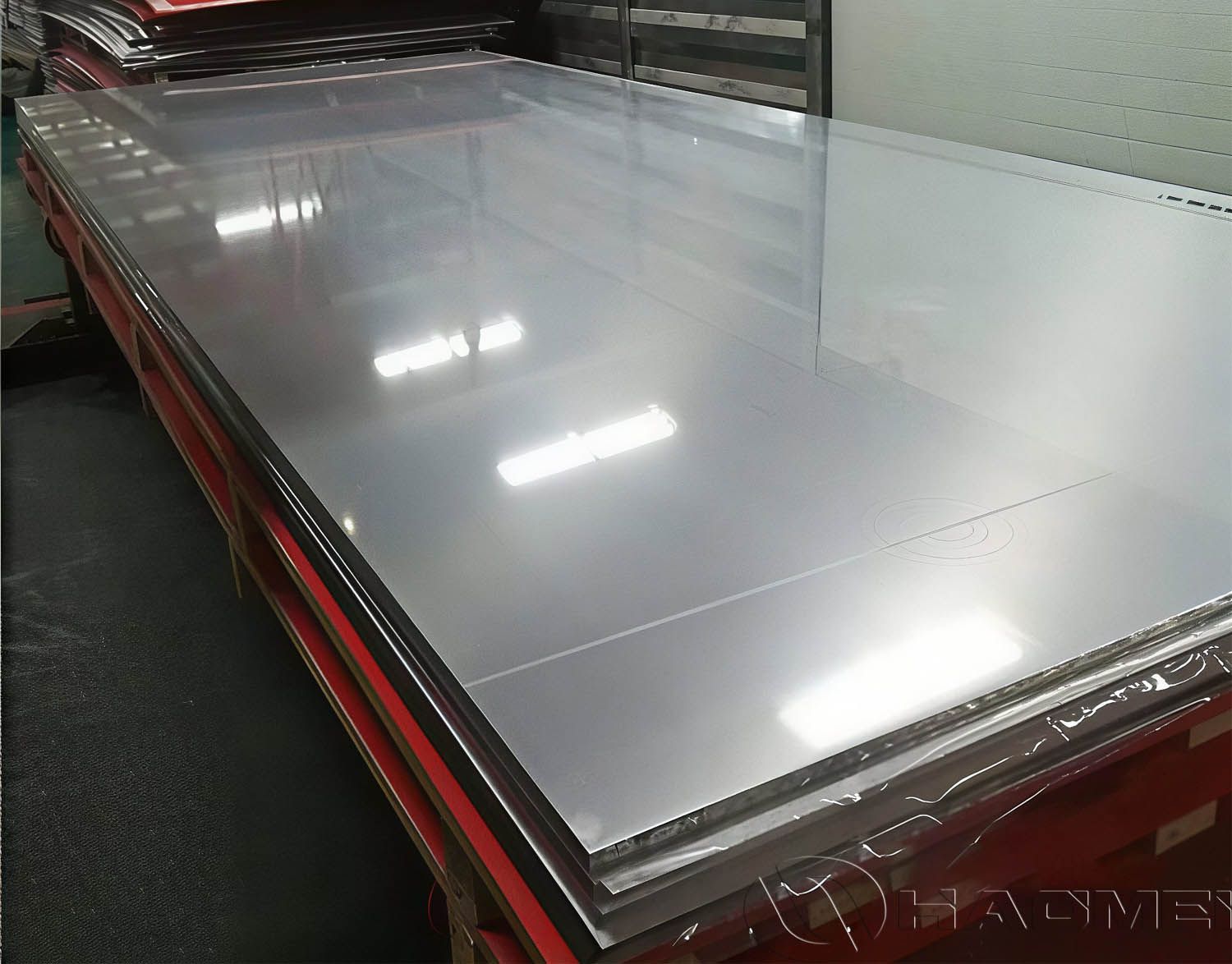
| Alloy | 5083, 6061, 6082, 7075 |
| Thickness | 6–300 mm |
| Width | 100–2650 mm |
| Length | 1000–16000 mm |
| Thickness Tolerance | ±0.1–±0.3 mm |
| Surface Quality | Free from porosity, sand holes, inclusions, peeling, and deep scratches; precision-milled or ground surface available to reduce subsequent polishing work |
| Internal Quality | Ultrasonic testing available; free from delamination and shrinkage cavities to prevent internal defects from being exposed during machining |
| MOQ | 1–3 tons |
| Alloy Grade | 6061 | 6082 | 7075 | 5083 | 2024 |
| Alloy Series | 6xxx | 6xxx | 7xxx | 5xxx | 2xxx |
| Typical Temper | T6 | T6 | T6 | H32 | T4 |
| Tensile Strength / MPa | ≥310 | ≥340 | ≥570 | ≥270 | ≥470 |
| Yield Strength / MPa | ≥275 | ≥310 | ≥505 | ≥200 | ≥325 |
| Hardness / HB | 95 | 100 | 150 | 75 | 120 |
| Thermal Conductivity / W·m⁻¹·K⁻¹ | 167 | 170 | 130 | 117 | 121 |
| Machinability | Excellent | Good | Moderate | Good | Good |
| Weldability | Excellent | Good | Poor | Excellent | Poor |
| Relative Cost | Medium | Medium-High | High | Medium-High | High |
| Typical Applications | General injection molds, thermoforming molds | Structural molds, load-bearing molds | High-pressure injection molds, heavy-duty tooling | Foam molds, corrosion-resistant tooling | Aerospace tooling, high-strength structures |
1. Lightweight Material
The density of aluminum is only about one-third that of mold steel. Aluminum mold plates reduce mold weight, simplify lifting, installation, and removal, and reduce the load on injection molding machines. This makes them especially suitable for large molds and tooling systems.
2. Excellent Thermal Conductivity
The thermal conductivity of aluminum is much higher than that of mold steel. Heat can be dissipated more uniformly, reducing the cooling cycle of plastic parts by approximately 20% to 60%.
Faster cooling helps reduce shrinkage, warping, and deformation of molded products while improving production efficiency. This is one of the major advantages of aluminum in thermoforming and blow molding applications.
3. High-Speed Machining and High Processing Efficiency
Aluminum can generally be machined at speeds approximately 5–10 times higher than steel, with lower tool wear. CNC machining cycles can be significantly shortened, making aluminum plates ideal for rapid prototyping, quick mold delivery, and shortened product development cycles.
4. Multiple Surface Treatment Options
6061 aluminum can be treated by anodizing, hard anodizing, and coating. 7075 aluminum can also undergo hard anodizing to improve surface wear resistance.
5. High Recyclability
Aluminum machining scrap has a high recycling value. This helps control the total material cost of mold production.
6. Good Polishing and Surface Finishing Properties
Aluminum mold plates can be mechanically polished to achieve a mirror-like surface. They can also be anodized or hard anodized to significantly improve surface hardness, wear resistance, and corrosion resistance.
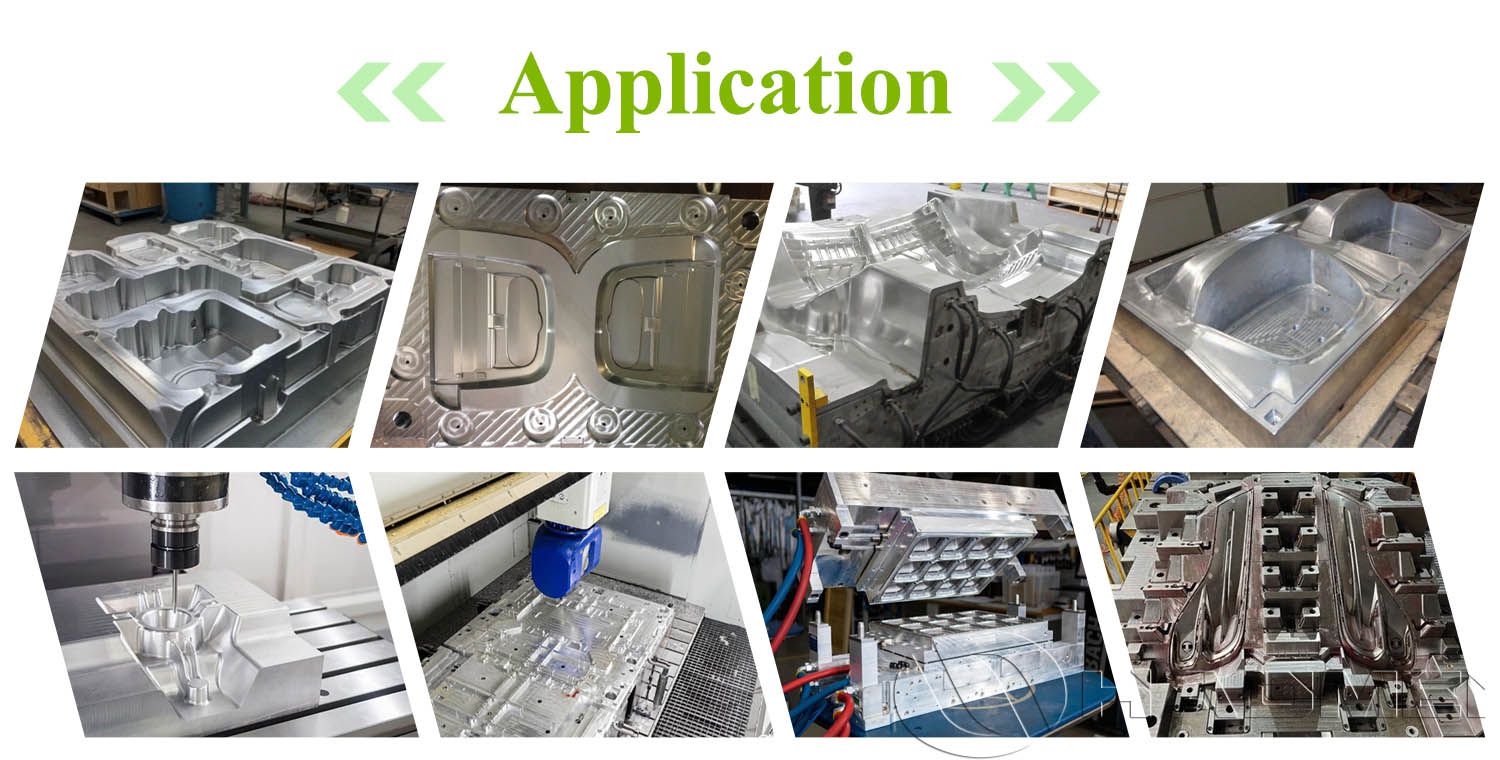
Thanks to their unique physical characteristics, aluminum plates for molds play an essential role in modern manufacturing.
Plastic Injection Molds: Aluminum is particularly suitable for low- to medium-volume production, rapid prototyping, and injection-molded products requiring very short cooling cycles, such as daily consumer products and electronic housings.
Blow Molds and Thermoforming Molds: Common applications include blow-molded bottles and containers, automotive interior components, and packaging trays. Because aluminum dissipates heat quickly, products can cool and set faster, improving production efficiency and yield.
Tire and Rubber Molds: Aluminum alloys offer both good thermal conductivity and low weight. They are particularly suitable for tire tread blocks and rubber vulcanization molds that require frequent installation and removal.
Foam Molds for EPS and EPP: Aluminum sheets are an excellent choice for expanded polystyrene (EPS), expanded polypropylene (EPP), appliance packaging, thermal insulation boxes, and other foam plastic molding applications.
Fixtures and Gauges: Aluminum plates are widely used in automotive welding fixtures, aerospace inspection tools, and component checking gauges. Their lightweight properties and dimensional stability make them ideal for these applications.
Misunderstanding 1: Ordinary 6061 Hot-Rolled Plate Can Be Used Directly for Precision Molds
Ordinary 6061-T6 aluminum sheet may not undergo pre-stretching stress relief. Residual internal stress can remain in the material. When a large amount of material is removed during CNC milling, stress is released and the mold cavity may warp or lose dimensional accuracy.
For precision molds, 6061-T651 stress-relieved aluminum plate should be specified, and an ultrasonic inspection report should be requested.
Misunderstanding 2: Higher Strength Means 7075 Should Be Used for Every Mold
7075 aluminum is expensive, difficult to weld, and generally less tough than 6061. For ordinary rapid prototype molds, 6061 aluminum plate is often sufficient. Using 7075 without a real performance requirement only increases unnecessary procurement costs.
Misunderstanding 3: Focusing Only on Thickness While Ignoring Flatness and Internal Inspection
Some low-cost aluminum mold plates contain pores, inclusions, or internal defects. These defects may be exposed after machining and polishing, resulting in mold failure or scrapping.
Poor flatness in large plates may also cause an uneven machining reference surface and loss of machining accuracy. Purchase contracts should clearly specify requirements for ultrasonic inspection and flatness tolerances.
Misunderstanding 4: Aluminum Molds Do Not Need Surface Protection
Aluminum is relatively soft. Direct use in injection molding can lead to surface wear and corrosion over time. For long-term production of plastic components, hard anodizing is recommended to improve surface hardness, wear resistance, and corrosion resistance.
WELCOME TO CONTACT US
Your information is for contact only and will not be shared with any third party.