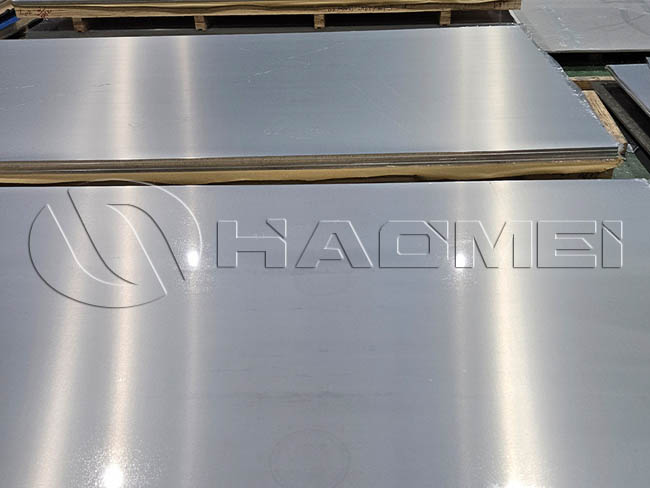
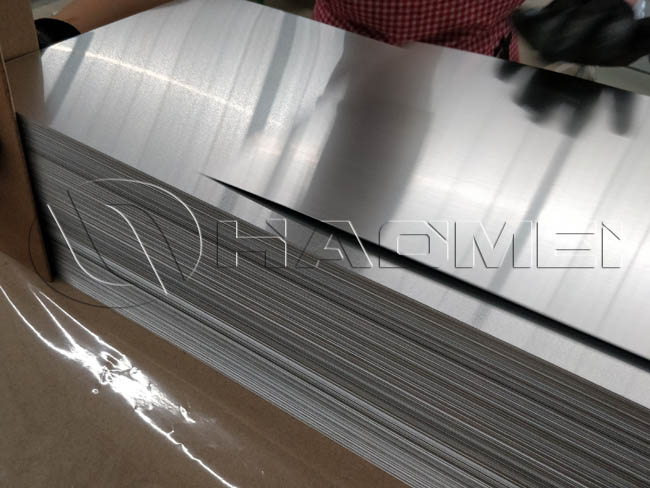
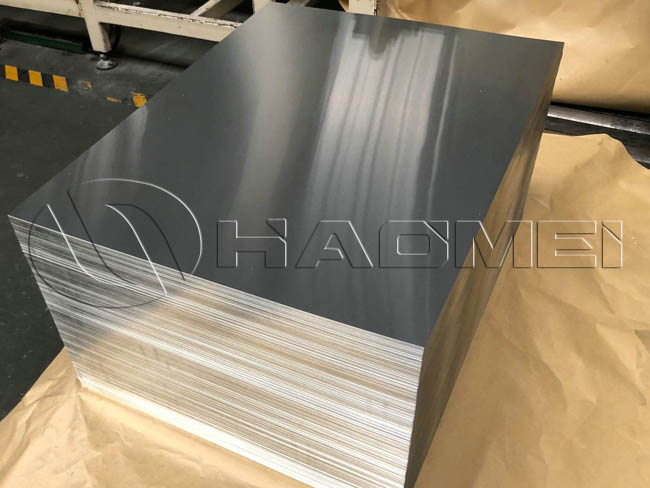
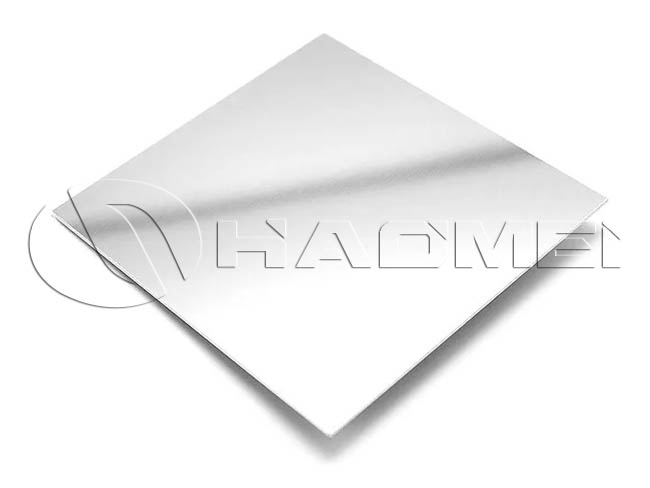
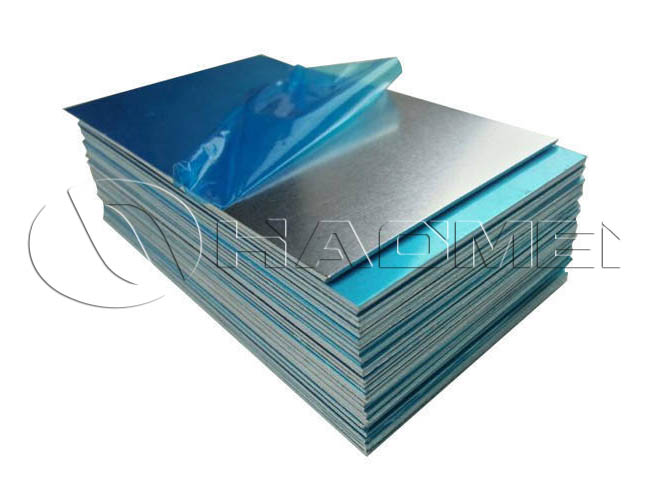
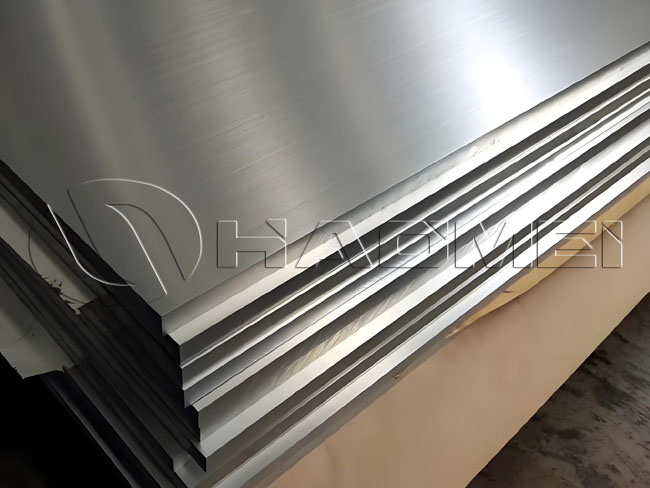
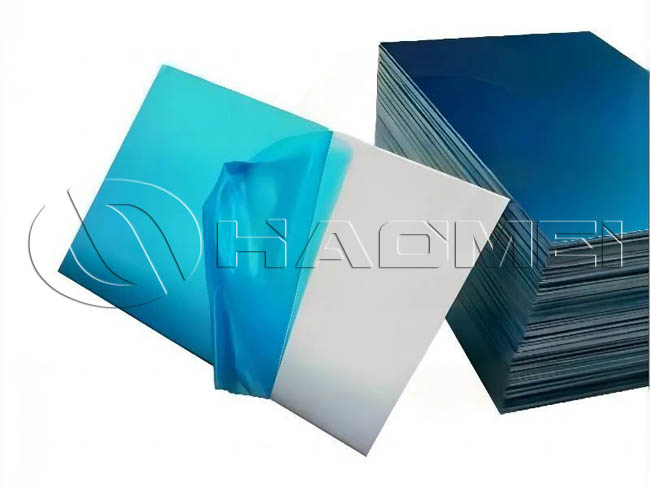
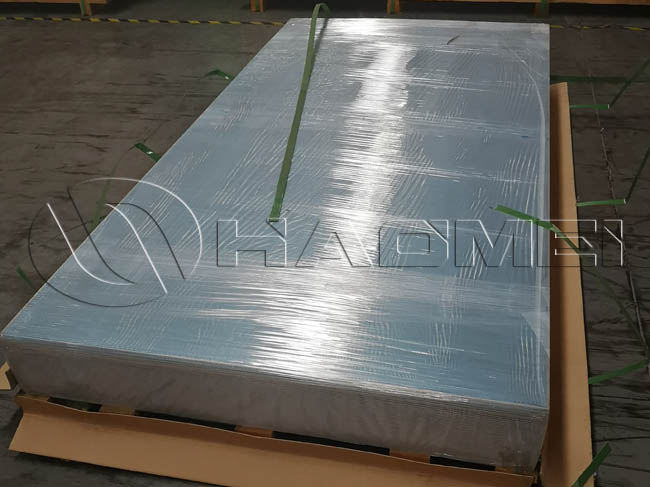
3004 aluminum sheet belongs to the aluminum-manganese (Al-Mn) alloy series. To further improve its strength, an appropriate amount of magnesium (Mg) is added to the 3003 alloy composition. For this reason, it is also known as an aluminum-magnesium-manganese alloy.
As one of the most widely used anti-rust aluminum alloys, the key feature of 3004 aluminum sheet is that it is non-heat-treatable. This means its strength cannot be increased through heating and quenching; instead, its mechanical properties are improved primarily through cold working processes such as rolling.
Within the 3xxx alloy family, 3004 aluminum sheet is positioned as a medium-to-high-end material. Its strength is significantly higher than that of 1100 pure aluminum and the earlier 3003 aluminum alloy, while retaining the excellent corrosion resistance and workability of 3xxx series alloys.
Common Tempers of 3004 Aluminum Sheet
| Temper | Description |
| O | Fully annealed condition. This is the softest temper with the highest ductility. |
| H12 | Moderate strength and good plasticity. |
| H14 | Half-hard temper with the best overall balance of properties. |
| H18 | Full-hard temper with the highest tensile strength but relatively poor formability. Commonly used for flat support parts requiring very high hardness. |
| H24 | Based on the high strength of H14, special annealing provides excellent bending and roll-forming capability. |
Chemical Composition
| Element | Content Range (%) |
| Al | Remainder |
Mn
| 0.4-1.3 |
| Mg | 0.4-0.8 |
| Si | ≤0.30 |
| Fe | ≤0.70 |
| Cu | ≤0.25 |
| Zn | ≤0.25 |
| Ti | ≤0.20 |
| Cr | ≤0.30 |
| Total Other Elements | ≤0.15 |
Physical Properties
| Density | 2.70 g/cm³ |
| Young's Modulus | 69 GPa |
| Thermal Conductivity | 237 W/(m·K) |
| Coefficient of Thermal Expansion | 23.1 × 10⁻⁶/(m·K) |
| Electrical Resistivity | 0.0282 Ω·mm²/m |
Mechanical Properties
Typical mechanical properties of 3004 aluminum sheet at room temperature are as follows:
| Grade | Temper | Thickness (mm) | Tensile Strength Rm (MPa) | Yield Strength Rp0.2 (MPa) | Elongation (%) |
| 3004 | O / H111 | >0.2–0.5 | 155–200 | ≥60 | ≥13 |
| >0.5–1.5 | ≥14 |
| >1.5–3.0 | ≥15 |
| >3.0–6.0 | ≥16 |
| >6.0–12.5 | ≥16 |
| >12.5–50 | ≥14 |
| H12 | >0.2–0.5 | 190–240 | ≥155 | ≥2 |
| >0.5–1.5 | ≥3 |
| >1.5–3.0 | ≥4 |
| >3.0–6.0 | ≥5 |
| H22 / H32 | >0.2–0.5 | 190–240 | ≥145 | ≥4 |
| >0.5–1.5 | ≥5 |
| >1.5–3.0 | ≥6 |
| >3.0–6.0 | ≥7 |
| H14 | >0.2–0.5 | 220–265 | ≥180 | ≥1 |
| >0.5–1.5 | ≥2 |
| >1.5–3.0 | ≥2 |
| >3.0–6.0 | ≥3 |
| H24 / H34 | >0.2–0.5 | 220–265 | ≥170 | ≥3 |
| >0.5–1.5 | ≥4 |
| >1.5–3.0 | ≥4 |
| H16 | >0.2–0.5 | 240–285 | ≥200 | ≥1 |
| >0.5–1.5 | ≥1 |
| >1.5–4.0 | ≥2 |
| H26 / H36 | >0.2–0.5 | 240–285 | ≥190 | ≥3 |
| >0.5–1.5 | ≥3 |
| >1.5–3.0 | ≥3 |
| H18 | >0.2–0.5 | ≥260 | ≥230 | ≥1 |
| >0.5–1.5 | ≥1 |
| >1.5–3.0 | ≥2 |
| H28 / H38 | >0.2–0.5 | ≥260 | ≥220 | ≥2 |
| >0.5–1.5 | ≥3 |
| H19 | >0.2–0.5 | ≥270 | ≥240 | ≥1 |
| >0.5–1.5 | ≥1 |
| H112 | >4.5–12.5 | ≥160 | ≥60 | ≥7 |
| >12.5–40.0 | ≥6 |
| >40.0–80.0 | ≥6 |
| F | >2.5–80.0 | - | - | - |
Main Advantages of 3004 Aluminum Sheet
Excellent Corrosion Resistance: Due to the presence of manganese and magnesium, 3004 aluminum sheet forms a dense oxide film that effectively resists atmospheric corrosion, moisture, and chemical corrosion.
Good Plasticity and Formability: It has high ductility, especially under heated conditions, and can undergo complex forming processes such as deep drawing, stretching, and stamping.
Excellent Weldability: It is suitable for gas-shielded welding, spot welding, and other welding processes, delivering stable weld performance.
Cost-Effective Material: 3004 aluminum sheet has relatively low raw-material and processing costs, making it an economical and practical industrial material.
Lightweight: It is approximately one-third lighter than steel, helping reduce the overall weight of products and structures.
Higher Strength: Benefiting from the strengthening effect of magnesium, 3004 aluminum typically offers around 20% higher strength than 3003 aluminum. It is therefore more reliable in applications that need to withstand certain mechanical loads.
Good Surface-Treatment Performance: 3004 aluminum sheet has high surface flatness and is highly suitable for color coating, embossing, anodizing, and other surface treatments.
3004 Aluminum Sheet Specifications
| Alloy Series | 3000 Series (Al-Mn-Mg) |
| Temper | O, H14, H24, H32, H34, etc. |
| Thickness | 0.1–10 mm |
| Width | 100–2,650 mm |
| Length | 1,000–16,000 mm |
| Thickness Tolerance | ±0.02 mm |
| Production Process | Cold rolling (CC) and hot rolling (DC) |
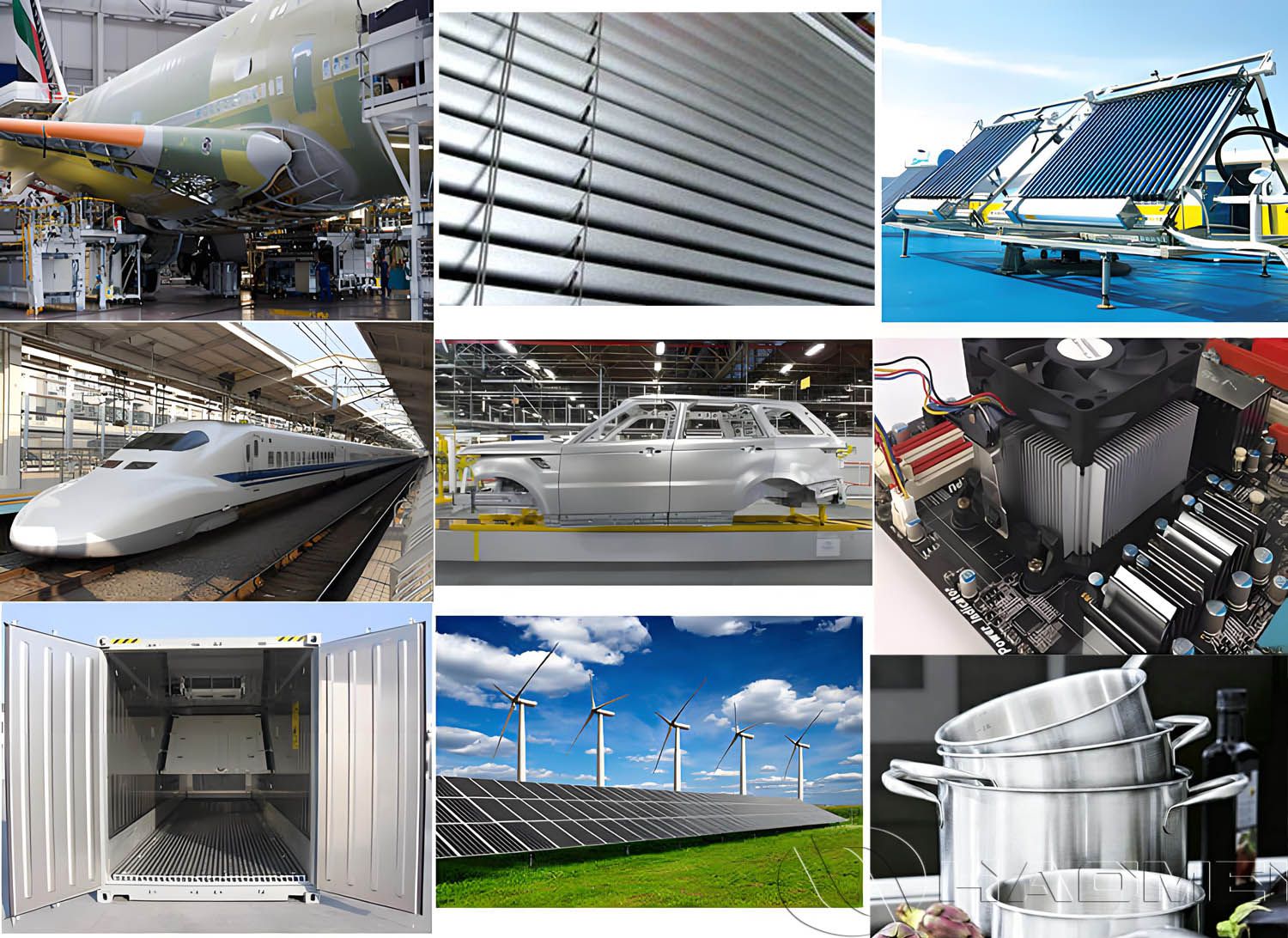
| Applications | Lamp housings and holders, shutters, aluminum curtain panels, LCD display back plates, substrates for color coating, etc. |
| Packaging | Export-standard coil or sheet packaging suitable for long-distance ocean transportation. |
| MOQ | 1–3 tons |
Applications of 3004 Aluminum Sheet
Thanks to its excellent properties, 3004 aluminum sheet is widely used in the following fields:
Packaging Containers — Key Application: Its most important application is as material for beverage can bodies, as well as liquid storage containers for chemicals and food products.
Automotive Industry: Used for automotive body panels, door panels, roofs, underbody components, and other parts. It is an important material for vehicle lightweighting and corrosion resistance.
Aerospace: Used for aircraft exterior panels, fuel tanks, lining plates, and related parts that require high strength and corrosion resistance.
Chemical Industry: Used for corrosion-resistant equipment such as conveyor belts, pipes, and containers.
Architectural Decoration: Used for curtain walls, exterior cladding, roofing, and decorative panels.
Home Appliances: Used in refrigerator, washing machine, and air-conditioner housings.
Cookware and Kitchen Appliances: Used to manufacture cookware such as pots, pans, and baking trays, as well as kitchen appliances including coffee makers and toasters.
Processing Characteristics of 3004 Aluminum Sheet
Stamping and Forming
Suitable for deep drawing, stretching, bending, and other complex stamping operations. It can be used for complex curved products such as automotive outer panels.
Cutting
It can be precisely cut using laser cutting, plasma cutting, and other methods.
Surface Treatment
It can undergo anodizing, painting, spraying, electrolytic ceramic treatment, and other surface treatments to improve durability and appearance.
Welding
Suitable for various welding methods, including TIG welding, MIG welding, and spot welding.
Surface Treatment Options for 3004 Aluminum Sheet
| Product Type | Description |
| 3004 Anodized Aluminum Sheet | Anodized to form a dense oxide film, improving corrosion resistance and surface hardness. It has an attractive appearance and is suitable for decorative applications. |
| 3004 Color-Coated Aluminum Sheet | Uses 3004 aluminum sheet as the substrate and is coated with PE or PVDF coatings. It offers rich colors and good weather resistance and is commonly used for roofing, curtain walls, and decorative panels. |
| 3004 Embossed Aluminum Sheet | Embossed with patterns such as orange peel or diamond patterns to improve anti-slip performance and decorative appeal. Commonly used in packaging, insulation, and decoration. |
| 3004 Brushed Aluminu3004 Mirror Aluminum Sheetm Sheet | Mechanically brushed to create a refined metallic texture. It is widely used for appliance panels, decorative panels, and nameplates. |
| 3004 Mirror Aluminum Sheet | Polished or roll-finished to increase surface reflectivity. The sheet is flat and bright, suitable for lighting reflectors and decorative materials. |
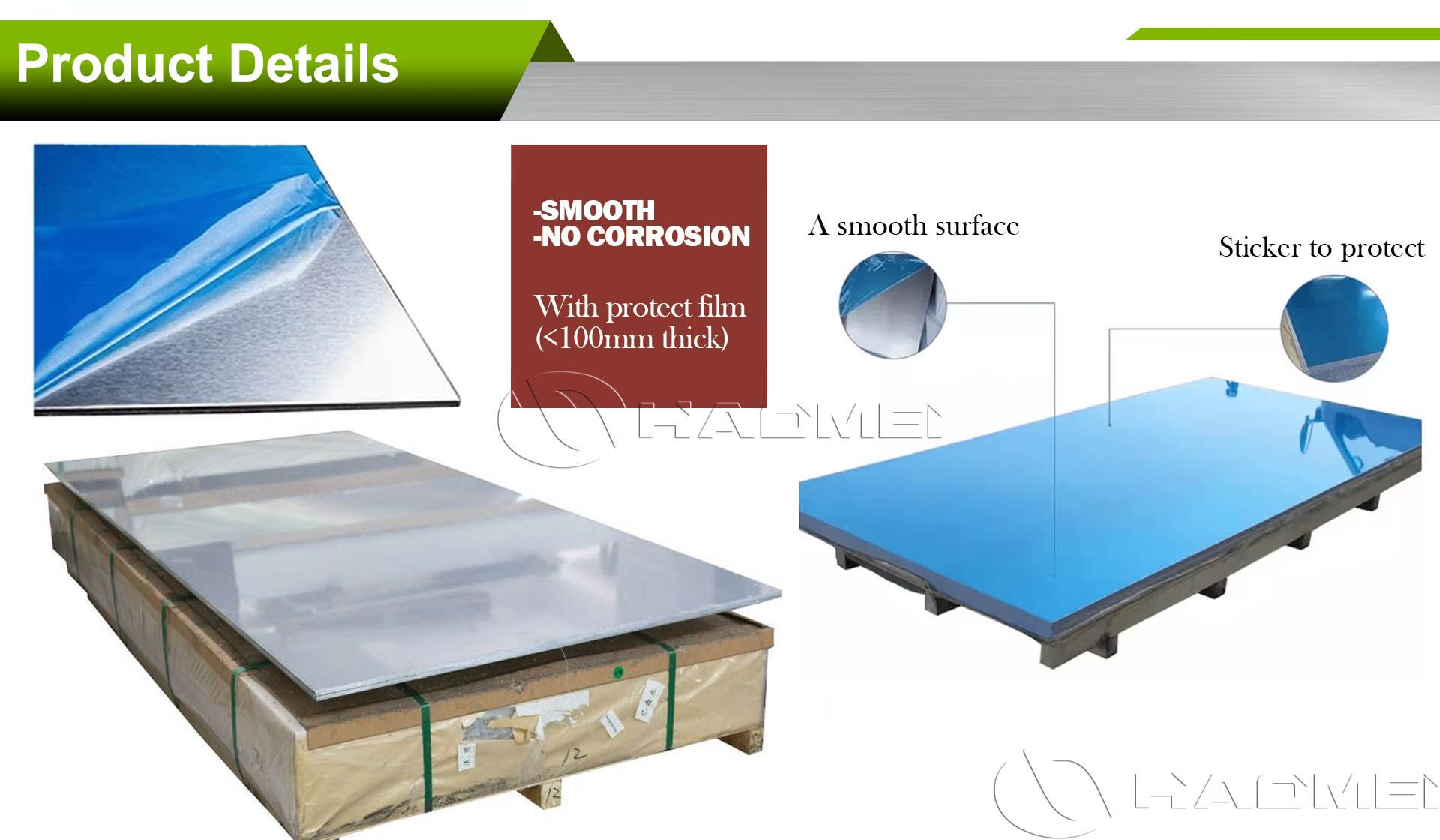
| 3004 Laminated Aluminum Sheet | Covered with a protective or decorative film to prevent scratches during transportation and fabrication, while also providing different decorative effects. Suitable for further processing. |
Quality Standards
3004 aluminum sheet generally complies with the following international and domestic standards:
ASTM B547/B547M: Standard specification for aluminum alloy sheet and strip
EN 485: European standard for aluminum alloy sheet and plate
GB/T 3190: Chinese national standard for aluminum alloy products
ISO 6361: Standard for mechanical properties of aluminum alloy sheet and plate
3004 Aluminum Sheet vs. 3003 Aluminum Sheet
| Comparison Item | 3004 Aluminum Sheet | 3003 Aluminum Sheet |
| Alloy Composition | Al-Mn-Mg, with Mg: 0.8%–1.3% | Al-Mn, without magnesium |
| Strength | Higher; tensile strength: 150–285 MPa | Medium; tensile strength: 140–180 MPa |
| Corrosion Resistance | Better resistance to fatigue and salt spray | Good; suitable for basic anti-rust applications |
| Formability | Excellent deep-drawing performance; suitable for complex processes without cracking | Good; suitable for simple forming |
| Typical Applications | Applications requiring higher strength and corrosion resistance, such as coastal environments and food containers | General anti-rust and low-strength applications, such as simple decoration and standard packaging |
Packaging and Transportation
To ensure product quality, 3004 aluminum sheet is generally packaged and transported according to the following requirements:
Packaging Method: Wooden or steel pallets are used. Sheets are separated by plastic film or cardboard to prevent abrasion and corrosion.
Protection Measures: Protective corner guards are installed around the sheets to prevent damage during transportation.
Identification Markings: Each coil or sheet is marked with product number, thickness, width, length, material grade, and other relevant information.
Transportation Method: Dedicated transport vehicles are used to avoid excessive vibration and impact, ensuring the products remain stable during delivery.
FAQ
Q1. What is the difference between 3004 aluminum sheet and 3003 aluminum sheet?
A1. 3004 aluminum sheet is strengthened by adding magnesium (Mg) to the 3003 alloy composition. Its strength is approximately 20% higher while maintaining good formability and corrosion resistance. It is more suitable for applications with higher load-bearing requirements, such as beverage can bodies.
Q2. What are the common tempers of 3004 aluminum sheet, and how should they be selected?
A2. Common tempers include O, H14, H16, H18, and H19:
O temper: Best ductility; suitable for deep drawing and stretching.
H14 / H16: Balanced strength and formability; suitable for structural parts.
H18 / H19: High-strength tempers; suitable for products requiring high rigidity.
Q3. Is 3004 aluminum sheet suitable for deep-drawn products?
A3. Yes. 3004 aluminum sheet has excellent ductility and processing performance. O temper, in particular, is highly suitable for deep-drawn containers, can bodies, and complex formed structures.
Q4. Can 3004 aluminum sheet be used for food packaging?
A4. Yes. 3004 aluminum sheet has good corrosion resistance and safety performance. It can meet food-contact material requirements and is widely used for beverage cans, food containers, and related applications.
Q5. How is the corrosion resistance of 3004 aluminum sheet?
A5. 3004 is an anti-rust aluminum alloy with excellent corrosion resistance. It maintains stable performance in humid environments, industrial atmospheres, and food-related environments and is not easily oxidized.
Q6. Can 3004 aluminum sheet be welded?
A6. Yes. 3004 aluminum sheet has good weldability and can be welded using TIG, MIG, and other methods. ER3003 or ER5356 filler wire is recommended.
Request a Quote for 3004 Aluminum Sheet Today
Ready to get started? Contact our sales team today for a free quote or technical consultation for 3004 aluminum sheet. We offer flexible delivery options and can fulfill orders of any size.
Email: sales@alummc.com
WhatsApp: +86 18703635966