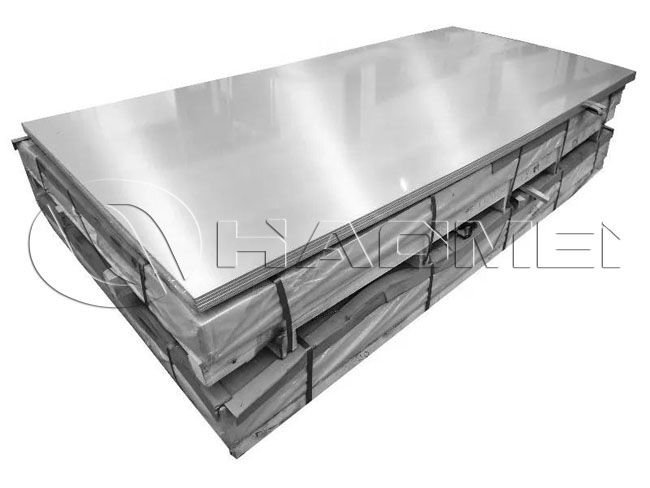
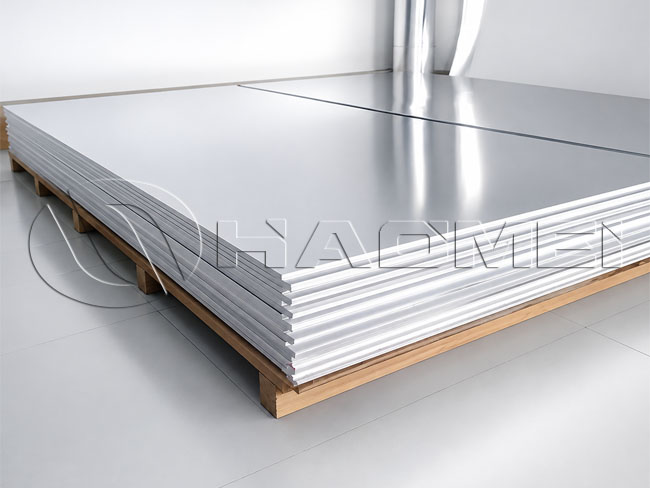
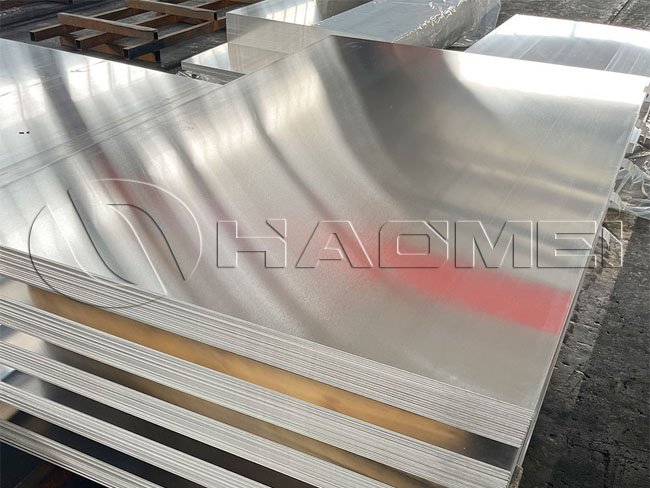
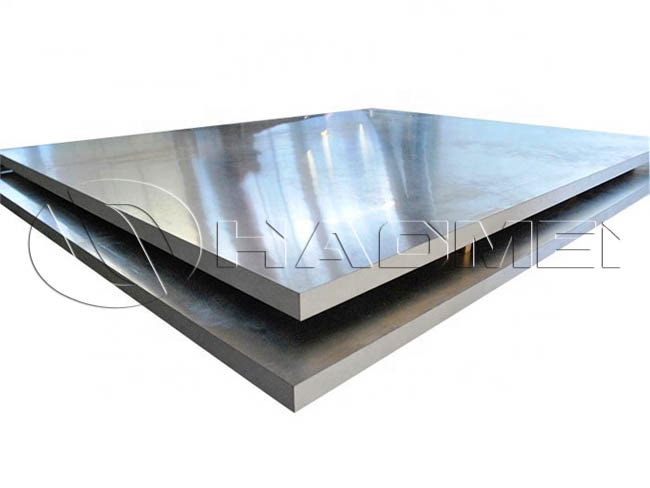
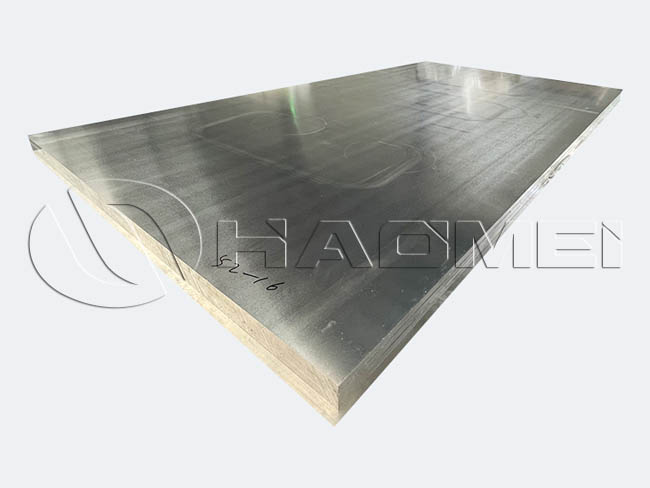
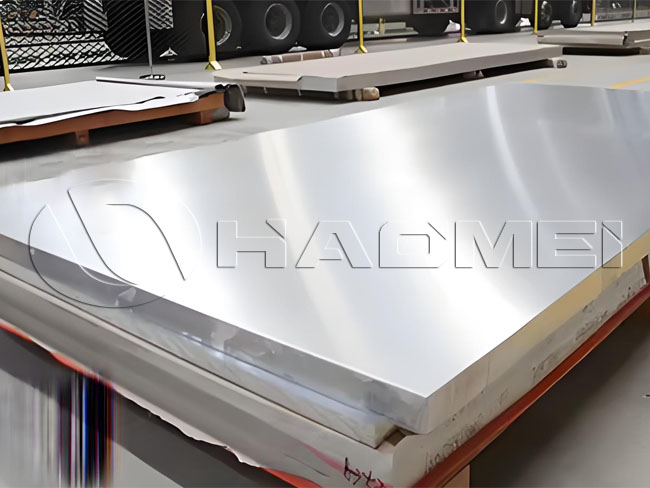
Oil tanker trucks are tank-bodied transport vehicles used for carrying various liquids, liquefied gases, and powdered materials. Compared with conventional carbon steel, aluminum alloy sheets offer a much lower weight. An all-aluminum tanker truck can achieve an overall weight reduction of 30%–40%, reducing fuel consumption and tire wear during transportation, thereby lowering daily operating and maintenance costs.
Aluminum alloys also provide excellent corrosion resistance, helping extend the service life of tanker trucks. In addition, aluminum is highly recyclable and has a high recovery rate.
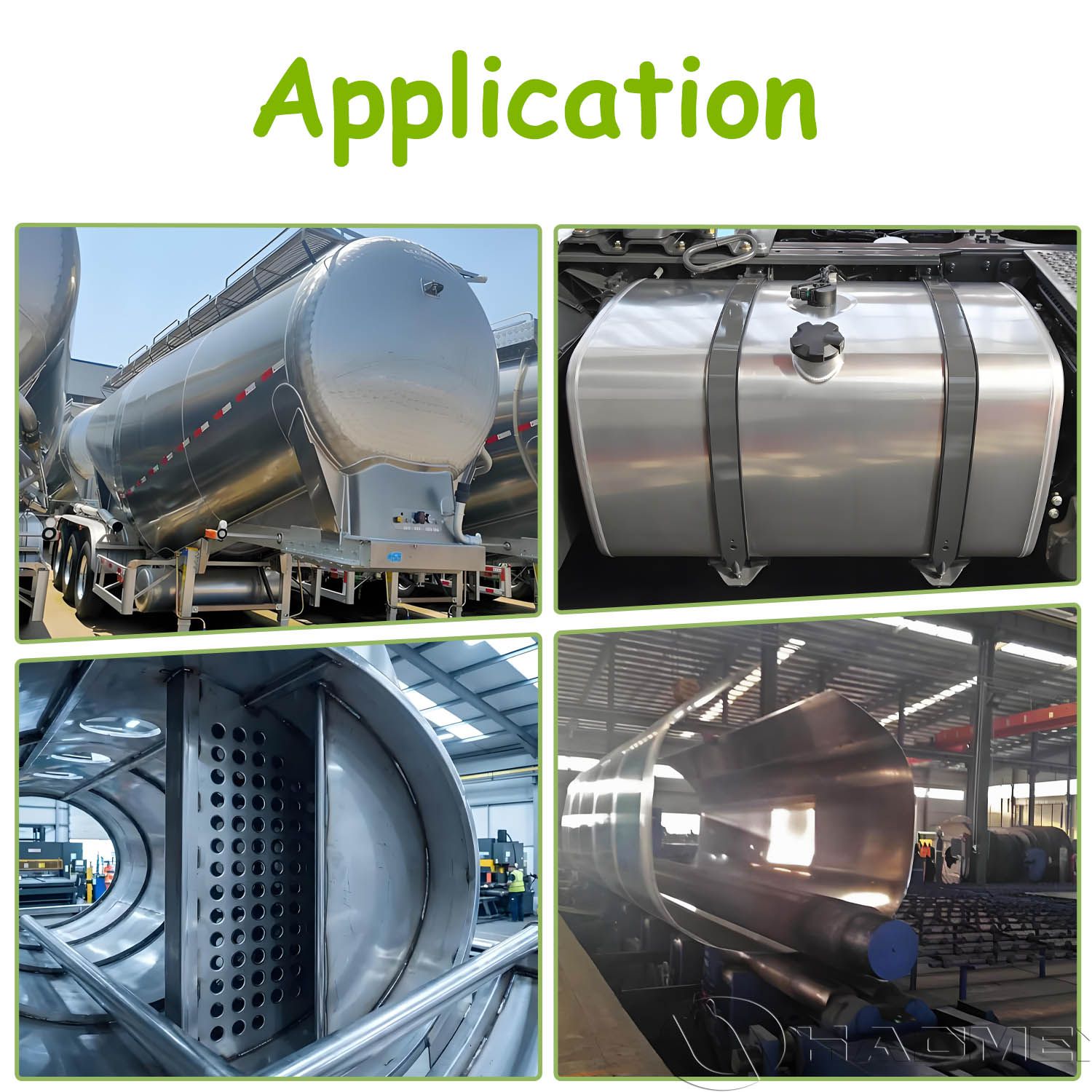
The body of an aluminum alloy tanker truck consists of multiple components, including side panels, fenders, tank openings, and other structural parts.
Common aluminum sheet dimensions for tanker trucks are generally less than 12.5 m in length and 2.2 m in width. Common thicknesses include 5 mm, 6 mm, 7 mm, and 8 mm. A complete tanker body typically requires welding together 4–6 aluminum sheets.
HAOMEI Aluminum operates industry-leading extra-wide hot-rolling and cold-rolling production lines, with a maximum width of up to 3,800 mm. This helps reduce welded seams in the tank body, improving overall structural strength and appearance.
The primary alloying element in 5xxx series aluminum sheets for oil tanker trucks is magnesium, generally ranging from 3% to 5%. These alloys are also known as aluminum-magnesium alloys. Aluminum sheets for tanker trucks can be continuously cast and rolled, and are suitable for anodizing and further processing.
5xxx series aluminum sheets for tanker trucks feature excellent corrosion resistance and weldability. They are widely used in oil tankers, LPG tankers, cement tankers, and other specialized transport vehicles. Common aluminum alloy grades include:
5083 aluminum sheet
5182 aluminum sheet
5454 aluminum sheet
5754 aluminum sheet
5052 aluminum sheet
Aluminum Alloy Grades for Oil Tanker Trucks
5083 Aluminum Sheet for Oil Tanker Trucks
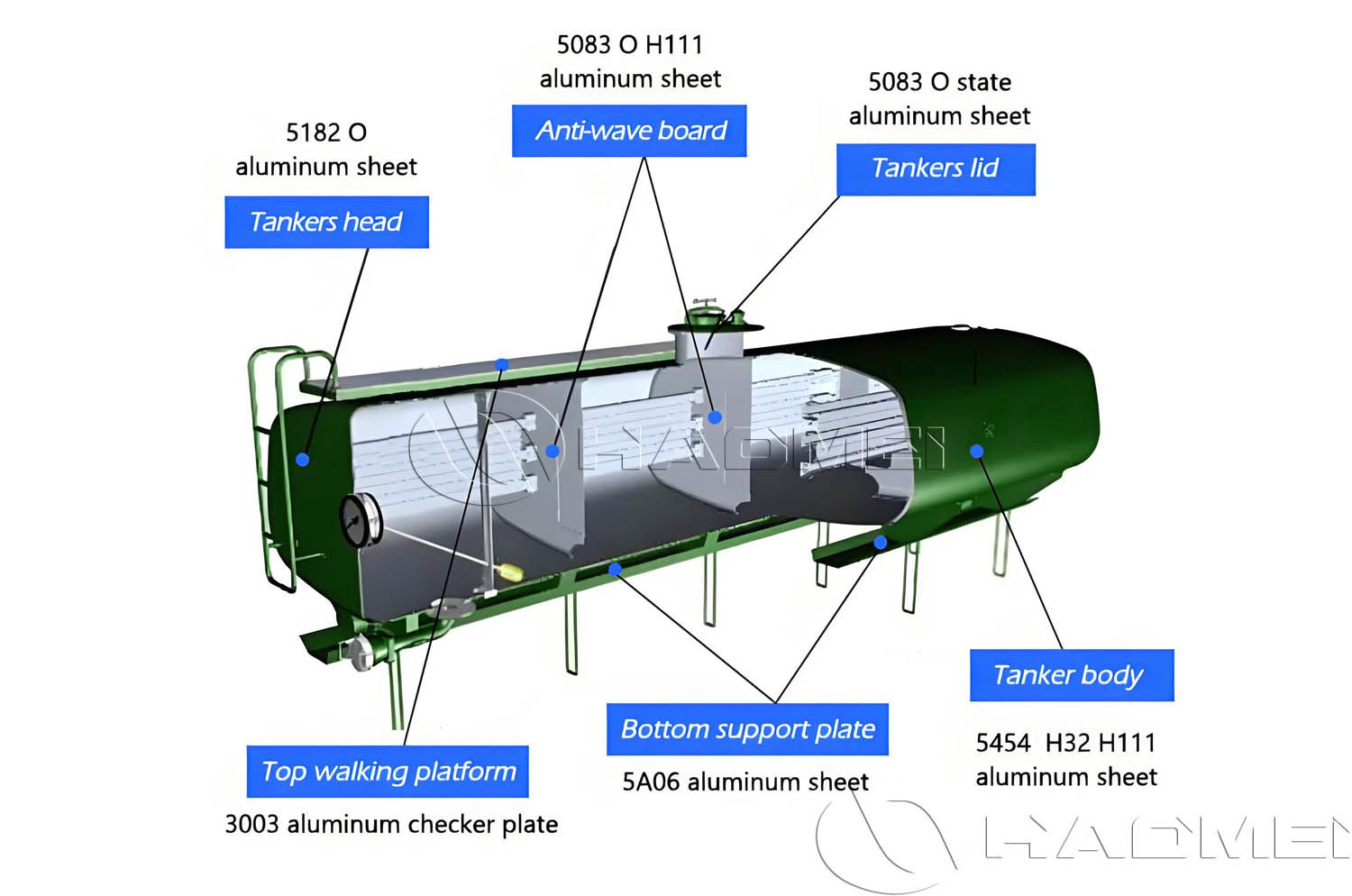
5083 aluminum sheet is one of the most widely used aluminum alloys in oil tanker truck manufacturing. The two most common tempers for tanker truck bodies are 5083-H111 and 5083-O.
5083-O aluminum sheet:In the annealed condition, it is soft and highly formable. It is suitable for bending applications and is commonly used for tanker heads, tank covers, and baffle plates.
5083-H111 aluminum sheet:Offers high strength and good ductility, enabling it to withstand a certain level of impact and vibration. It is commonly used for oil tanker truck bodies.
5083-H32 aluminum sheet:Has lower strength and hardness than 5083-H111. It can also be used for tanker truck bodies, generally in applications with lower pressure and load requirements.
5083-H321 aluminum sheet:Provides excellent resistance to stress corrosion cracking and high strength. It is suitable for high-pressure environments, such as tanker truck level gauges, air inlets, and related components.
5454 Aluminum Sheet
5454 aluminum sheet provides good high-temperature resistance and corrosion resistance. It is commonly used in tanker truck manufacturing applications that require a certain degree of temperature stability.
Product Features:
Good corrosion resistance
Medium strength and excellent stability
Suitable for welding and machining
Stable performance within certain temperature ranges
Typical Applications:
Oil tanker bodies
Chemical liquid transport tanks
Road transport tankers
5182 Aluminum Sheet
5182 aluminum sheet offers good ductility and formability, making it suitable for tanker accessories and structural components.
Product Features:
Excellent formability
Good surface quality
Good corrosion resistance
Suitable for stamping, bending, and welding
Typical Applications:
Tanker heads
Partitions
Anti-surge baffles
Side protection structures
Other auxiliary structural components
Core Performance Advantages of Aluminum Sheets for Oil Tanker Trucks
1. Lightweight Design for Higher Transport Efficiency
The density of aluminum is only about one-third that of steel. It significantly reduces the overall vehicle weight, improving transport efficiency and increasing economic returns under the same payload limits.
2. Excellent Corrosion Resistance
Aluminum-magnesium alloys have natural oxidation resistance and can effectively withstand corrosion from fuel, chemicals, and external environments, extending the service life of the tanker.
3. High Strength and Reliable Safety
Through appropriate alloy design and temper selection, such as H111 and H32, aluminum sheets can meet the structural strength requirements of tanker bodies while maintaining lightweight performance.
4. Excellent Weldability
Tanker truck manufacturing involves extensive welding processes. Aluminum sheets offer good welding adaptability, high weld strength, and reduced susceptibility to cracking.
5. Good Forming and Processing Performance
Aluminum sheets are suitable for rolling, bending, stamping, and other processing methods, meeting the needs of complex tanker body designs.
6. Reliable Safety Performance
Aluminum has excellent electrical conductivity, which helps prevent the accumulation of static electricity and reduces the risk of fire and explosion. Its thermal conductivity is also better than that of steel, enabling faster heat dissipation and reducing the risk of localized overheating.
7. Environmentally Friendly and Recyclable
Aluminum has a recycling rate of over 95%. Its recycling cost is relatively low, helping reduce the carbon footprint.
Aluminum Sheet Applications by Tanker Truck Component
Aluminum sheets for oil tanker trucks can be selected according to the functional requirements of different components:
| Tanker Component | Recommended Aluminum Alloy |
| Tank shell / cylindrical body | 5083 or 5454 aluminum sheet |
| Tank head / end cap | 5182 or 5052 aluminum sheet |
| Baffles / reinforcing structures | High-strength aluminum alloy |
| Accessories, such as steps and guardrails | Anti-slip aluminum tread plate |
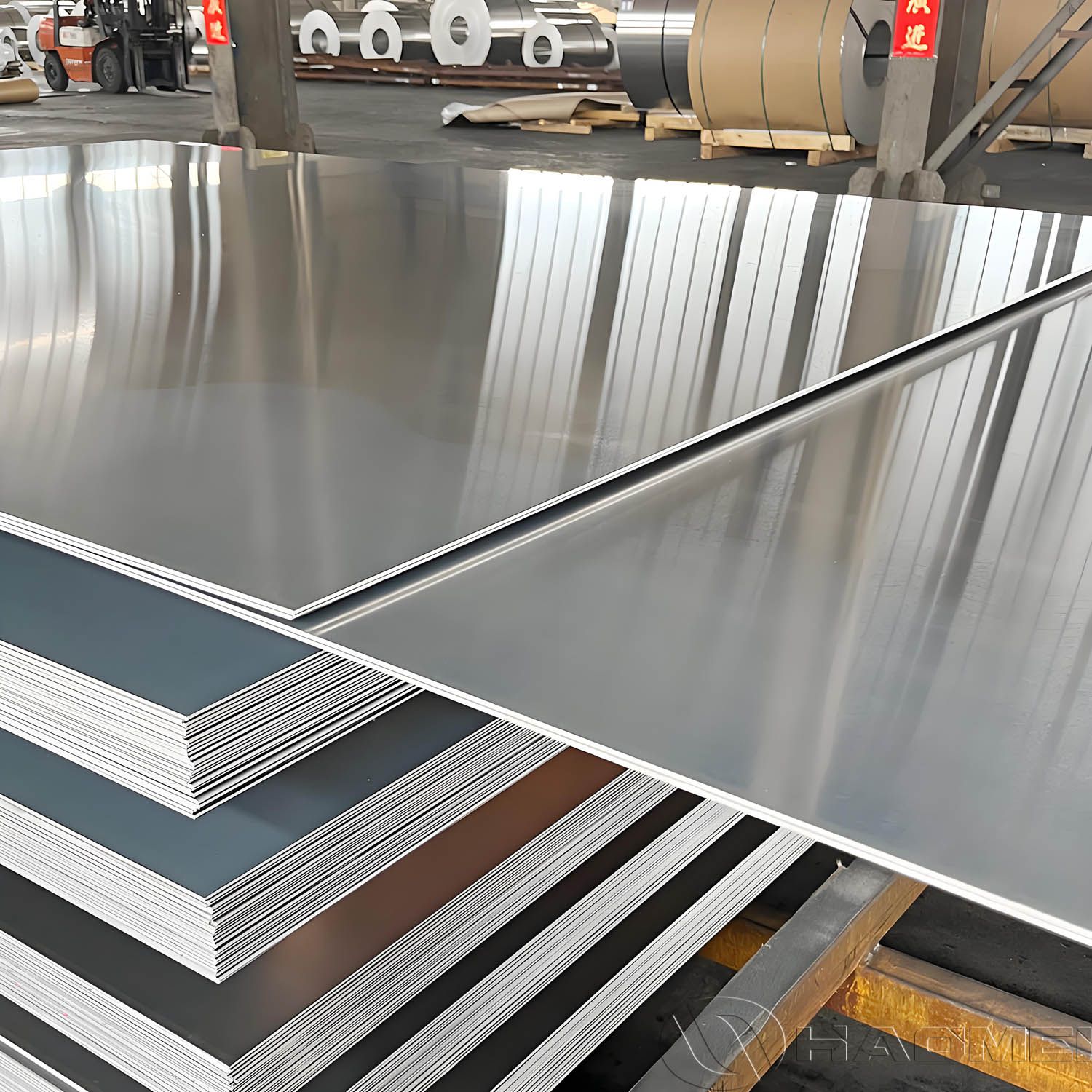
Technical Parameters for Tanker Truck Aluminum Sheets
| Item | Specification |
| Alloy Grades | 5083, 5454, 5182, 5754, 5052, etc. |
| Temper | O, H111, H112, H32, H114, etc. |
| Thickness | Commonly 3 mm–12 mm; customizable |
| Width | 1,000 mm–2,500 mm |
| Length | 500 mm–16,000 mm; cut-to-length and custom cutting available |
| Surface | Flat and clean, free from obvious scratches, oil stains, dents, and marks |
| Standards | Available according to Chinese, European, American, or customer-specific technical standards |
Chemical Composition
| Alloy | Si | Fe | Cu | Mn | Mg | Cr | Zn | Ti | Other, Each | Other, Total | Al |
| 5083 | 0.20 | 0.35 | 0.15 | 0.20-0.50 | 4.0-5.0 | 0.10 | 0.25 | 0.10 | 0.05 | 0.15 | remainder |
| 5052 | 0.25 | 0.40 | 0.10 | 0.10 | 2.2-2.8 | 0.15-0.35 | 0.10 | - | 0.05 | 0.15 | remainder |
| 5754 | 0.40 | 0.40 | 0.10 | 0.05 | 2.6-3.5 | 0.30 | 0.20 | 0.15 | 0.05 | 0.15 | remainder |
| 5454 | 0.25 | 0.40 | 0.10 | 0.50-1.0 | 2.4-3.0 | 0.05-0.20 | 0.25 | 0.20 | 0.05 | 0.15 | remainder |
5182
| 0.20 | 0.35 | 0.15 | 0.20-0.50 | 4.0-5.0 | 0.10 | 0.25 | 0.10 | 0.05 | 0.15 | remainder |
Mechanical Properties
| Alloy | Temper | Tensile Strength Rm (MPa) | Yield Strength Rp0.2 (MPa) | Elongation |
| 5083 | O/H111 | ≥275 | ≥125 | ≥15% |
| 5083 | H112 | ≥275 | ≥125 | ≥12% |
| 5052 | O/H111 | 170–215 | ≥65 | ≥16% |
| 5052 | H112 | ≥190 | ≥80 | ≥7% |
| 5754 | H112 | ≥190 | ≥80 | ≥7% |
| 5454 | H32 | ≥250 | ≥180 | ≥8% |
| 5182 | O/H111 | ≥280 | ≥125 | ≥26% |
Welding Process for Oil Tanker Truck Aluminum Sheets
Aluminum sheet welding is a core technology in oil tanker truck manufacturing. Since aluminum has high thermal conductivity and a high coefficient of linear expansion, suitable welding processes and parameters are required.
Recommended practices include:
Using MIG or TIG welding methods and controlling heat input to reduce welding deformation.
Selecting suitable filler wires, such as ER5183 and ER5356, to ensure weld strength.
Applying a reasonable welding sequence and dedicated fixtures to control distortion during welding.
Processing Performance of Tanker Truck Aluminum Sheets
1. Roll-Bending Performance
Oil tanker bodies are commonly designed in elliptical, circular, or rounded-rectangular shapes, requiring aluminum sheets with good roll-bending performance. High-quality aluminum sheets have excellent flatness and ductility, resisting cracking during rolling while maintaining stable curvature and dimensional accuracy.
2. Bending Performance
Aluminum sheets used for baffles, support components, tank edge structures, and accessories often require bending and forming. Aluminum sheets with suitable tempers provide good ductility and can meet bending requirements for different angles and radii.
3. Welding Adaptability
Oil tanker trucks have high requirements for welding quality. Aluminum sheets with stable chemical composition and uniform internal structure can help reduce welding defects such as porosity, cracks, and slag inclusions, improving weld density and tank sealing performance.
4. Surface Treatment Performance
Aluminum sheet surfaces can undergo cleaning, polishing, brushing, coating, and other treatments. These processes improve the visual appearance of tanker trucks while enhancing surface protection.
Applications
Aluminum sheets for oil tanker trucks are widely used in the manufacture of various liquid transportation equipment, including:
Gasoline tanker trucks
Diesel tanker trucks
Aviation kerosene tanker trucks
Semi-trailer tankers
Refueling trucks
Chemical liquid transport vehicles
Food-grade liquid transport tanks
Dangerous goods transport vehicles
Mobile oil storage equipment and specialized containers
FAQ
Q1: Why do oil tanker trucks use aluminum sheets instead of steel sheets?
A: Aluminum sheets offer significant lightweight advantages, weighing approximately one-third as much as steel. This can effectively increase payload capacity and reduce fuel consumption. Aluminum alloys also provide excellent corrosion resistance, longer service life, and lower overall operating costs.
Q2: What is the standard thickness of aluminum sheets for oil tanker trucks?
A: The typical thickness range is 4 mm–12 mm, depending on the tanker design and load-bearing requirements. Customized thicknesses are available.
Q3: Do the products comply with international standards?
A: Yes. Our products can be manufactured according to international standards such as ASTM and EN. Material certificates and inspection reports can also be provided.
Q4: How is the weldability of aluminum sheets?
A: Aluminum-magnesium alloys, such as 5083 and 5454, have excellent weldability. They offer high weld strength and good crack resistance, making them suitable for manufacturing large oil tanker bodies.
Q5: Do you support customized sizes and specifications?
A: Yes. We can provide customized fixed lengths, special widths, and different tempers, including H111 and H32, according to customer requirements.
Q6: What is the delivery lead time?
A: The delivery time for standard specifications is generally 25–40 days. Customized orders may vary depending on the production schedule.
Q7: Can you provide samples?
A: Yes. Samples can be provided for customer performance testing and quality verification.
Q8: How are aluminum sheets packaged for transportation?
A: Export-standard packaging is used, such as wooden pallets with moisture-proof protection, to ensure that products are protected from damage and corrosion during transportation.