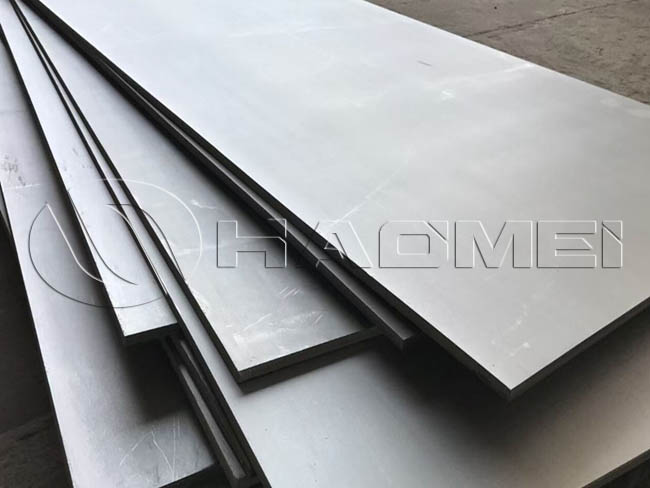
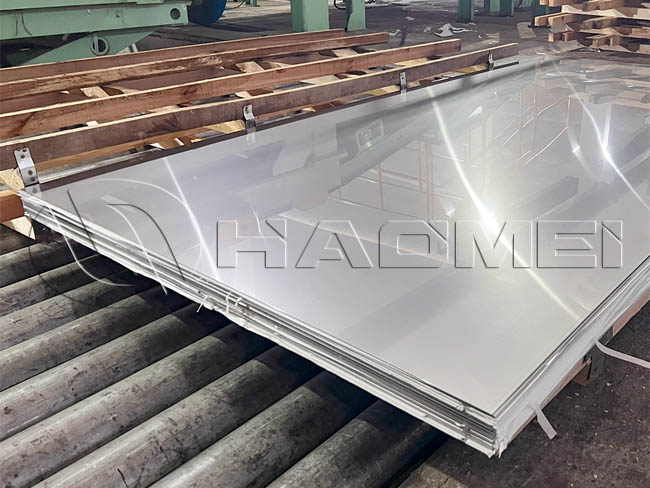
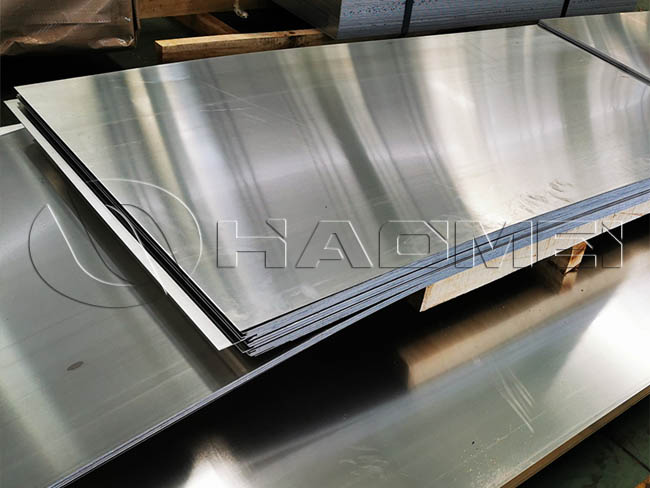
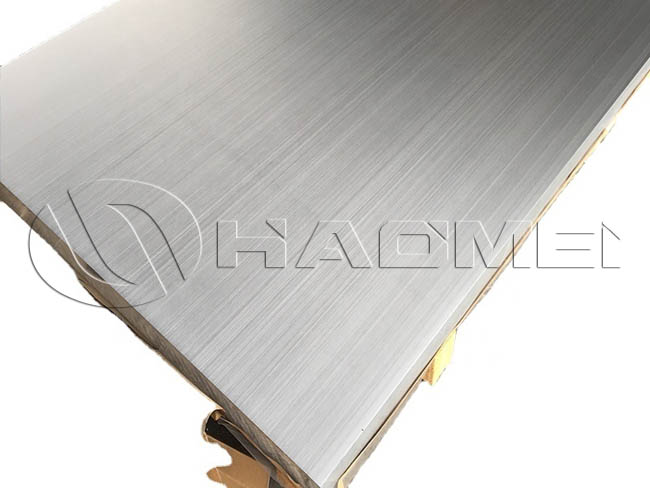
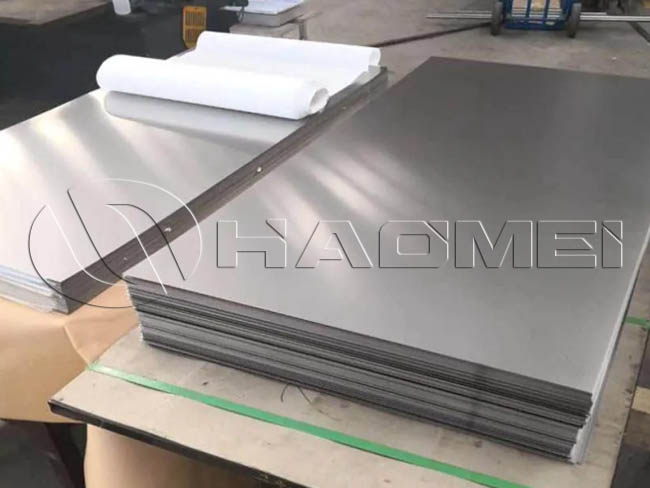
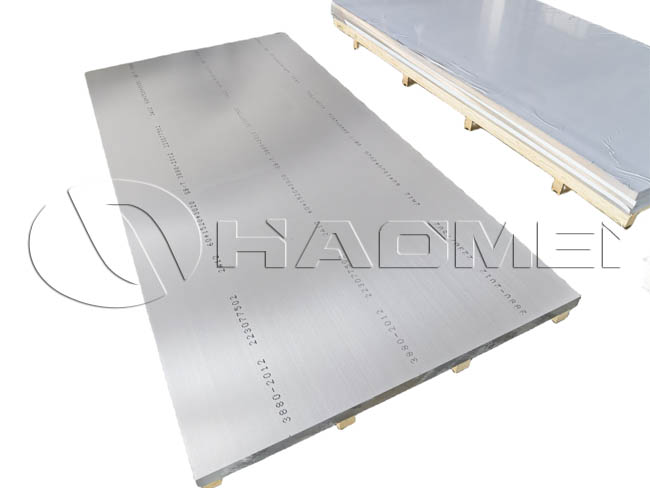
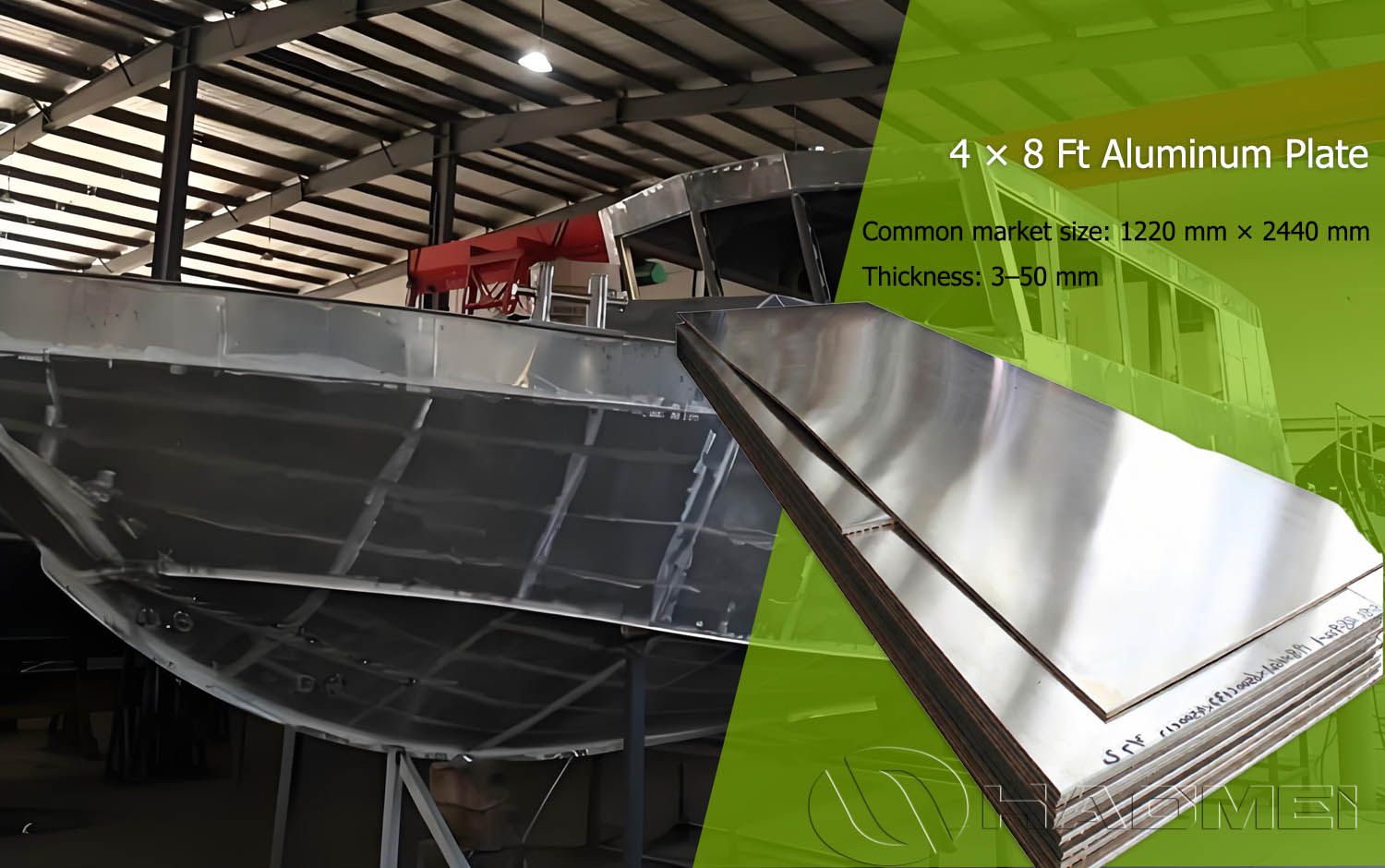
A 4 × 8 ft marine-grade aluminum sheet refers to a marine aluminum alloy sheet with a standard size of 4 feet wide by 8 feet long, approximately 1220 mm × 2440 mm. With excellent seawater corrosion resistance, good weldability, a high strength-to-weight ratio, and convenient fabrication properties, it has become an important material for modern aluminum boat manufacturing.
The 4 × 8 ft marine aluminum sheets supplied by HAOMEI Aluminum are widely used by shipyards, aluminum boat manufacturers, and repair companies worldwide because of their standardized dimensions, convenient transportation, and flexible processing options.
What Is a 4 × 8 Ft Marine-Grade Aluminum Sheet?
A 4 × 8 ft marine-grade aluminum sheet is an aluminum alloy sheet or plate with a width of 4 feet and a length of 8 feet. Its metric dimensions are approximately:
Width: 4 ft ≈ 1219 mm
Length: 8 ft ≈ 2438 mm
Common market size: 1220 mm × 2440 mm
Thickness: 3–50 mm
Marine-grade aluminum plates are commonly made from 5000 series aluminum-magnesium alloys, including:
5052 marine aluminum plate
5083 marine aluminum plate
5086 marine aluminum plate
5454 marine aluminum plate
5754 marine aluminum plate
Among them, 5083 and 5086 are widely recognized materials for hull structure manufacturing. They are particularly suitable for seawater environments, welded hull structures, and load-bearing components.
5052 is often used for decks, cabin doors, storage boxes, consoles, and auxiliary structural components because of its good corrosion resistance and formability.
Why Is It an Ideal Choice for Marine Engineering?
1. Excellent Corrosion Resistance
Marine-grade aluminum plates, such as 5083, 5052, and 5086 from the 5000 series Al-Mg alloy family, can rapidly form a dense aluminum oxide protective layer on the surface. This layer effectively resists corrosion caused by seawater, marine atmospheres, and industrial chemical media, significantly extending the service life of hull structures.
2. Lightweight
Aluminum has a density of only about one-third that of steel. It can greatly reduce the weight of the hull, thereby improving vessel speed, increasing payload capacity, and significantly reducing fuel consumption.
3. High Toughness and Impact Resistance
Through alloy optimization and proper processing, these aluminum plates can maintain good impact toughness while delivering high yield strength. They can effectively absorb wave impact and shock loads.
4. Excellent Weldability
Shipbuilding requires extensive welding operations. With MIG and TIG welding processes, shipyards can fabricate different cabin layouts, decks, seats, storage systems, and equipment platforms according to specific vessel requirements.
5. Easy Repair
After localized impact damage, scratches, or minor deformation, aluminum alloy hulls can generally be repaired by reshaping, welding repair, or partial plate replacement.
Product Specifications
| Item | Specification |
| Product Name | 4 × 8 Ft Marine-Grade Aluminum Plate |
| Standard Size | 1219 × 2438 mm |
| Alloys | 5052, 5083, 5086, 5456, 6061 |
| Tempers | H111, H112, H116, H321, T6 |
| Thickness | 3-50 mm |
| Width | 1219 mm (4 ft) |
| Length | 2438 mm (8 ft) |
| Standards | ASTM B209, EN 485 |
| Surface | Milled surface, smooth flat surface |
| Certifications | ABS, DNV, LR, BV, CCS, etc. |
| MOQ | 3 tons |
Main Applications of 4 × 8 Ft Marine Aluminum Sheet
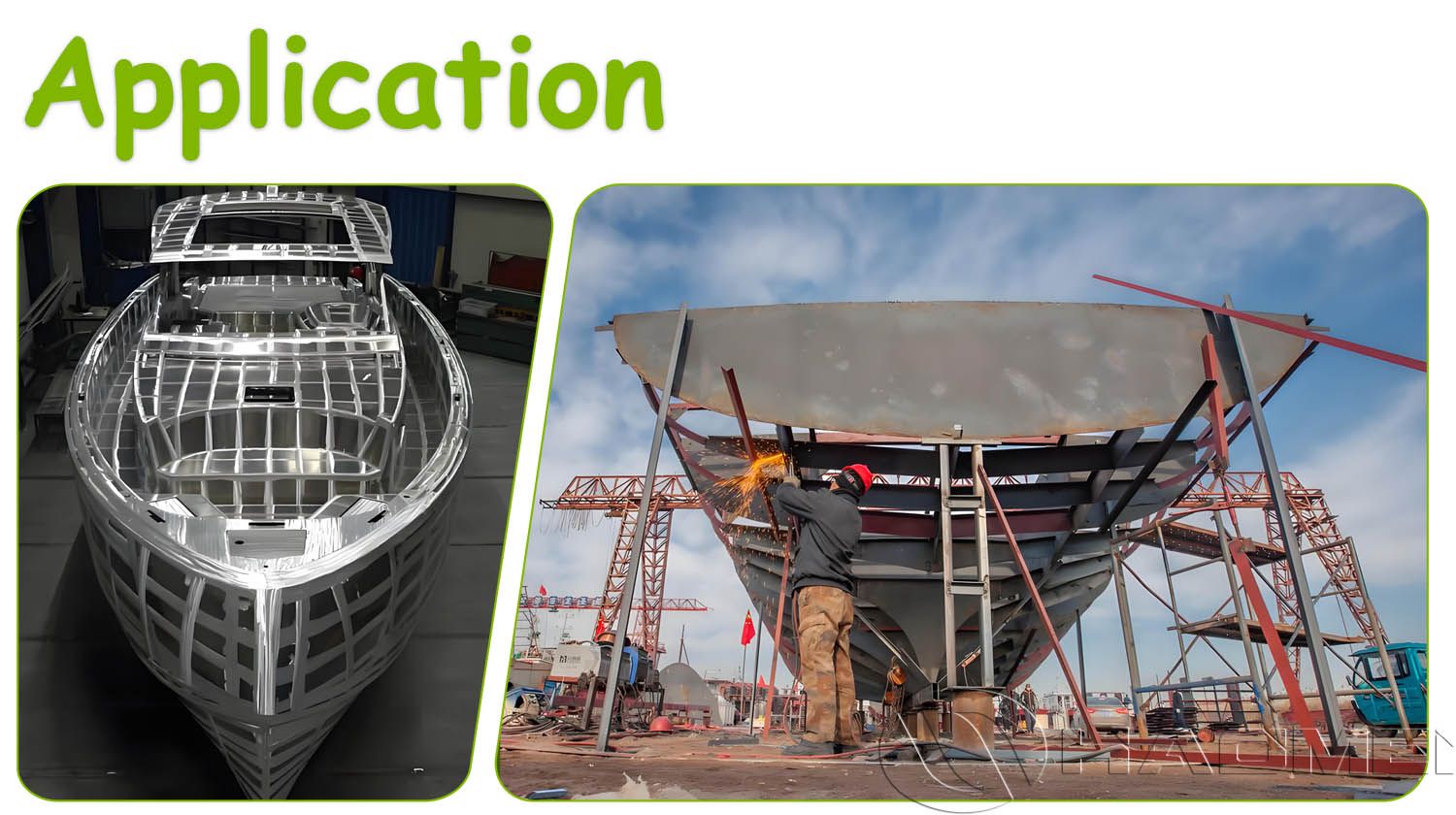
Shipbuilding
Used for key structural components such as hull outer plates, decks, engine foundations, hull side plates, and bottom shell plates. 5083 aluminum plate has been successfully used for decks, engine foundations, hull sides, and bottom shell plates on yachts and cruise vessels.
Fishing Boats and Yachts
An ideal material for lightweight boat design. The hull, deck, and superstructure of aluminum fishing boats can all be manufactured from 5083 aluminum plate.
Marine Engineering
Used for offshore drilling platforms, floating docks, offshore structures, and related marine facilities.
Specialized Vessels
Suitable for high-speed ferries, naval vessels, passenger ships, and other specialized vessels.
Pressure Vessels and Storage Tanks
Used for onboard liquid containers, storage tanks, and pressure vessels.
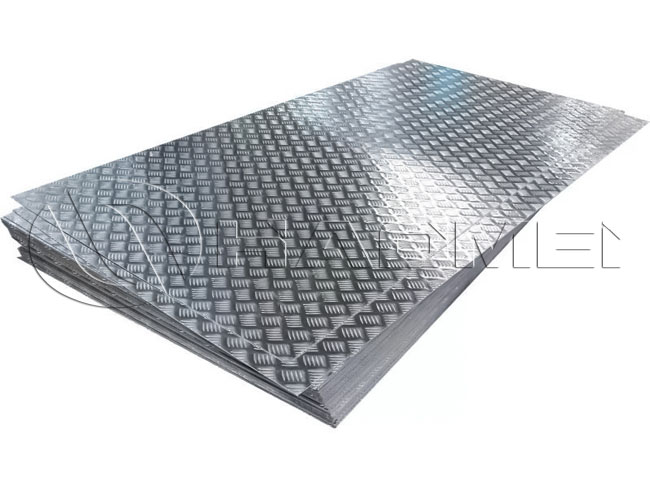
4 × 8 Ft Marine Anti-Slip Tread Aluminum Sheet
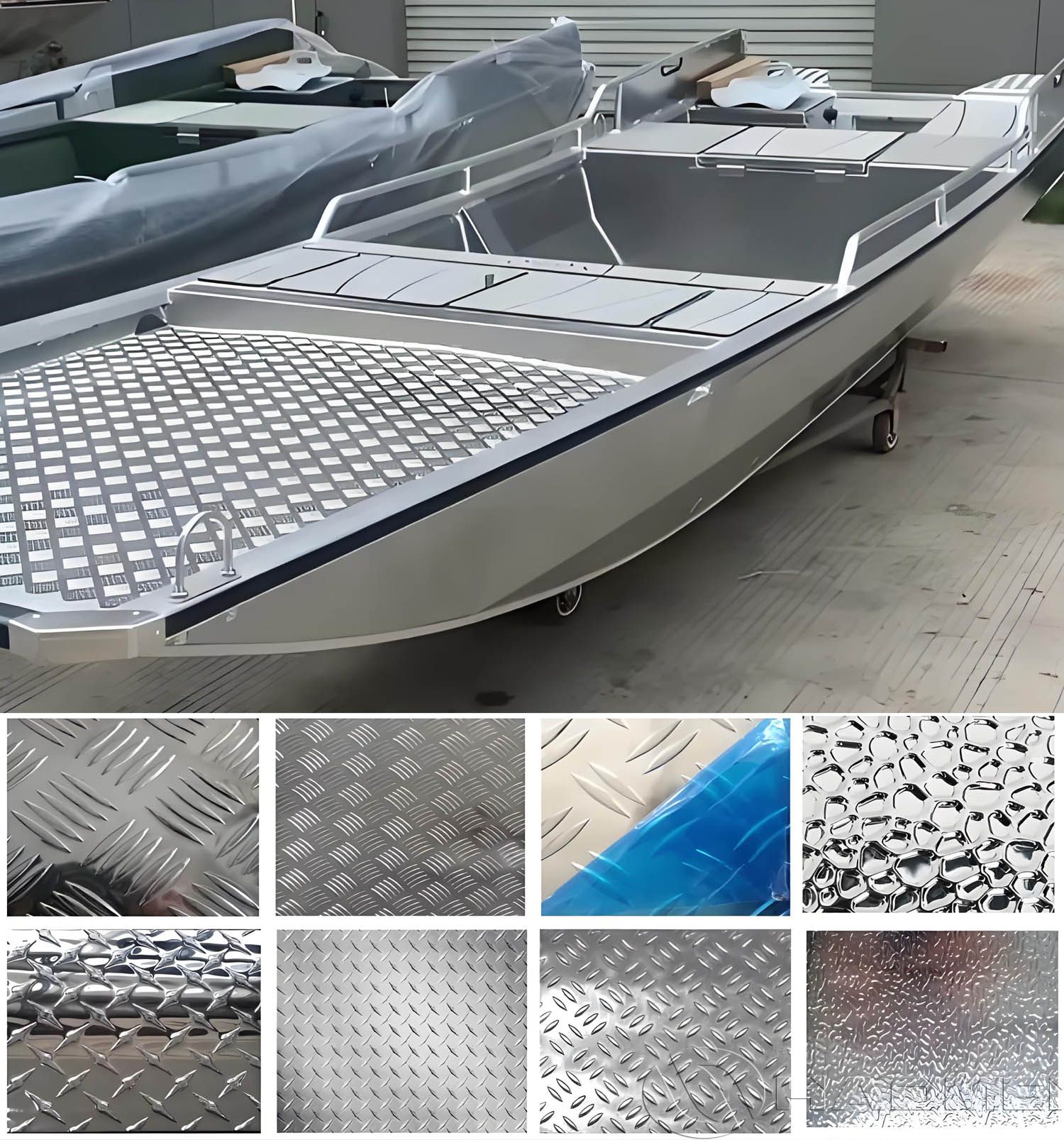
For boat decks, boarding steps, working platforms, stern areas, and walkway plates, slip resistance is extremely important.
A 4 × 8 ft marine tread aluminum plate provides good traction and friction. In wet environments with splashing water, fish scales, or oil contamination, it helps improve walking safety for crew members and passengers.
Common tread patterns include:
Five-bar tread pattern
Pointer pattern
Orange-peel pattern
Diamond anti-slip pattern
Customized embossed patterns
Common alloys include 5052 and 5083, typically in thicknesses from 2 mm to 5 mm.
Marine Aluminum Sheet Thickness Selection
The thickness range of 4 × 8 ft marine aluminum sheet is broad and can be selected according to vessel type, structural location, and intended use.
The thickness of 5083 marine aluminum plate is typically between 3 mm and 50 mm. Common thicknesses include 3 mm, 4 mm, 5 mm, 6 mm, 8 mm, and 10 mm.
3–5 mm Thin Plate
Suitable for non-primary load-bearing components of small fishing boats and yachts, including hull side panels, superstructures, and bulkheads. A 3 mm 4 × 8 aluminum plate is especially common in boatbuilding.
5–10 mm Medium-Thickness Plate
Suitable for major structural components such as hull outer plating, decks, and engine foundations. This is the most widely used thickness range for marine aluminum plates.
Plates Above 10 mm
Suitable for bottom shell plates of larger vessels, offshore platform structures, and other locations requiring very high strength and rigidity.
In practical applications, the bottom plate of an aluminum fishing boat is often 5 mm thick, while the hull side plate may be 4 mm thick. For a 6-meter aluminum boat, the outer hull plating may use 3 mm 5083 aluminum plate throughout.
Thickness requirements differ depending on the vessel type and structural location. Proper material selection is essential to achieve the best balance between performance and cost.
What Should You Consider When Purchasing 4 × 8 Ft Marine Aluminum Plate?
1. Confirm the Alloy and Temper
Select 5083, 5086, or 5052 according to the vessel location and intended application. Then select the appropriate temper, such as H116, H321, or H112, based on structural requirements.
2. Confirm Thickness and Dimensions
While 4 × 8 ft is a standard size, thickness must be selected according to actual requirements. Some manufacturers can provide customized extra-wide and extra-long plates, with widths from 20 mm to 2650 mm and lengths from 500 mm to 16,000 mm.
3. Request Classification Society Certification
Be sure to request certification from major classification societies, such as CCS, DNV, ABS, LR, or BV.
4. Request Material Test Certificates
Ask for Mill Test Certificates (MTCs) compliant with standards such as EN 10204 3.1 / 3.2 to confirm that chemical composition and mechanical properties meet the required specifications.
5. Evaluate the Total Cost
Do not consider unit price alone. The total cost should include certification, surface treatment, packaging, shipping, and other supply-chain expenses.
A low-cost aluminum plate with poor flatness, unstable mechanical properties, or missing certifications may ultimately result in higher rework, repair, and maintenance costs.