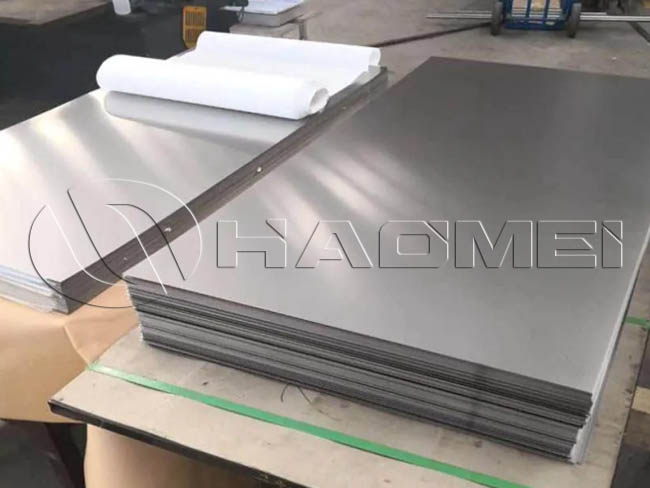
A deck is a horizontal structural platform located above the inner bottom of a vessel. It is supported by deck beams and used to enclose interior spaces and divide the ship into horizontal compartments.
As a critical area directly exposed to external loads and harsh marine conditions, a ship deck faces year-round challenges including standing water, condensation, wind and rain, strong UV radiation, and repeated wet-dry cycles caused by seawater. In addition, foot traffic, mechanical loads, contamination from oils, acids, alkalis, and frequent cleaning all create demanding requirements for deck surface protection.
Therefore, ship deck coatings and materials must provide excellent corrosion resistance, water resistance, weather resistance, and strong adhesion. They should also offer good anti-slip performance, wear resistance, and chemical resistance.
Core Alloy Grades
Marine environments are characterized by high salinity, high humidity, and strong ultraviolet radiation. Ordinary metals are highly susceptible to pitting corrosion and surface deterioration under these conditions.
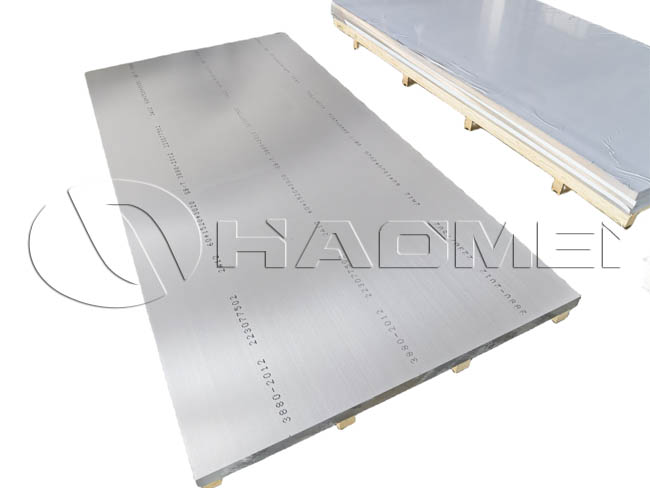
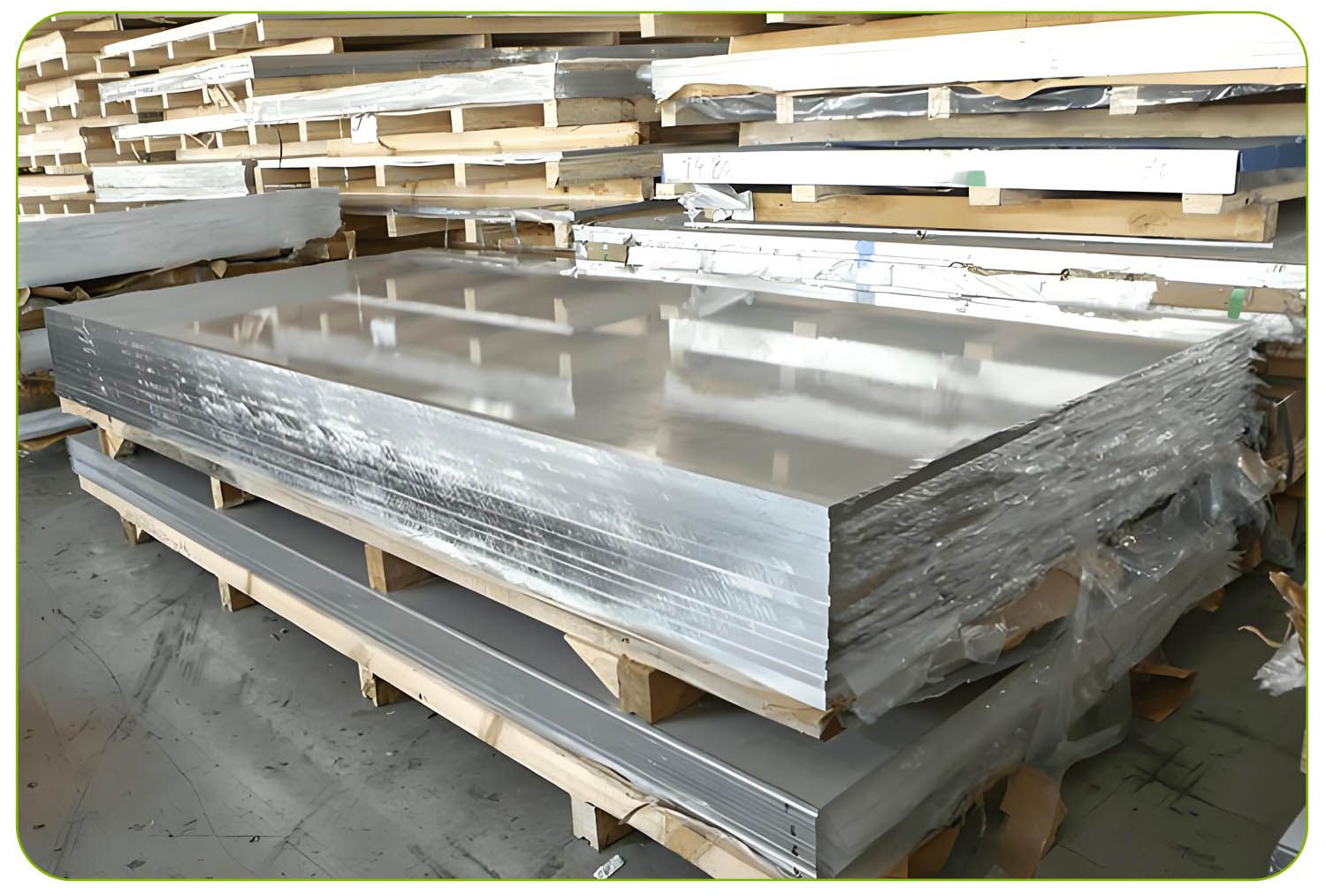
Our aluminum plates for ship decks are mainly produced from high-quality 5000 series alloys, such as 5083 and 5086, as well as 6000 series alloys, such as 6061.
5083 Aluminum-Magnesium Alloy
5083 aluminum-magnesium alloy is the primary material for marine deck aluminum plates. It contains 4.0%–4.9% magnesium and is a non-heat-treatable alloy.
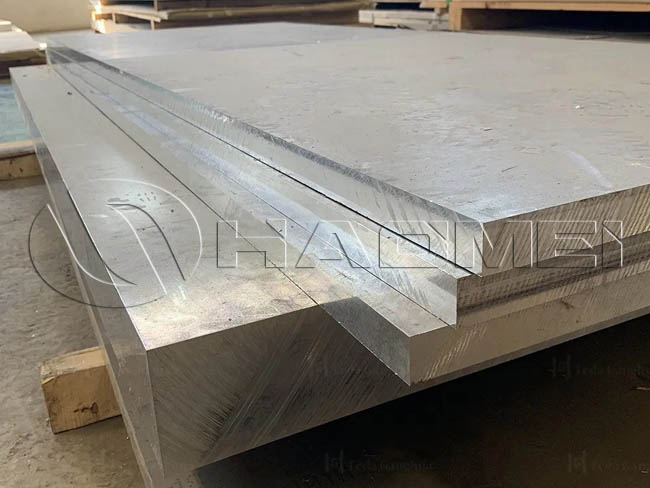
5083 is one of the most widely used marine aluminum alloys, with tensile strength exceeding 290 MPa. It is particularly suitable for major structural components that come into direct contact with seawater, including hull outer plating and decks.
As one of the strongest non-heat-treatable aluminum alloys, 5083 delivers highly reliable performance within its recommended service temperature range, below 65°C.
5052 Aluminum-Magnesium Alloy
5052 aluminum-magnesium alloy contains 2.2%–2.8% magnesium and 0.15%–0.35% chromium. Chromium helps refine the grain structure and reduce the risk of stress corrosion cracking.
5052 offers medium strength and excellent formability, performing well in chloride-rich marine environments. With good corrosion resistance and anti-rust properties, 5052 is commonly used for specific ship deck applications.
6061 Aluminum-Magnesium-Silicon Alloy
6061 aluminum-magnesium-silicon alloy contains 0.4%–0.8% silicon and 0.8%–1.2% magnesium. It is a heat-treatable aluminum alloy that combines excellent strength, corrosion resistance, machinability, and weldability.
Compared with 5083, 6061 has slightly lower corrosion resistance but better machinability. It is more commonly used for machined parts, structural component fabrication, and projects requiring a balance of strength, weldability, and versatility.
Although 6061 aluminum alloy is not generally recommended for primary hull structures in direct seawater contact, it plays an important role in superstructures, outfitting components, and deck fittings.
Surface Types of Aluminum Plate for Ship Decks
Based on surface form, aluminum plates for ship decks are generally divided into two categories:
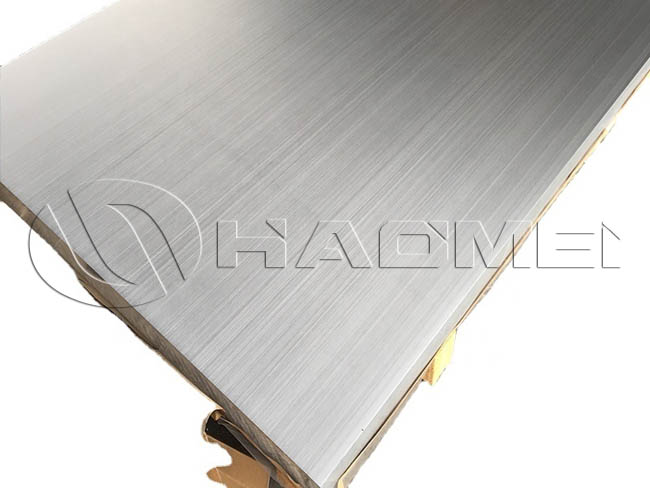
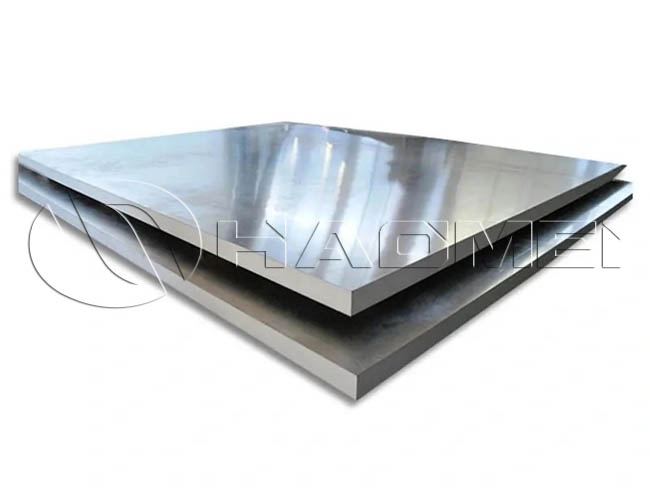
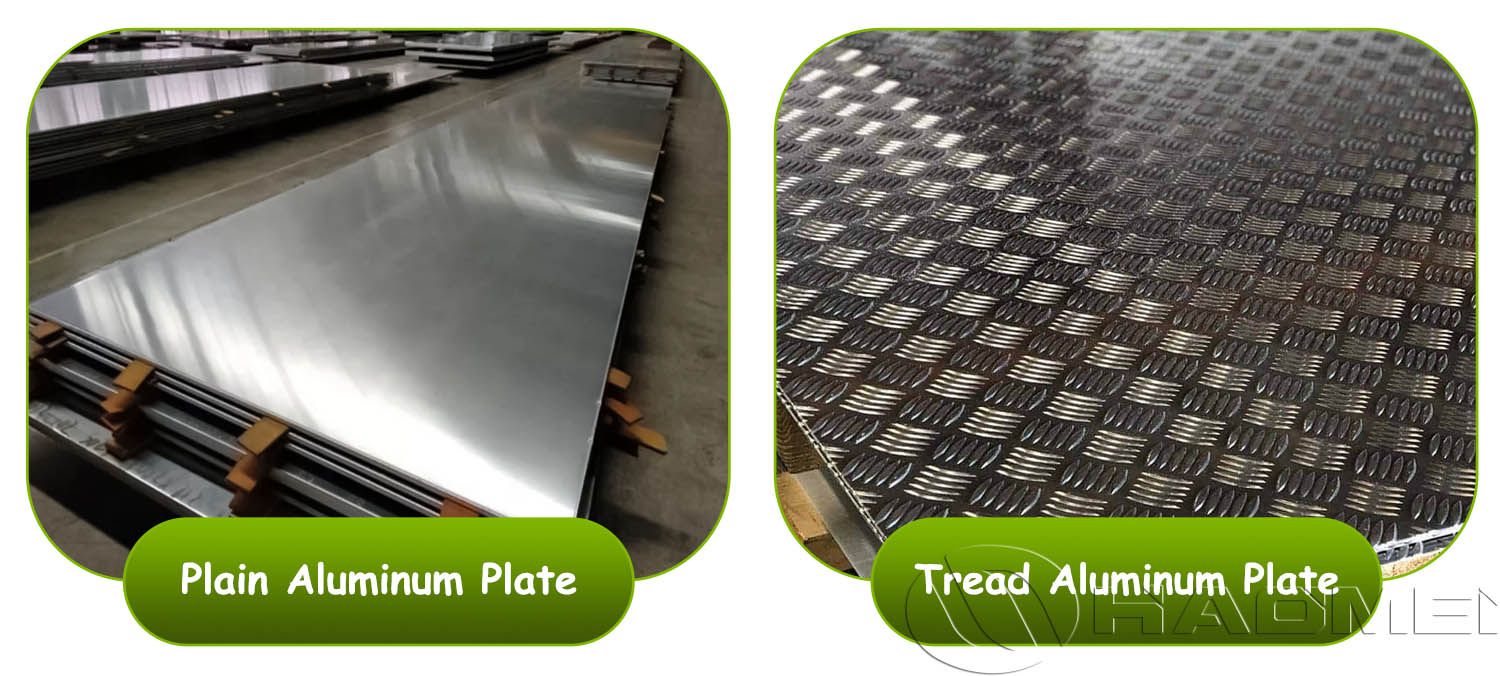
Plain Marine Aluminum Plate
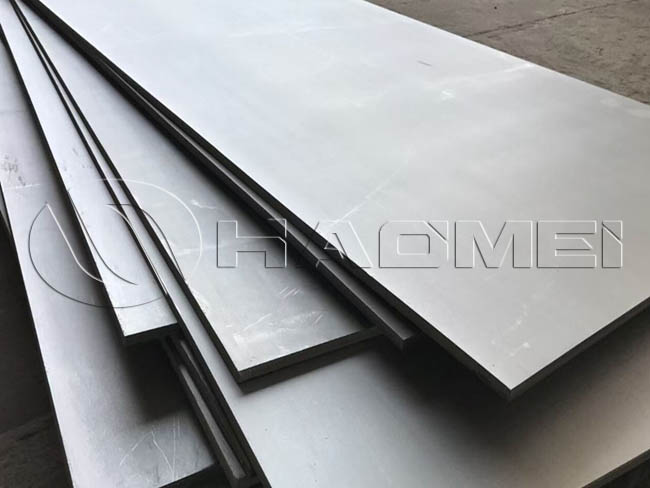
Plain aluminum plates are suitable for structural decks, bulkheads, equipment foundations, hull components, and other applications requiring welding, bending, assembly, installation, or subsequent coating treatment.
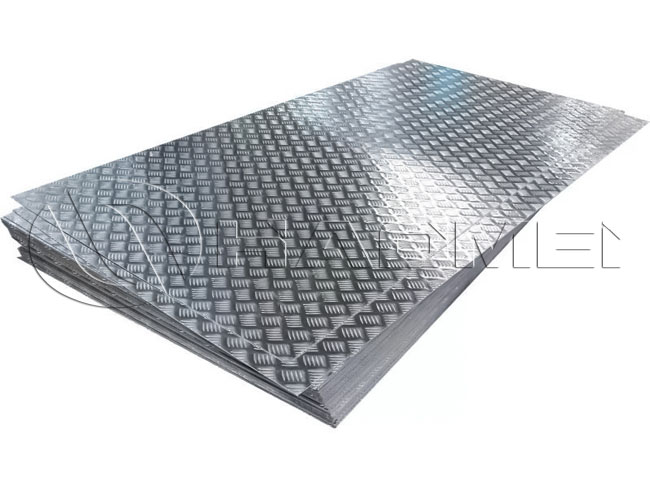
Anti-Slip Tread Aluminum Plate
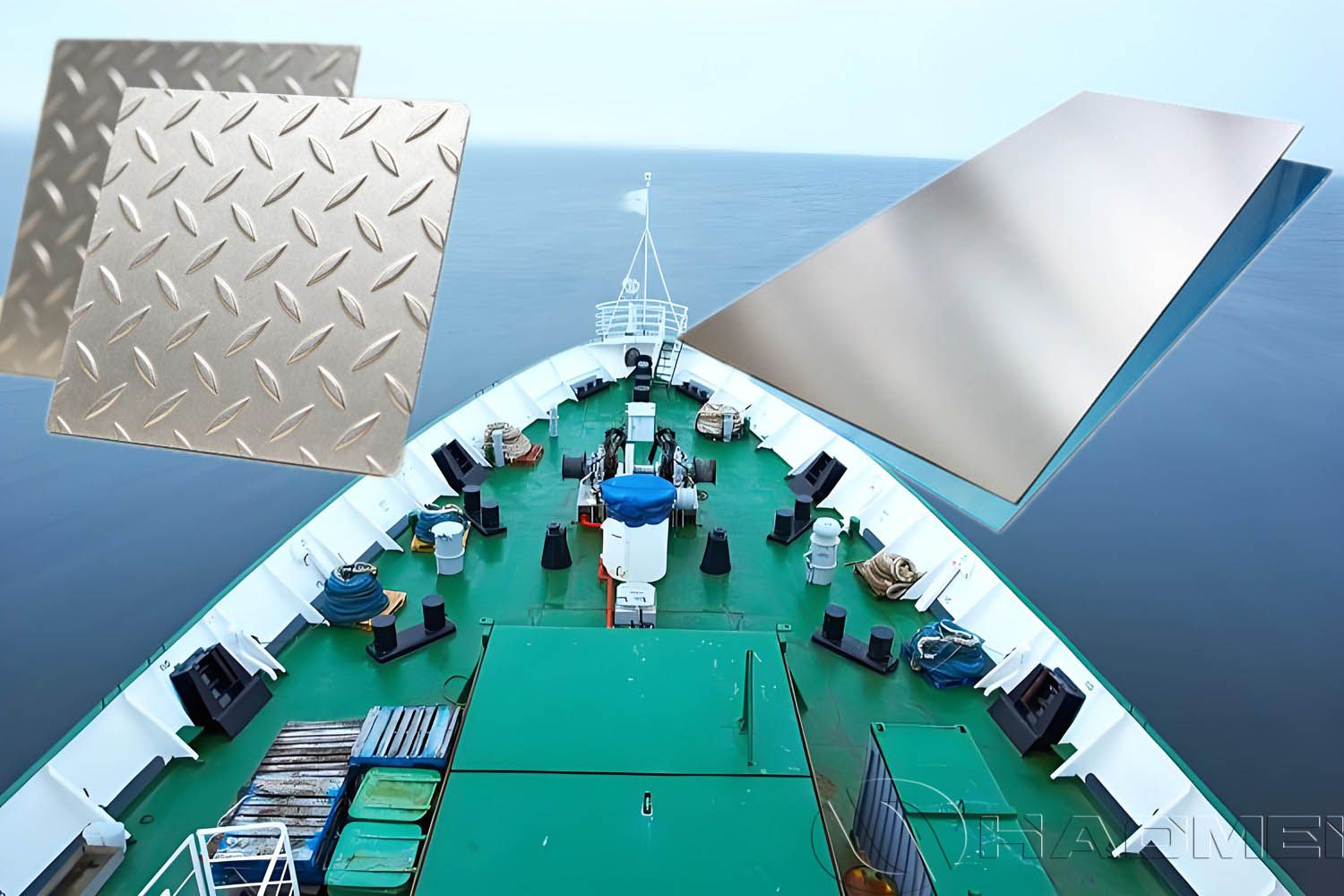
Tread aluminum plates feature raised patterns such as five-bar, diamond, pointer, or lentil patterns. These patterns significantly improve slip resistance and are suitable for decks, walkways, steps, and platforms with frequent foot traffic, standing water, or oil contamination risks.
Key Performance Advantages
1. Lightweight Construction
The density of aluminum alloy is approximately one-third that of steel. When structural strength requirements are met, replacing steel plate with marine aluminum plate can effectively reduce the overall weight of the vessel.
2. Seawater Corrosion Resistance
Marine aluminum plate forms a dense and self-repairing oxide film on its surface. This film effectively prevents chloride-ion attack from seawater and reduces corrosion issues.
3. Anti-Slip Safety
Marine deck aluminum plates are often supplied as tread plates. The raised pattern height is typically about 1 mm, providing more than 30% better slip resistance in wet conditions than plain aluminum sheet.
4. Good Weld Joint Ductility
Marine aluminum plates support MIG welding, TIG welding, and friction stir welding (FSW). Welded joints can achieve a high joint-efficiency factor.
5. Good Fabricability
The material is easy to shear, stamp, bend, and form. It can be processed into various shapes and dimensions to meet different application requirements.
6. Easy Cleaning and Maintenance
Compared with steel plates that are prone to rust, aluminum decks generally remain cleaner and are easier to wash and maintain on a daily basis.
Common Thickness Selection for Ship Deck Aluminum Plate
Deck plate thickness should be determined based on vessel type, span, supporting structure, personnel loads, equipment weight, cargo loads, and applicable design standards. The following ranges are for general reference:
| Plate Thickness | Typical Applications |
| 1.5-2.0mm | Lightweight hatch covers, decorative panels, equipment covers, non-load-bearing interior panels |
| 2.0-3.0mm | Walkways and steps for small boats, light-duty decks, hatch covers |
| 3.0-4.0mm | Fishing boat decks, boarding platforms, general working areas |
| 4.0-5.0mm | Medium-duty workboat decks, equipment platforms, heavy-duty walkways |
| 5.0-6.0mm | Main decks of offshore fishing boats and working areas of nearshore workboats |
| 6.0-8.0mm | Heavy-duty decks, equipment foundations, reinforced structures |
| Over 8.0 mm | Heavy-vessel platforms and support locations for offshore engineering equipment |
Plain Aluminum Plate vs. Tread Aluminum Plate: Which Is Better for Ship Decks?
A ship deck does not necessarily need to use only one type of aluminum plate. In actual vessel design, plain plates, tread plates, or a combination of both are selected according to the functional area.
| Comparison Item | Plain Marine Aluminum Plate | Marine Tread Aluminum Plate |
| Surface Form | Flat and smooth | Raised anti-slip pattern |
| Slip Resistance | General; additional coating may be required | Excellent; ideal for wet environments |
| Welding and Assembly | Convenient | Can be fabricated and welded, but the patterned surface requires protection |
| Ease of Cleaning | Easy to clean | Pattern grooves require additional attention during cleaning |
| Suitable Areas | Hull structures, bulkheads, bottom plates, equipment foundations | Deck surfaces, walkways, steps, platforms |
| Visual Appearance | Clean and smooth | Strong industrial appearance with a pronounced texture |
Common Specifications for Deck Aluminum Plate
| Item | Common Specifications |
| Product Name | Aluminum Plate for Ship Deck |
| Common Alloys | 5052, 5083, 5086, 6061 |
| Common Tempers | H111, H116, H321, H32, T6, T651, etc. |
| Thickness | 3–50 mm, customizable |
| Width | 1000–3100 mm, customizable |
| Length | 2000–12000 mm, customizable |
| Surface | Plain surface or tread surface |
| Tread Patterns | Five-bar, one-bar, pointer pattern, etc. |
| Common Standards | ASTM B209, EN 485, etc. |
| MOQ | 3 tons |
| Certifications | LR, CCS, ABS, DNV, and other classification society certifications |
Main Applications
Aluminum plate for ship decks is widely used in the following areas:
Main decks and bulkheads: 5083 is the primary alloy, used to withstand seawater corrosion and wave impact.
Superstructures and deckhouses: Both 6061 and 5083 may be used, balancing strength with fabrication convenience.
Yacht and high-speed boat decks: Lightweight construction improves vessel speed and fuel efficiency.
Naval vessels and offshore engineering ships: 6061 aluminum plate can meet high-strength requirements and withstand complex marine environments and severe weather.
Outfitting components such as masts and gangways: 6061 and 6063 aluminum extrusions are commonly used.
Working platforms and equipment surroundings: Provides stable, anti-slip flooring for machinery operating areas.
Fishing boats, cargo ships, and workboats: Suitable for deck, bulkhead, and other structural components.
Processing and Installation Recommendations for Ship Deck Aluminum Plate
High-quality materials must be properly fabricated and installed to fully utilize their corrosion resistance and structural advantages.
1. Cutting and Drilling
Aluminum plates can be cut using CNC cutting equipment, waterjet cutting, circular saws, band saws, laser cutting, or specialized aluminum-processing equipment.
When drilling, use drill bits and cutting parameters suitable for aluminum alloys to avoid burrs, deformation, or localized overheating.
2. Welding Process
Marine aluminum plates are commonly welded using MIG or TIG methods. Before welding, oil, oxide films, and contaminants should be removed from the surface. Welding wire should be selected to match the base material.
Common filler wires include:
ER5356
ER5183
ER5556
For marine aluminum-magnesium alloys such as 5083 and 5086, the strength of the heat-affected zone may decrease after welding. This factor should be fully considered in structural design and welding procedures.
3. Preventing Galvanic Corrosion Between Dissimilar Metals
When aluminum plates are in direct contact with carbon steel, copper, brass, or certain stainless-steel components in wet, seawater, or salt-spray environments, galvanic corrosion may occur.
The following measures are recommended:
Use insulating gaskets;
Install nylon washers;
Use sealants as isolation barriers;
Apply anti-corrosion coatings to joint areas;
Prevent standing water and long-term salt accumulation in gaps;
Regularly inspect fasteners and connection areas.
4. Tread Plate Installation Direction
For tread aluminum plate decks, the pattern direction should be arranged according to the primary walking direction and drainage direction.
In general, the pattern orientation should increase walking friction while reducing standing water, dirt accumulation, and difficult-to-clean areas.
5. Regular Cleaning and Maintenance
Although marine aluminum plate has good corrosion resistance, it is still recommended to rinse it regularly with fresh water to remove salt deposits, sand, and contaminants.
For oily areas, use neutral detergents. Avoid prolonged use of strong acids, strong alkalis, or chlorine-containing cleaning agents, as these may affect the surface condition of the aluminum plate.