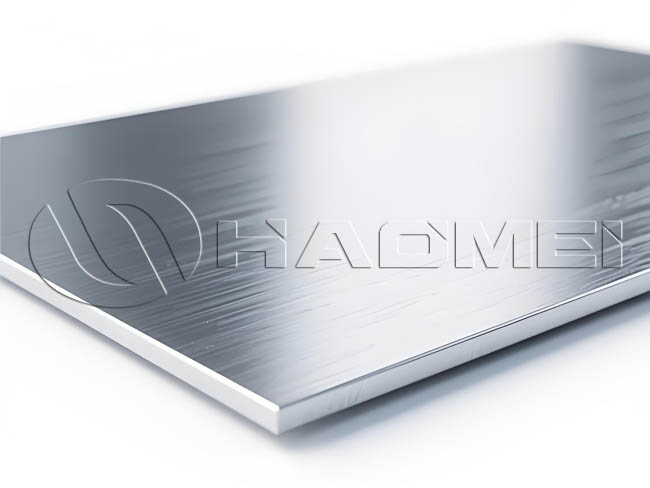
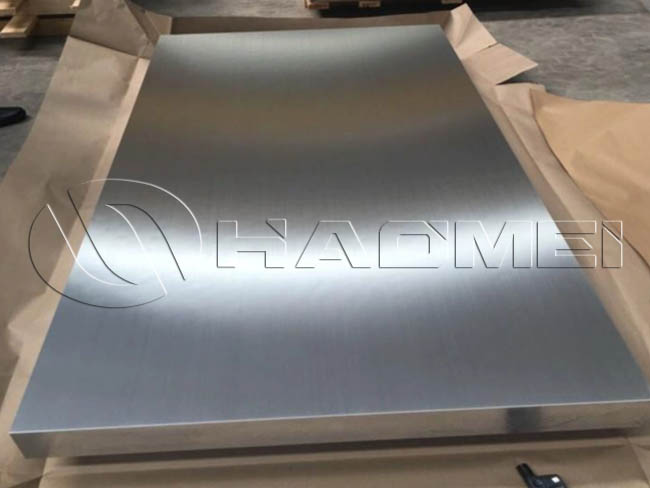
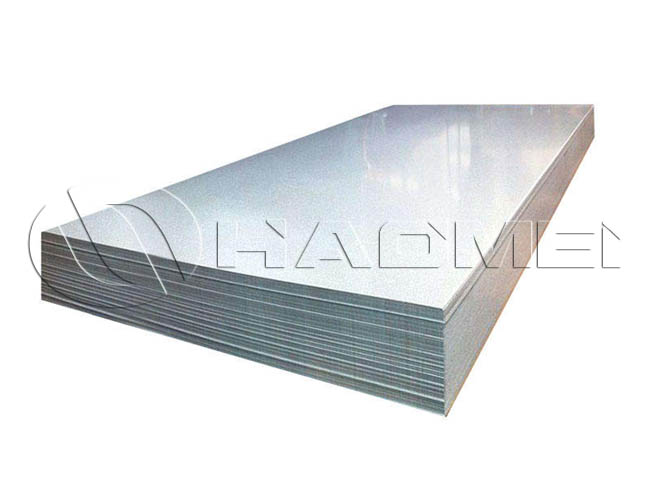
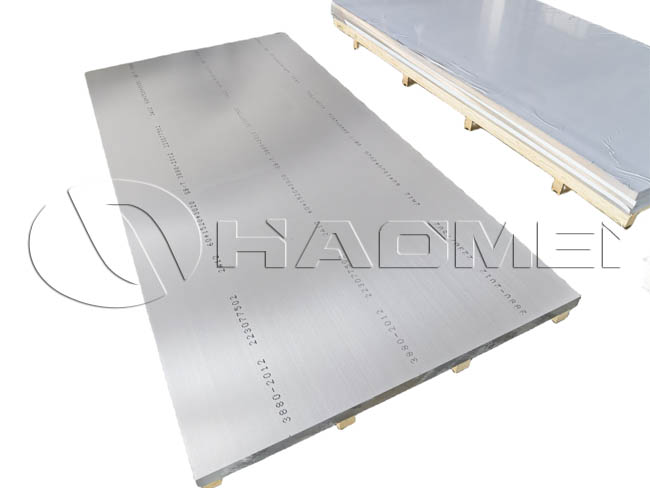
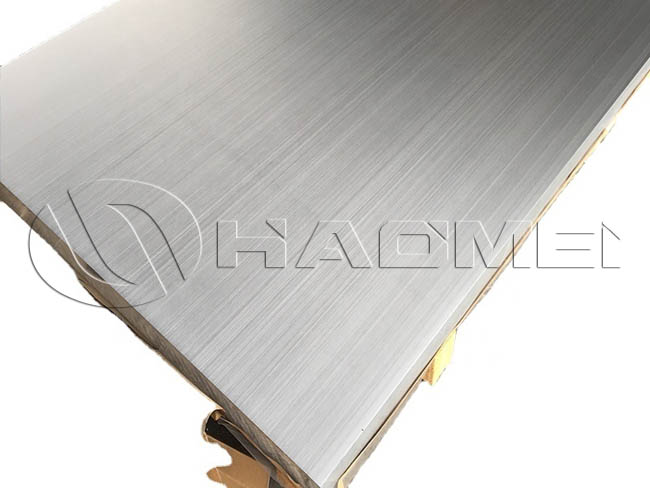
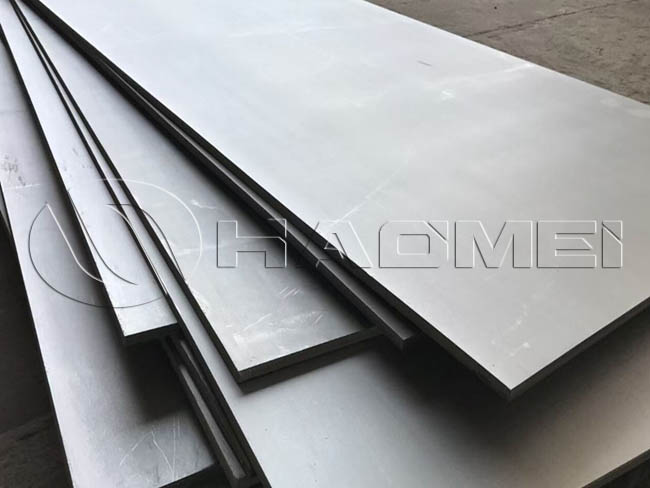
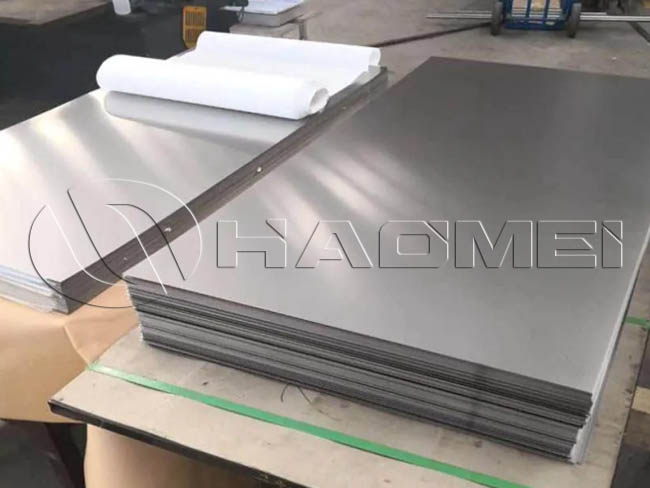
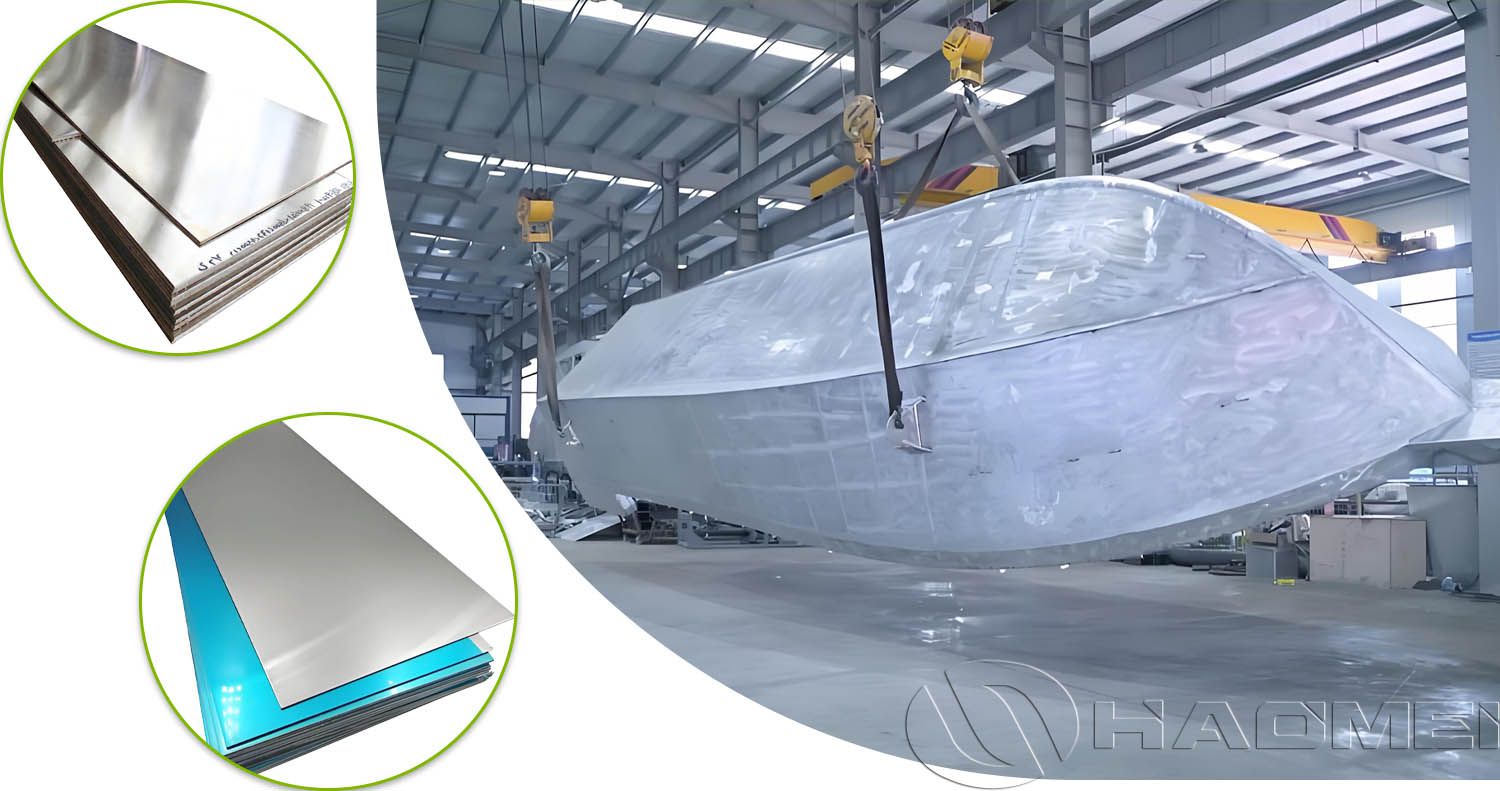
Among various shipbuilding materials, marine aluminum plate has become an ideal choice for manufacturing aluminum fishing boats, speedboats, workboats, fishing vessels, and leisure boats due to its light weight, high strength, corrosion resistance, ease of fabrication, and convenient maintenance.
High-quality aluminum plate affects not only the appearance of a boat but also its navigation stability, service life, fuel economy, and overall safety.
What Is Aluminum Plate for a Fishing Boat?
Fishing boat aluminum plate refers to aluminum alloy sheet or plate specifically used for manufacturing fishing boat hulls, decks, bulkheads, gunwales, bottom plates, storage compartments, consoles, and related structural components.
It is generally made from aluminum alloys with excellent corrosion resistance and weldability that are suitable for marine and freshwater environments.
Compared with ordinary decorative aluminum sheet, aluminum plate for fishing boats has higher performance requirements. In addition to sufficient strength and rigidity, it must withstand water impact, hull vibration, changing loads, welding heat input, humid conditions, and salt-spray corrosion.
Common Alloys for Fishing Boat Aluminum Sheet
Fishing boat aluminum sheets are commonly made from 5000 series Al-Mg alloys, mainly including 5083, 5086, and 5052.
5083 Marine Aluminum Sheet
5083 aluminum sheet is an Al-Mg alloy whose primary alloying element is magnesium, with small additions of manganese, chromium, and other elements. Its magnesium content ranges from 4.0% to 4.9%.
This balanced composition gives 5083 aluminum sheet excellent corrosion resistance, weldability, and formability.
Typical mechanical properties of 5083 aluminum sheet include:
Tensile strength: 275–350 MPa
Yield strength: 125–250 MPa
It offers good strength among non-heat-treatable aluminum alloys and excellent seawater corrosion resistance. 5083 is one of the most widely used aluminum plates in shipbuilding and is a preferred material for offshore fishing boats.
In vessel manufacturing, 5083 aluminum plate is widely used for decks, engine foundations, hull sides, and bottom shell plates. It is especially suitable for underwater hull areas and structural components exposed to marine environments for extended periods. Under harsh marine conditions, the corrosion-resistant service life of 5083 may be 10%–15% longer than that of 5086.
5086 Marine Aluminum Sheet
5086 aluminum sheet is also a 5000 series Al-Mg alloy, with a magnesium content of 3.5%–4.5%.
Tensile strength: 240–300 MPa
Yield strength: 95–205 MPa
The key advantage of 5086 is its higher ductility and elongation, making it more suitable for structures requiring forming operations. In addition, because it has a relatively lower magnesium content, 5086 is slightly less sensitive to hot cracking during welding and is suitable for complex welded structures.
Its resistance to stress-corrosion cracking is comparable to that of 5083.
5052 Marine Aluminum Sheet
5052 aluminum plate is one of the most widely used rust-resistant aluminum alloys. It provides relatively high strength, especially good fatigue strength, high ductility, and strong corrosion resistance.
In practical material selection:
For inland freshwater fishing boats, 5052 aluminum-magnesium alloy plate is generally sufficient.
For seawater or highly corrosive waters, 5083 aluminum-magnesium alloy sheet is recommended.
To adapt to marine environments while maintaining an attractive appearance, many aluminum boats use 5083 aluminum sheet for the lower hull and bottom, while 5052 is used for upper hull sections.
Another option is 5086 aluminum-magnesium alloy sheet , which offers high strength and strong corrosion resistance and is often used for boat bottoms and transoms.
Among these alloys, 5083 and 5086 are commonly used for medium- and large-sized aluminum fishing boats, offshore fishing boats, workboats, and load-bearing hull structures due to their seawater corrosion resistance, weldability, and structural strength.
5052 offers good formability and corrosion resistance and is suitable for decks, interior panels, cabin doors, storage boxes, and non-load-bearing structural components.
Common Specifications
| Item | Common Options |
| Common Alloys | 5052, 5083, 5086 |
| Common Tempers | O, H111, H112, H116, H321, H32, etc. |
| Thickness Range | 3–50 mm, or customized according to design requirements |
| Common Widths | 1000 mm, 1250 mm, 1500 mm, 2000 mm, and extra-wide sizes |
| Common Lengths | 2000 mm, 2500 mm, 3000 mm, 6000 mm, or cut to length |
| Surface Finish | Mill finish, milled surface, tread pattern, protective-film covered, pre-treated surface for coating |
| Supply Forms | Flat sheets, coils, cut-to-size plates, CNC-cut parts, bent parts |
| Typical Applications | Hull bottoms, hull sides, decks, bulkheads, cabin doors, storage structures, consoles |
| MOQ | 3 tons |
| Certifications | DNV, ABS, LR, BV, CCS, NK, KR |
Advantages of Aluminum Alloy Plates for Fishing Boats
1. Lightweight
Aluminum has a density of approximately one-third that of steel. Under the same structural design conditions, aluminum plate can significantly reduce the total weight of the vessel.
2. Excellent Corrosion Resistance
5000 series aluminum-magnesium alloys, in particular, naturally resist corrosion and can effectively withstand seawater exposure. Aluminum fishing boats are environmentally friendly, durable, and corrosion resistant, making them especially suitable for marine use.
3. Long Service Life
According to marine inspection requirements, the effective service life of aluminum alloy boats can be several times, or even up to ten times, that of fiberglass boats.
As fiberglass boats age, they may experience aging, gelcoat peeling, and other deterioration. Aluminum hull structures are stable and do not have the same delamination or aging concerns.
4. Reliable Strength and Impact Resistance
Aluminum alloy plates offer good structural strength and toughness. Their impact resistance is stronger than that of fiberglass boats, and this advantage becomes increasingly evident as the vessel ages.
5. Excellent Weldability
High-quality marine aluminum plates can be processed through MIG and TIG welding. This allows manufacturers to produce vessels with different lengths, widths, cabin configurations, and functional layouts.
6. Fast and Convenient Repair
Aluminum hulls can be repaired quickly and efficiently after collision damage. After welding repair, the hull can achieve performance comparable to a new hull. Repair costs are relatively low, which is difficult to achieve with fiberglass hulls.
7. High Residual Value and Recyclability
Aluminum is a recyclable metal that can be reused repeatedly. When a boat reaches the end of its service life, nearly all of the aluminum can be recovered with minimal material loss.
Common Tempers for Fishing Boat Aluminum Sheet
Fishing boat aluminum sheets are primarily made from 5000 series Al-Mg alloys. Common tempers include O, H111, H112, H116, H321, H32, and H34.
| Temper | Temper Characteristics | Main Advantages | Typical Applications |
| O | Fully annealed and relatively soft | High elongation; easy bending, stamping, stretching, and forming | Cabin doors, interior panels, curved covers, storage boxes, complex bent components |
| H111 | Lightly strain-hardened | Balanced strength and fabrication performance; suitable for general welding and forming | Decks, bulkheads, auxiliary hull-side plates, general structural parts |
| H112 | Hot-worked temper | Commonly used for medium- and thick-plate structures; good stability | Thick-plate structures, support plates, hull reinforcement components, bottom structures |
| H116 | Optimized for marine environments | Good seawater corrosion resistance; suitable for long-term humid and salt-spray exposure | Bottom plates, hull outer plates, gunwales, nearshore fishing boats, offshore fishing boats |
| H321 | Strain-hardened and stabilized | Higher strength, good corrosion resistance, and strong suitability for welded structures | Hulls, decks, bulkheads, and load-bearing structures of medium and large fishing boats |
| H32 | Strain-hardened and stabilized | Moderate hardness; balanced workability and strength | Hatch covers, storage compartments, control consoles, auxiliary deck structures |
H34
| Higher strain-hardened temper | Higher strength and good surface flatness | Marine equipment housings, support plates, components requiring limited bending |
Examples of Cut-to-Size Purchase Specifications
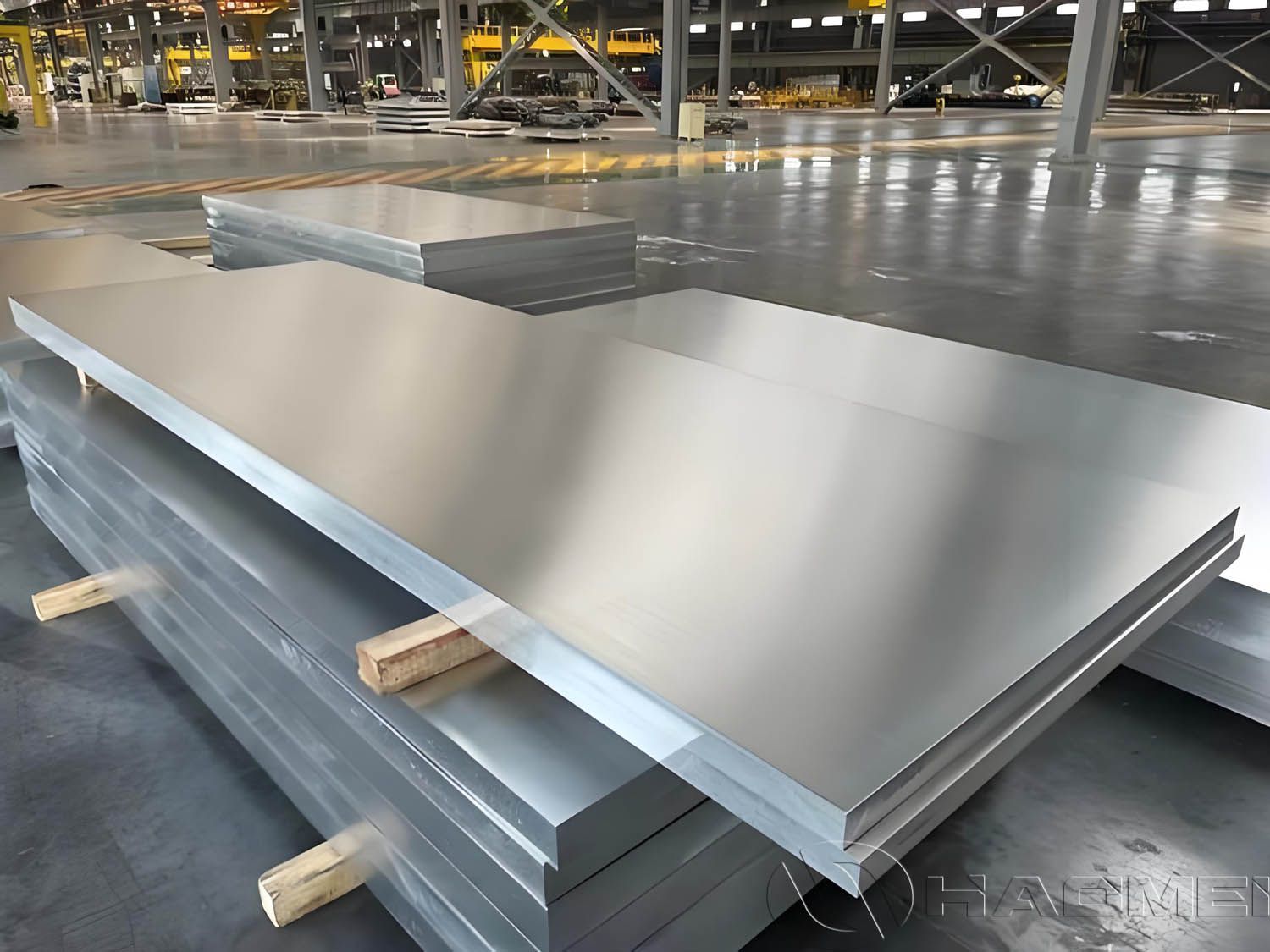
5083-H116 marine aluminum plate, 5 mm × 1500 mm × 6000 mm, for hull outer plating.
5083-H321 aluminum plate, 6 mm × 2000 mm × 6000 mm, for offshore fishing boat bottom structures.
5052-H32 aluminum plate, 3 mm × 1250 mm × 2500 mm, for fishing boat deck and storage-compartment fabrication.
5052 tread aluminum plate, 4 mm × 1500 mm × 3000 mm, for non-slip marine deck platforms.
Common Specifications of Tread Aluminum Sheet for Fishing Boats
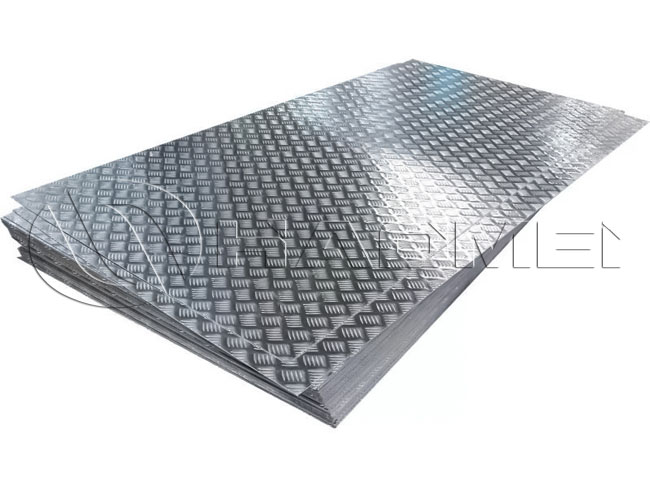
Fishing boat decks, step platforms, boarding areas, and work zones typically require non-slip surfaces. Therefore, tread aluminum plate is also a common material choice.
Common tread patterns include five-bar tread, pointer pattern, orange-peel texture, and customized anti-slip patterns.
Typical Application | Recommended Alloy | Common Thickness |
| Non-slip fishing boat deck | 5052, 5083 | 2.0-5.0mm |
| Boarding steps | 5052, 5083 | 3.0-6.0mm |
| Marine walkway plates | 5052, 5083 | 3.0-5.0mm |
| Stern working platforms | 5083,5086 | 4.0-6.0mm
|
| Non-slip storage-compartment covers | 5052-H32 | 2.0-4.0mm
|
When purchasing tread aluminum plate, it is important to specify whether the required thickness refers to the base plate thickness or the overall thickness including the tread pattern, in order to avoid differences in load-bearing and fabrication performance.
Applications in Fishing Vessel Construction
Aluminum plate for fishing vessels is widely used in a variety of structural components, including:
Hull bottom plates: High-strength aluminum provides excellent impact resistance while reducing hull weight.
Hull side plates: Offer excellent durability, corrosion resistance, and long-term structural stability.
Deck plates: Provide strong load-bearing capacity while maintaining lightweight construction.
Wheelhouse structures: Create strong yet lightweight cabins, helping improve vessel stability.
Bulkheads: Increase structural rigidity and improve onboard safety.
Fuel tanks: Aluminum’s corrosion resistance helps maintain fuel quality and extend tank service life.
Fish holds: Easy-to-clean aluminum surfaces help maintain hygienic storage and resist corrosion in harsh environments.
Classification Society Certifications
For marine aluminum plates, classification society certification is a key indicator of quality. Marine vessels are exposed to seawater for extended periods, placing extremely high requirements on hull plates and fabricated structural components.
Aluminum plates certified by recognized classification societies meet internationally accepted shipbuilding requirements for chemical composition, mechanical properties, and corrosion resistance.
High-quality marine aluminum plates should be certified by major classification societies such as:
CCS — China Classification Society
DNV — Det Norske Veritas
ABS — American Bureau of Shipping
BV — Bureau Veritas
LR — Lloyd’s Register
NK — Nippon Kaiji Kyokai
KR — Korean Register
These certifications ensure that aluminum plates can meet the demanding material-performance requirements of marine vessel manufacturing.
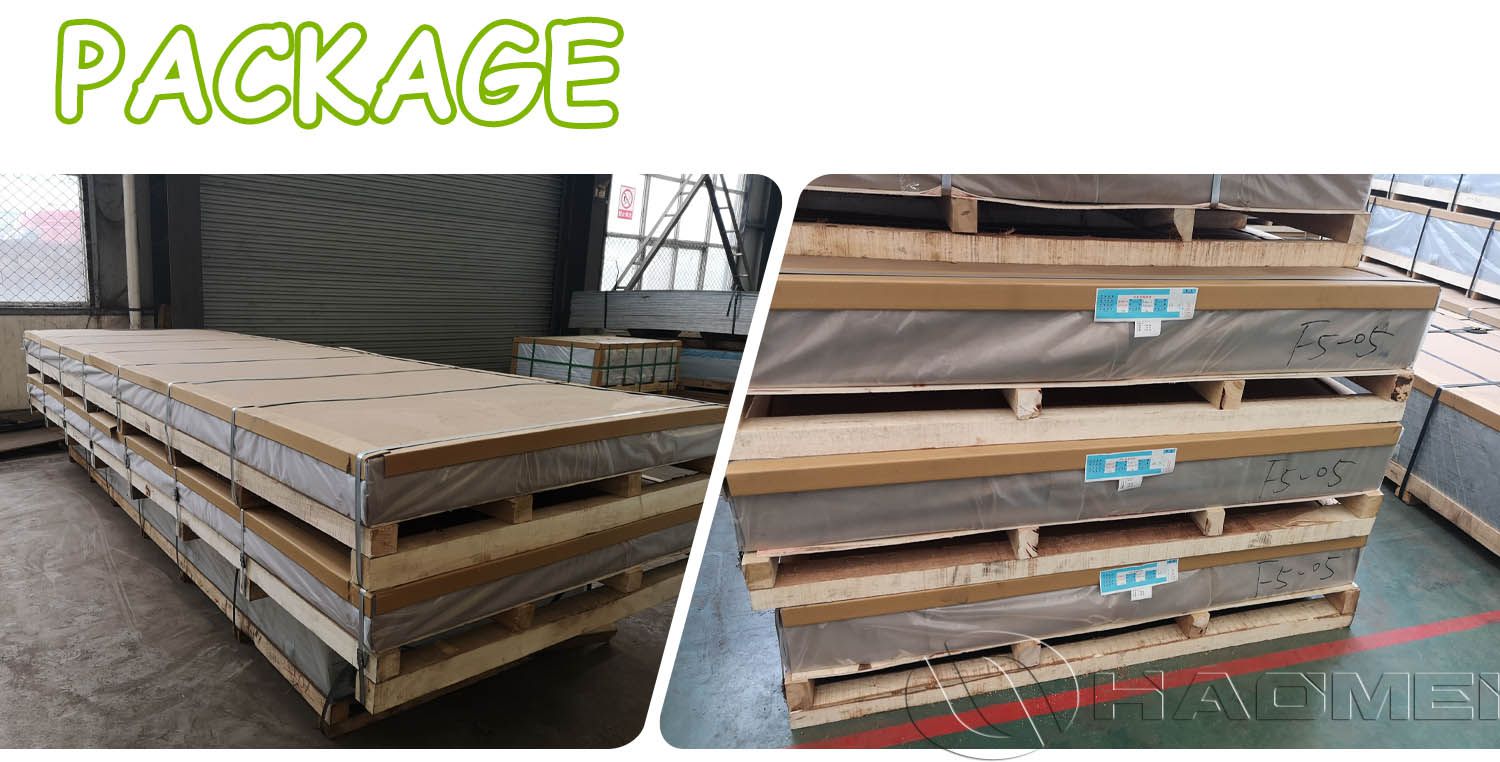
Export Packaging
To ensure safe international transportation, aluminum plates are generally packed with:
Protective film
Moisture-proof paper
Plastic packaging
Wooden pallets
Steel strapping
Corner protectors
These protective measures help prevent scratching, collision damage, deformation, moisture exposure, and corrosion during transportation.